접혀진 풍경
숲의 틈새
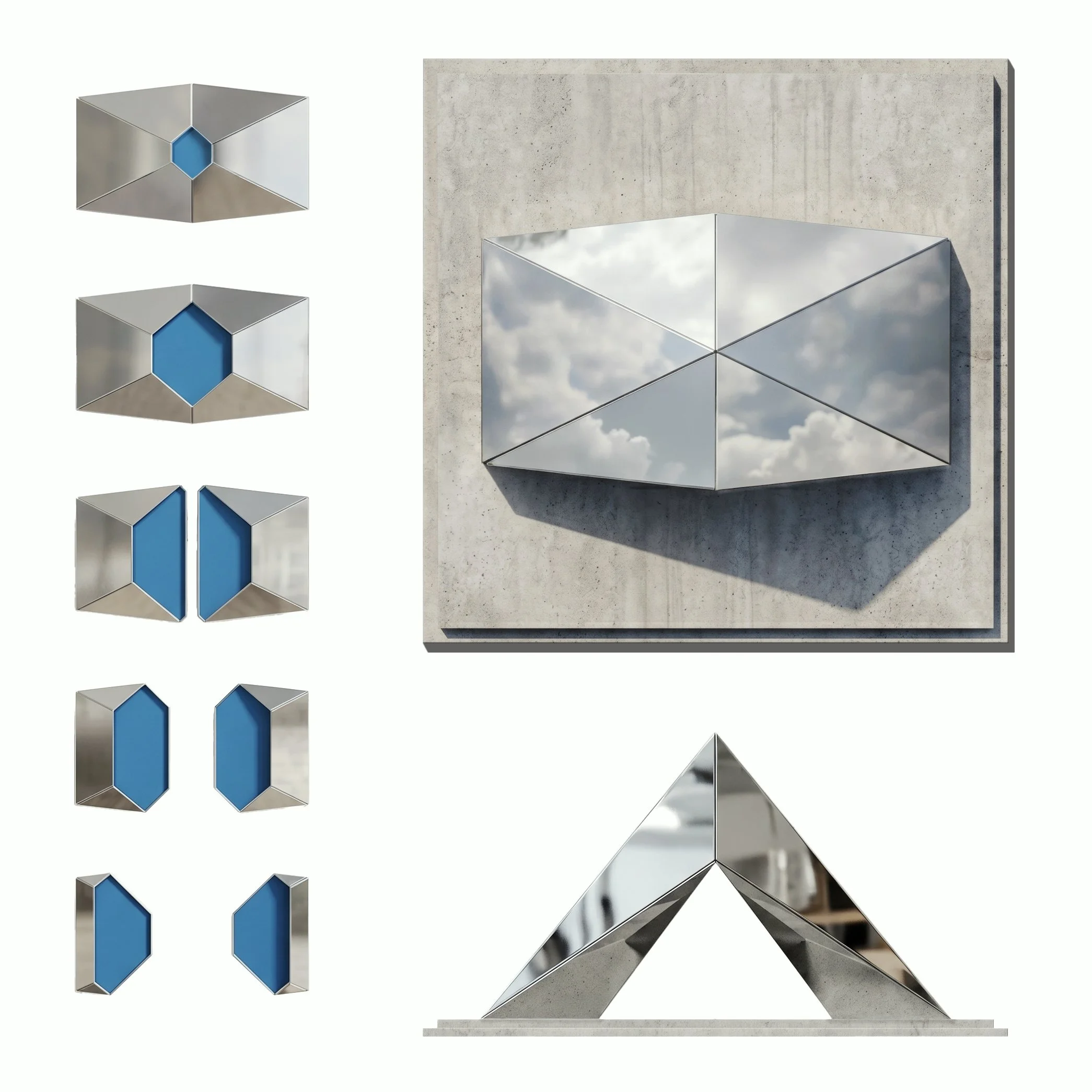
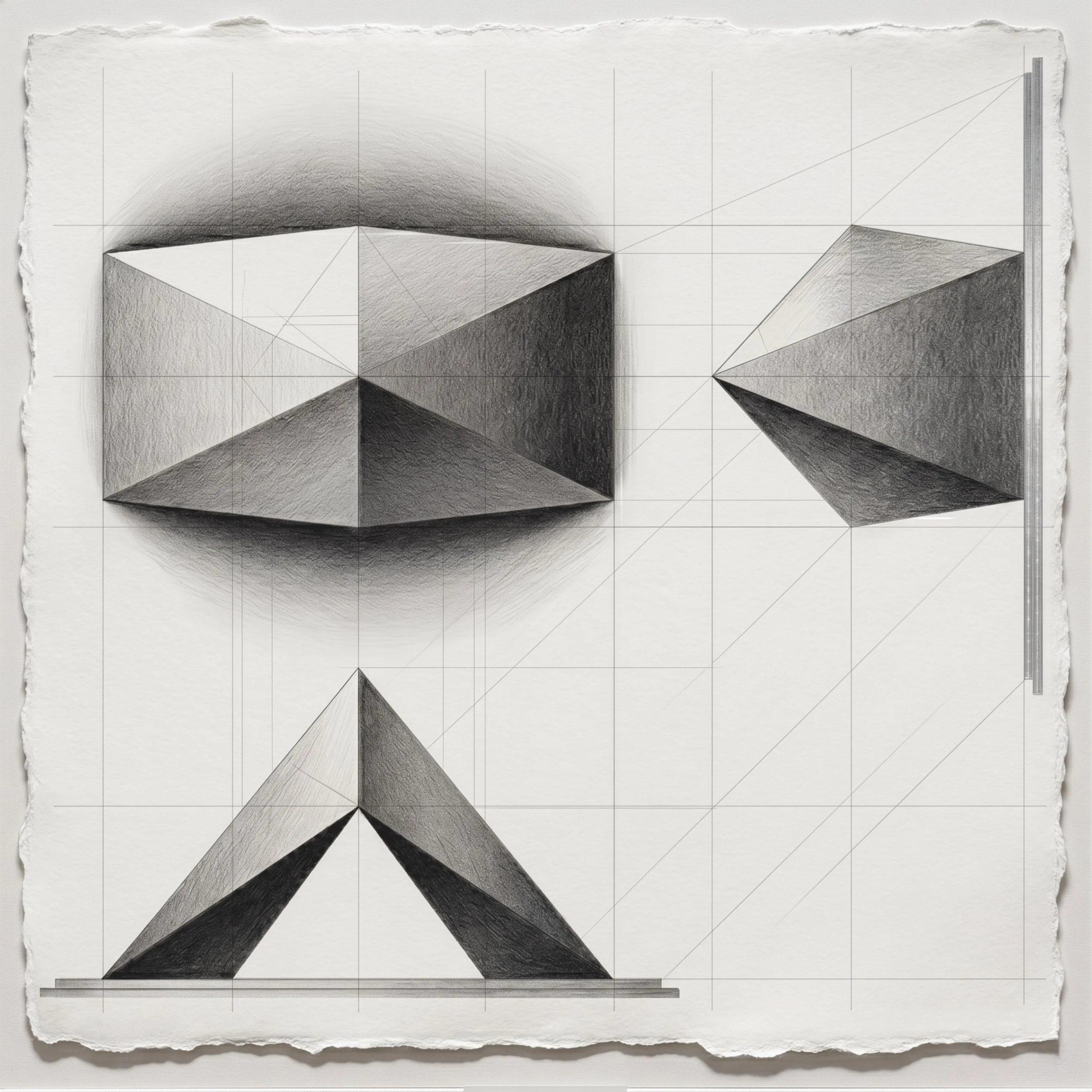
건축은 환경과 인간을 비추며 관계를 맺게 한다. 숲이라는 거대한 자연의 캔버스 위에 놓인 이 파빌리온은 대상과 배경을 잇는 정교한 매개체이다. 환경이 감각의 장을 열고 인간이 이를 해석할 때, 건축은 그 사이에 개입하여 새로운 경험의 층위를 직조한다. 이 파빌리온은 풍경을 재배열하는 방식으로 그 관계성 속에 깊숙이 관여한다.
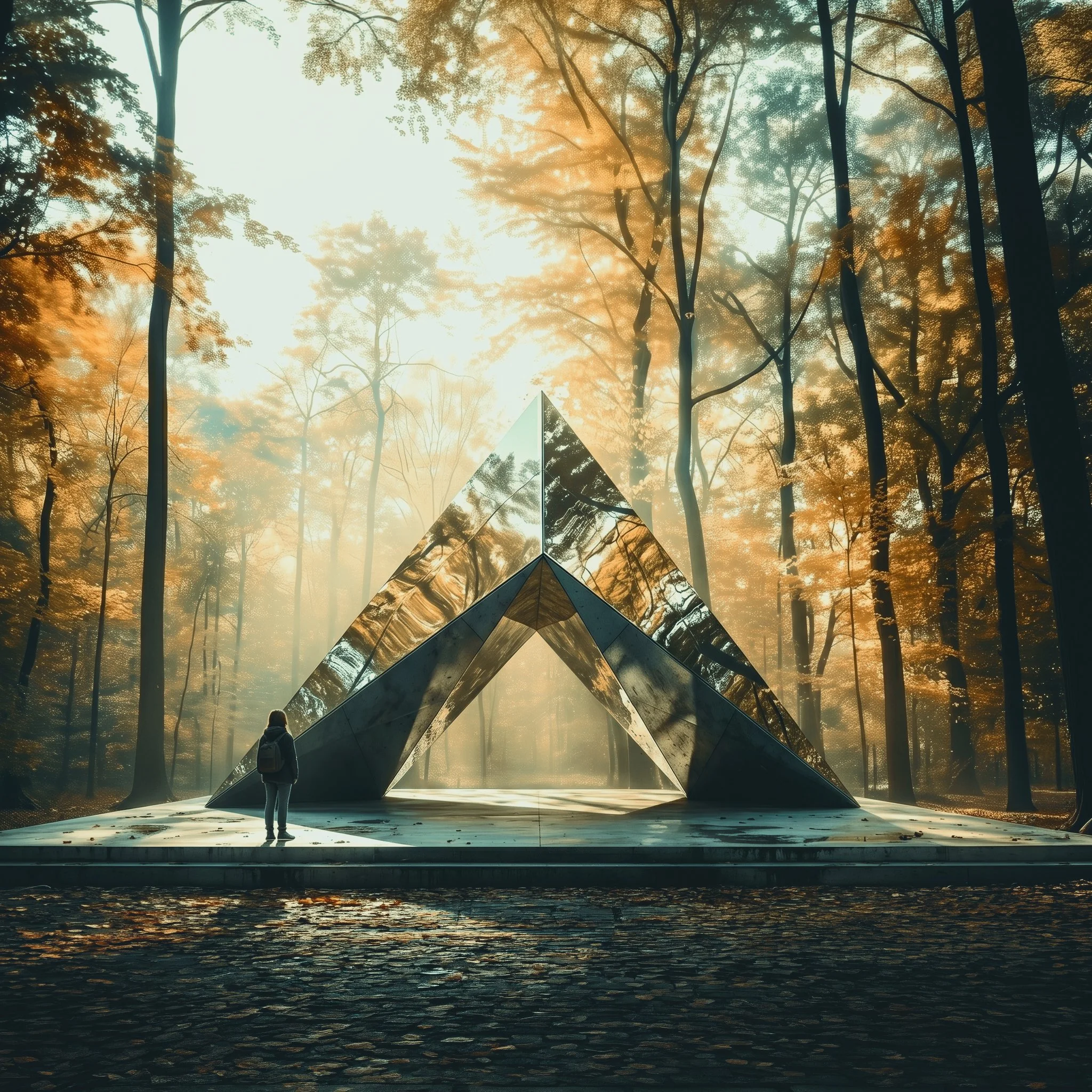
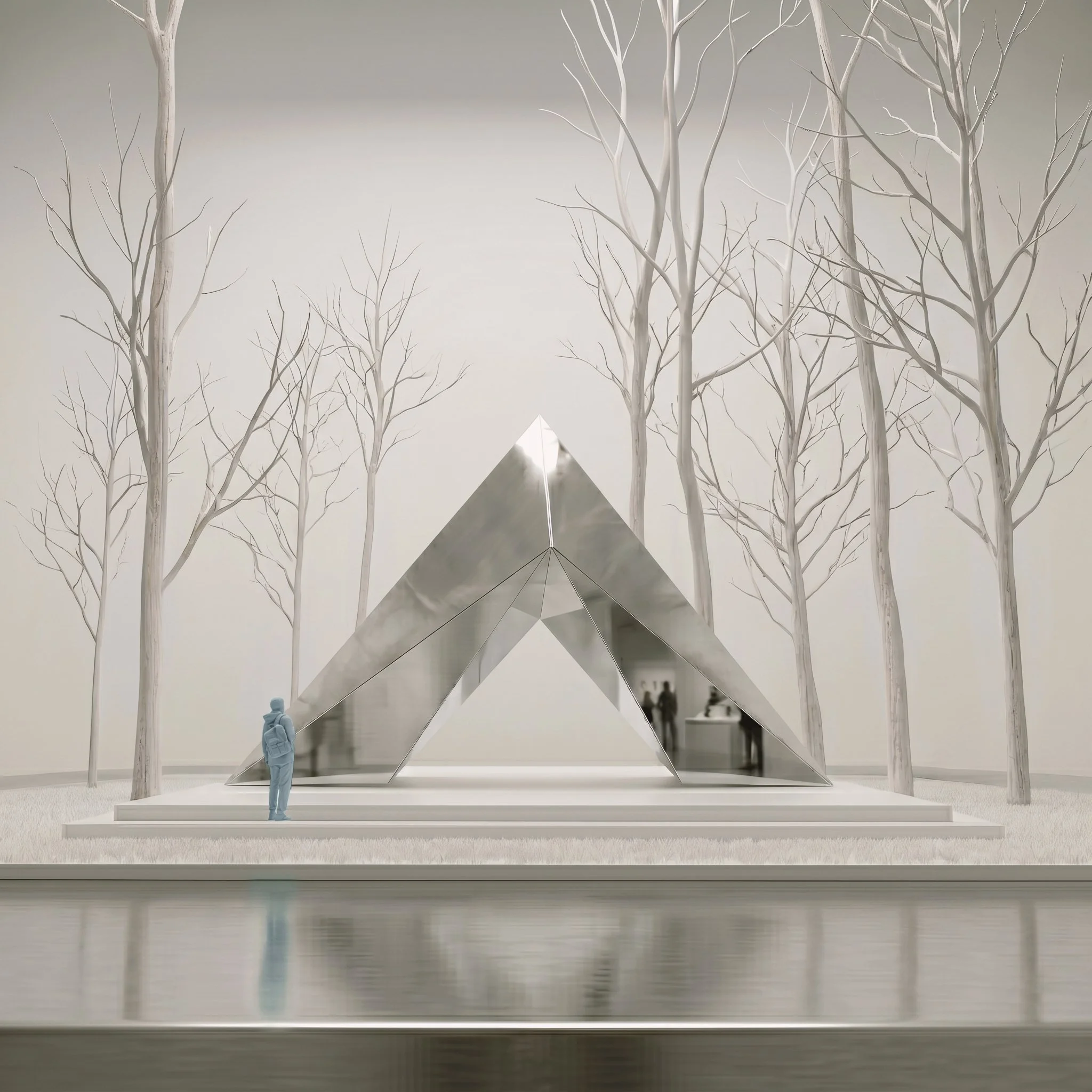
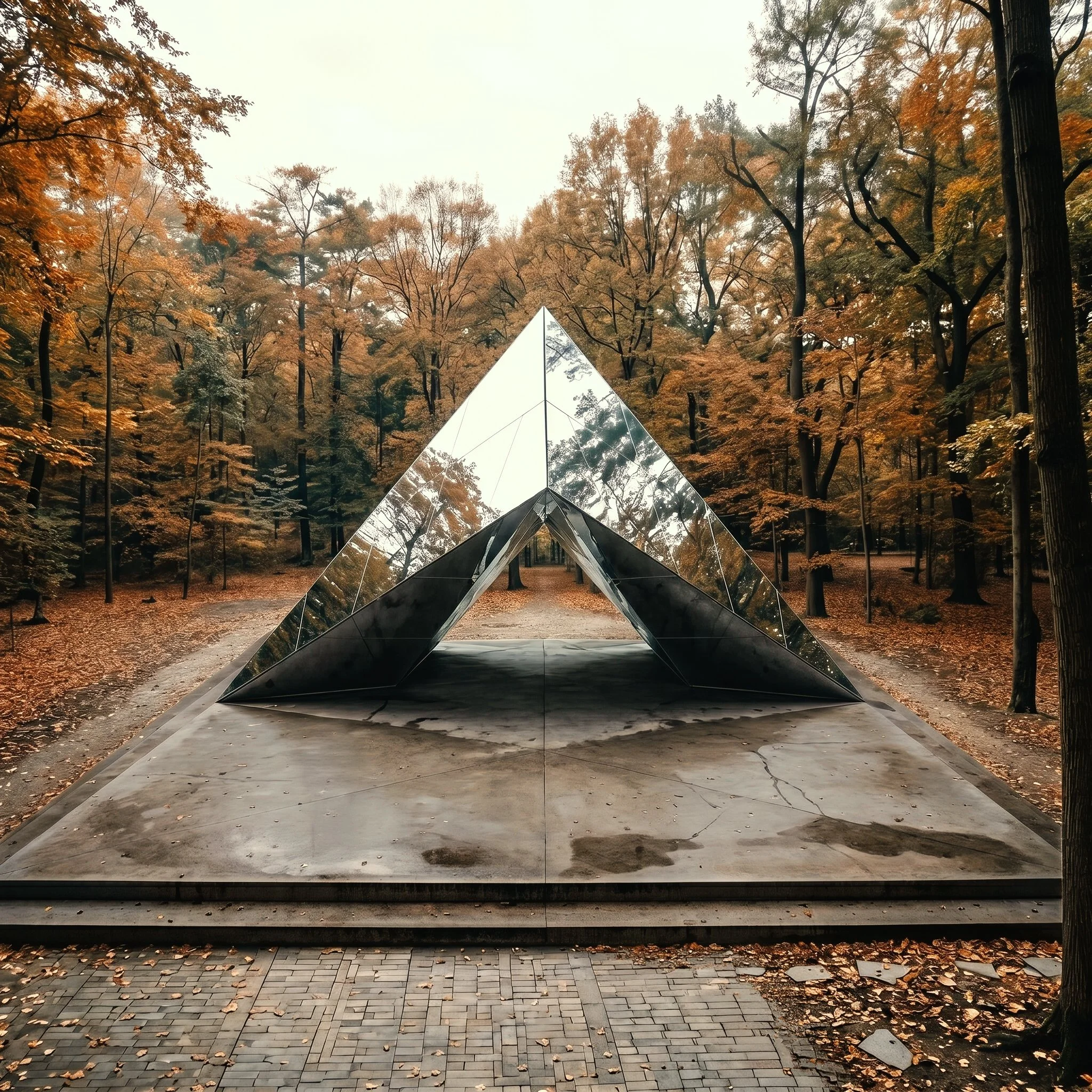
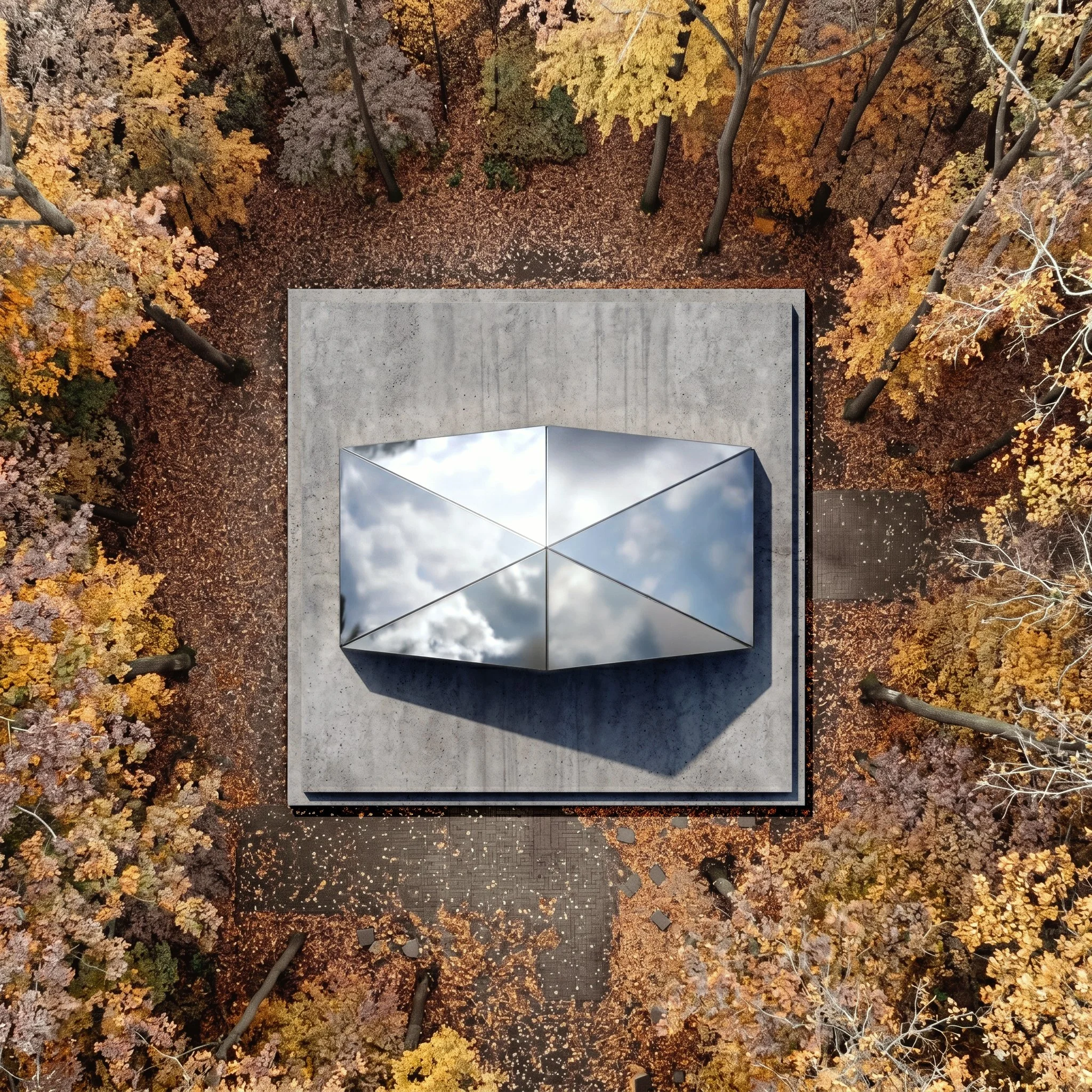
붉고 노란 가을의 숨결이 내려앉은 숲의 한가운데, 날카로운 거울의 능선이 솟아 있다. 차가운 직선과 대칭의 기하학은 유기적으로 확장된 자연과 선명한 대비를 이루지만, 결코 그 흐름을 끊지 않는다. 이 구조물은 시선을 차단하는 벽이 아니라, 숲의 무한한 연속성을 드러내기 위해 풍경을 잠시 멈추고 다차원의 평면으로 압축하는 장치이다. 반사되는 은빛 표면 위에서 나무의 수직성과 하늘의 깊이, 낙엽의 색채는 쉼 없이 꺾이고 겹쳐진다. 끝없이 이어지던 숲은 구조물을 경계로 여러 갈래로 접히고, 익숙했던 풍경은 이내 낯설고 매혹적인 질서로 재구성되어 우리가 전에 없던 감각을 마주하게 한다.
중앙의 틈을 따라 내부로 걸음을 내딛는 순간, 방문자는 접혀진 풍경의 단면 속을 거닐며 자연을 끝없이 투영하는 빛의 메아리를 체험한다. 은빛 표면 위에 포개어진 숲과 자신의 모습은 관찰자와 대상, 영구함과 찰나 사이의 경계를 흐리며, 건축을 수동적으로 보는 것에서 환경과의 관계망 속에서 주체적으로 경험하는 것으로 전환한다. 이곳은 가을의 시간이 공간을 구부려 스스로를 포개어 둔, 숲의 가장 고요하고 은밀한 틈새이다.
© INTERFACE STUDIOS 2026, ALL RIGHTS RESERVED
Folded Landscape
A Cleft in the Forest
Architecture binds humanity and the environment. Set against the vast canvas of the forest, this pavilion acts as a delicate medium bridging object and background. Where nature provides the sensory realm and we provide the interpretation, architecture intervenes to weave entirely new layers of experience. It deepens this bond by reimagining the landscape itself.
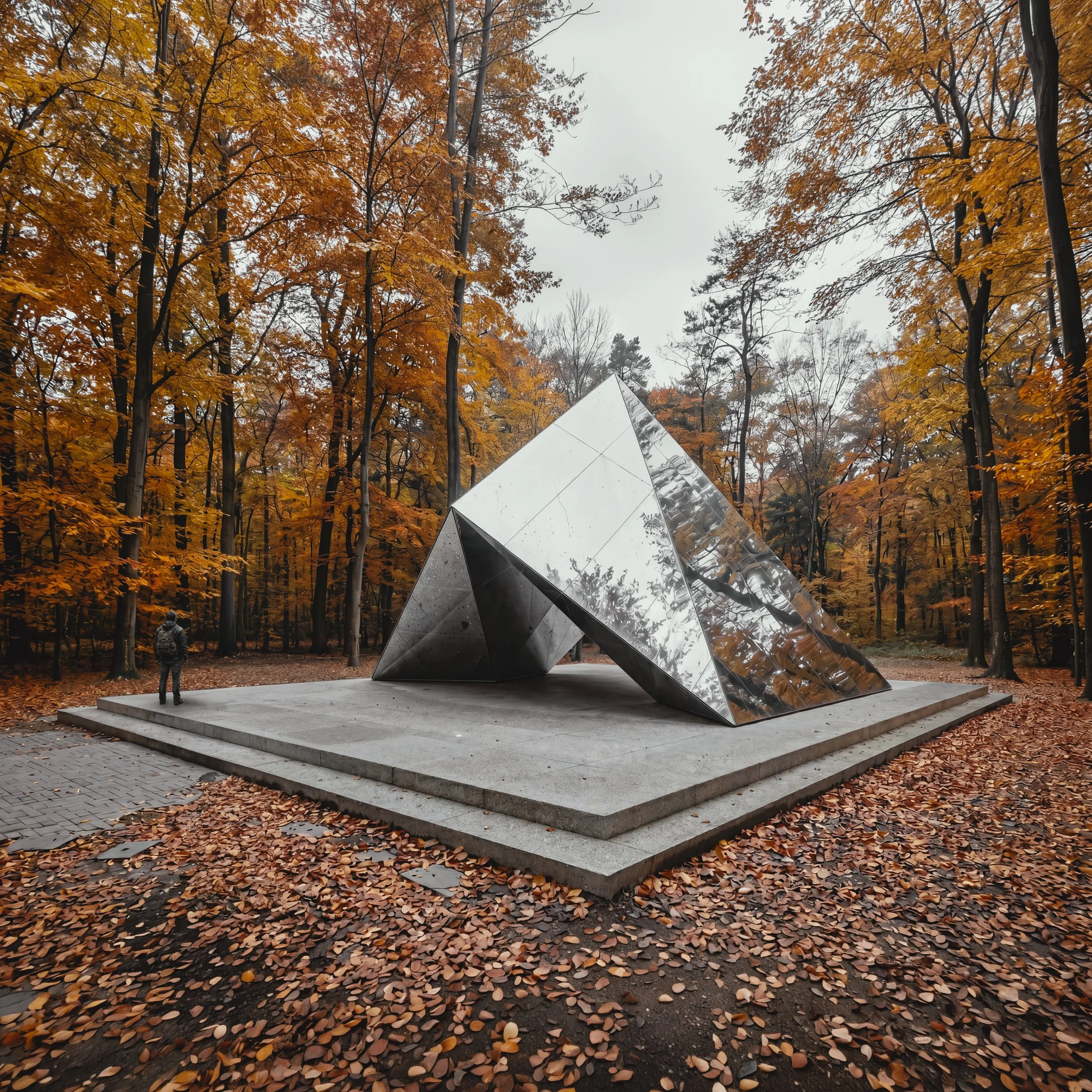
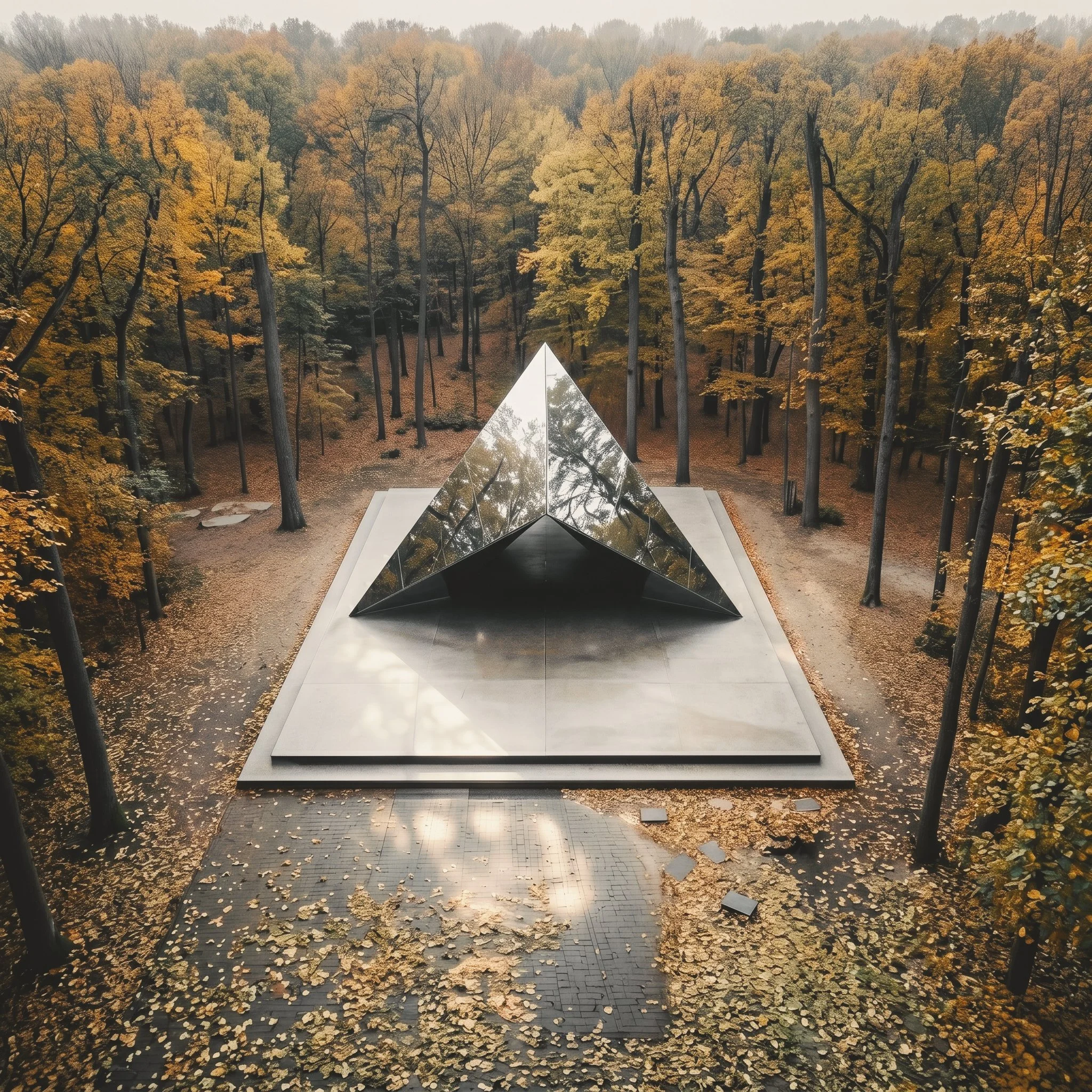
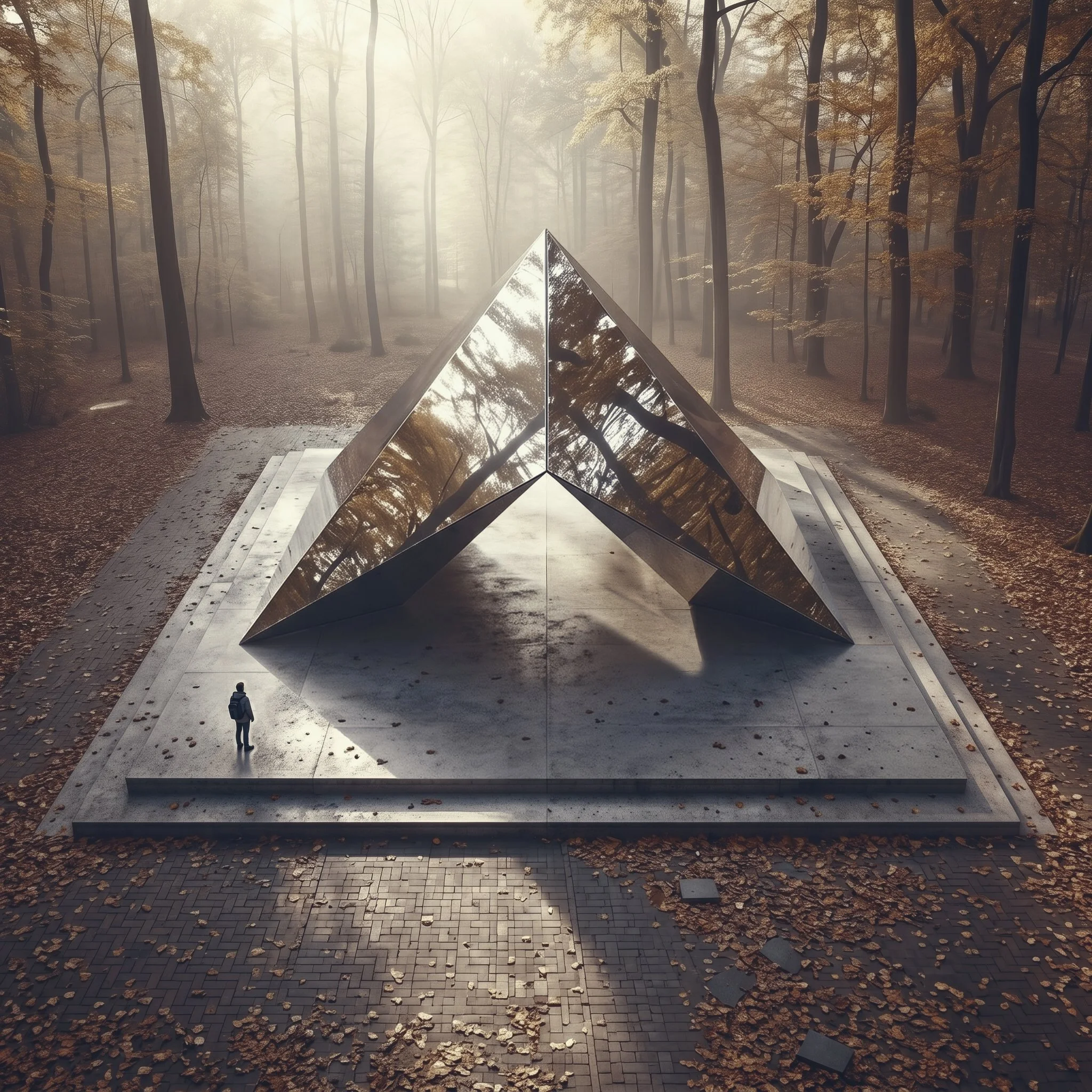
In the heart of the autumn woods, a sharp mirrored ridge rises. Its cold, symmetrical geometry boldly contrasts with organic nature, yet never severs its flow. Rather than a wall that obstructs, it is a device that momentarily pauses and compresses the scenery into multidimensional planes. Upon its silver surface, trees, the sky, and fallen leaves endlessly bend and overlap. The boundless forest folds along this boundary, shifting the familiar into a captivating new order that awakens unprecedented sensations.
Stepping into the central cleft, visitors walk through a cross-section of this folded landscape, immersed in echoes of light. Reflections of the woods and the self blur the lines between observer and object, between eternity and the fleeting moment. Here, architecture is no longer passively viewed, but actively experienced. This is the quietest, most intimate cleft in the forest—a place where autumn time bends space to fold in upon itself.