
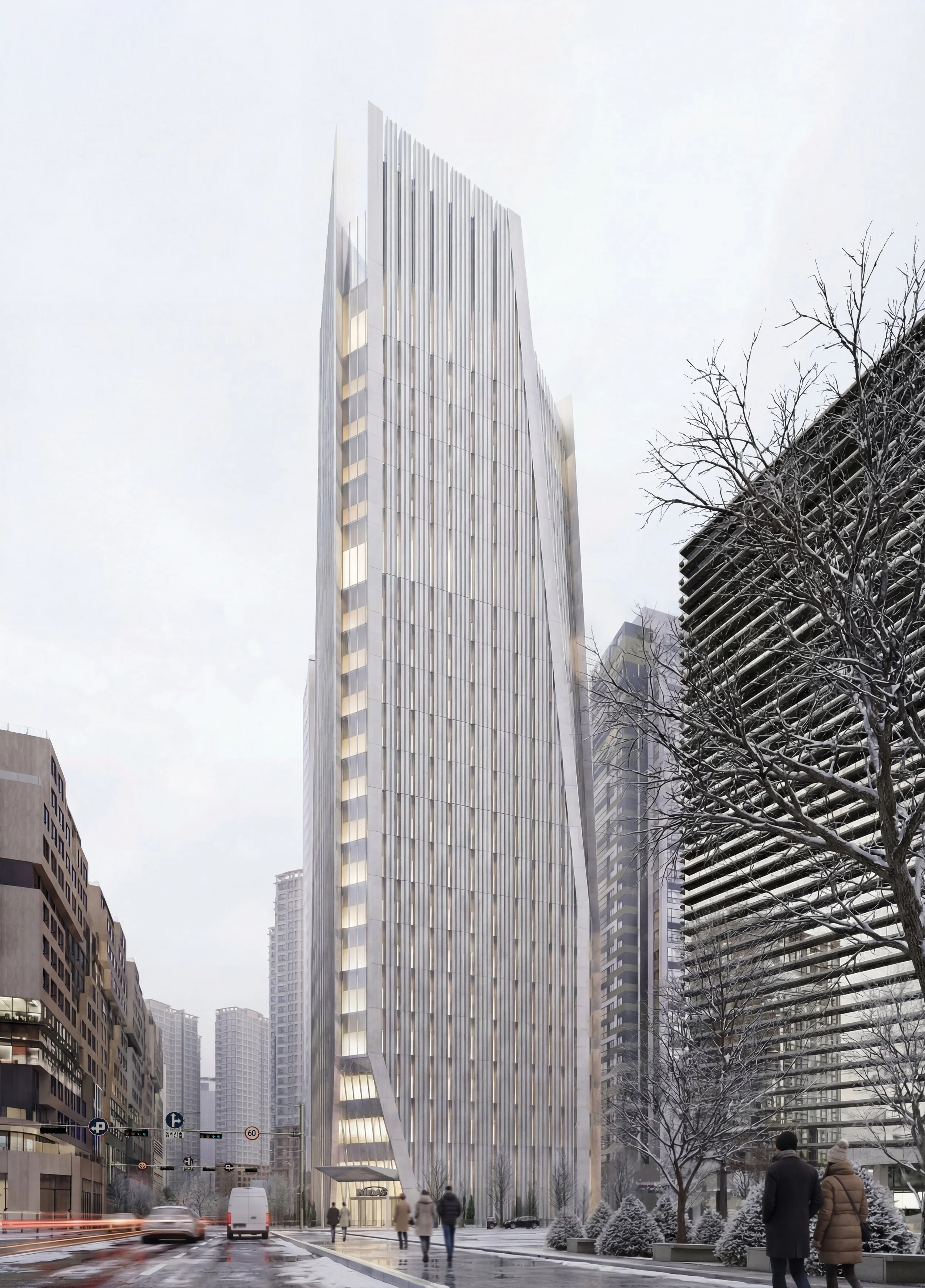
수직의 아고라: 인간과 수평적 소통을 향한 고전의 비례
대지는 판교 테크노밸리에서 남측으로 이어지는 수도권 IT·비즈니스 클러스터의 연장선에 놓여 있다. 대기업 사옥과 테크 기업이 집적된 이 업무 벨트는 일대를 고밀도 복합지구로 빠르게 재편해 왔다. 고속도로의 속도와 정자동의 차분한 리듬이 맞닿는 이 경계는, 혁신의 논리를 공간 언어로 번역하는 새로운 건축적 서사를 요구한다.
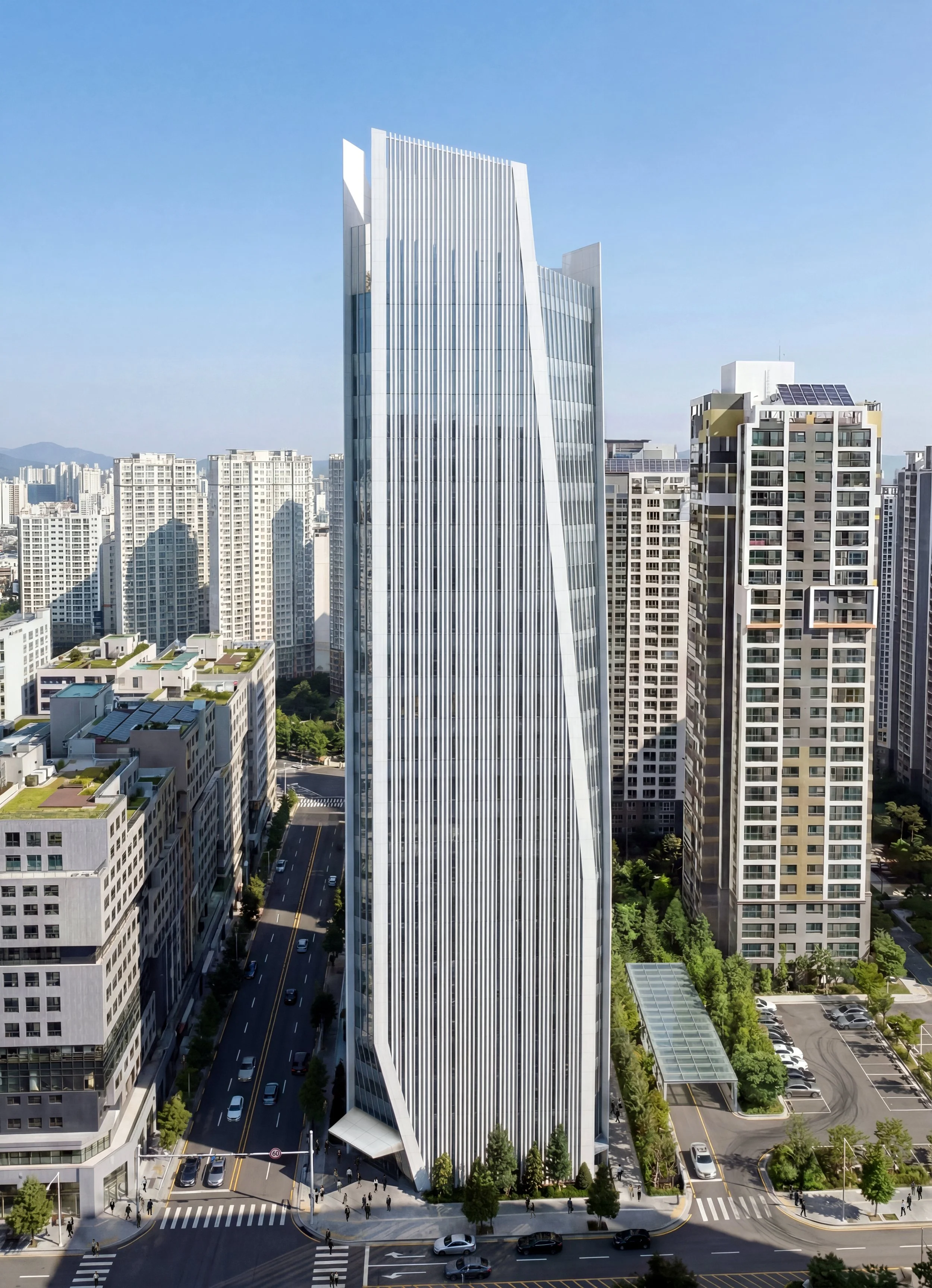
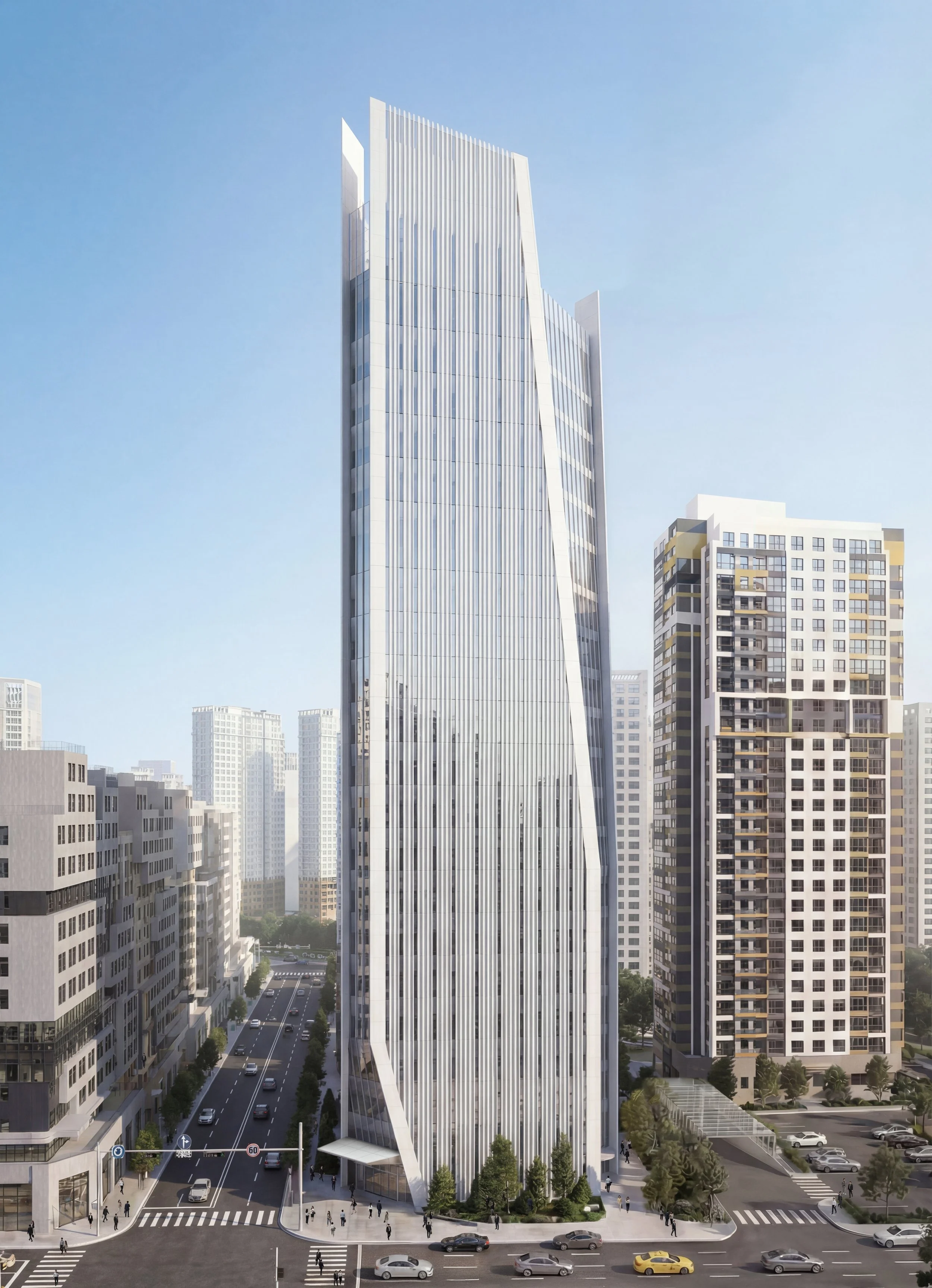
기하학적 질서와 효율이 지배하는 주변 도시 스케일에 대응하여, 이 프로젝트는 '수직의 아고라'라는 비전 아래 고전 건축의 공간 논리를 현대적 물성과 조형 언어로 재해석한다. 그 핵심은 '인간을 향한 고전적 비례'의 회복이며, 이는 기업의 경영철학인 자연주의 인본사상과 맞닿아 있다. 대지에서 솟아 하늘로 상승하는 타워의 층위는 GFRC 패널과 유리의 유기적 결합을 통해 극적인 시각적 전이를 구현하며, 조직의 문화적 맥락과 환경적 요구에 동시에 응답한다.
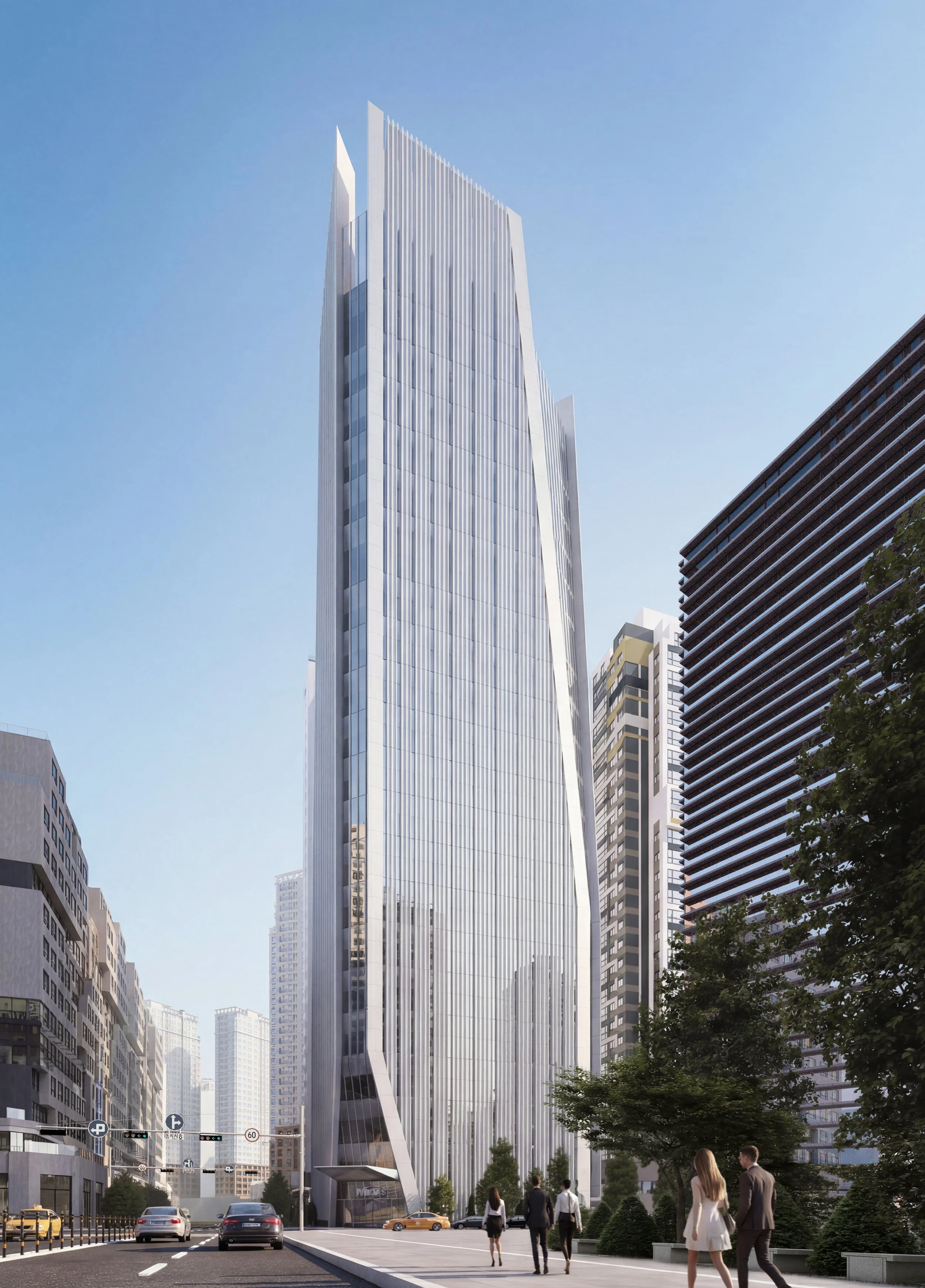
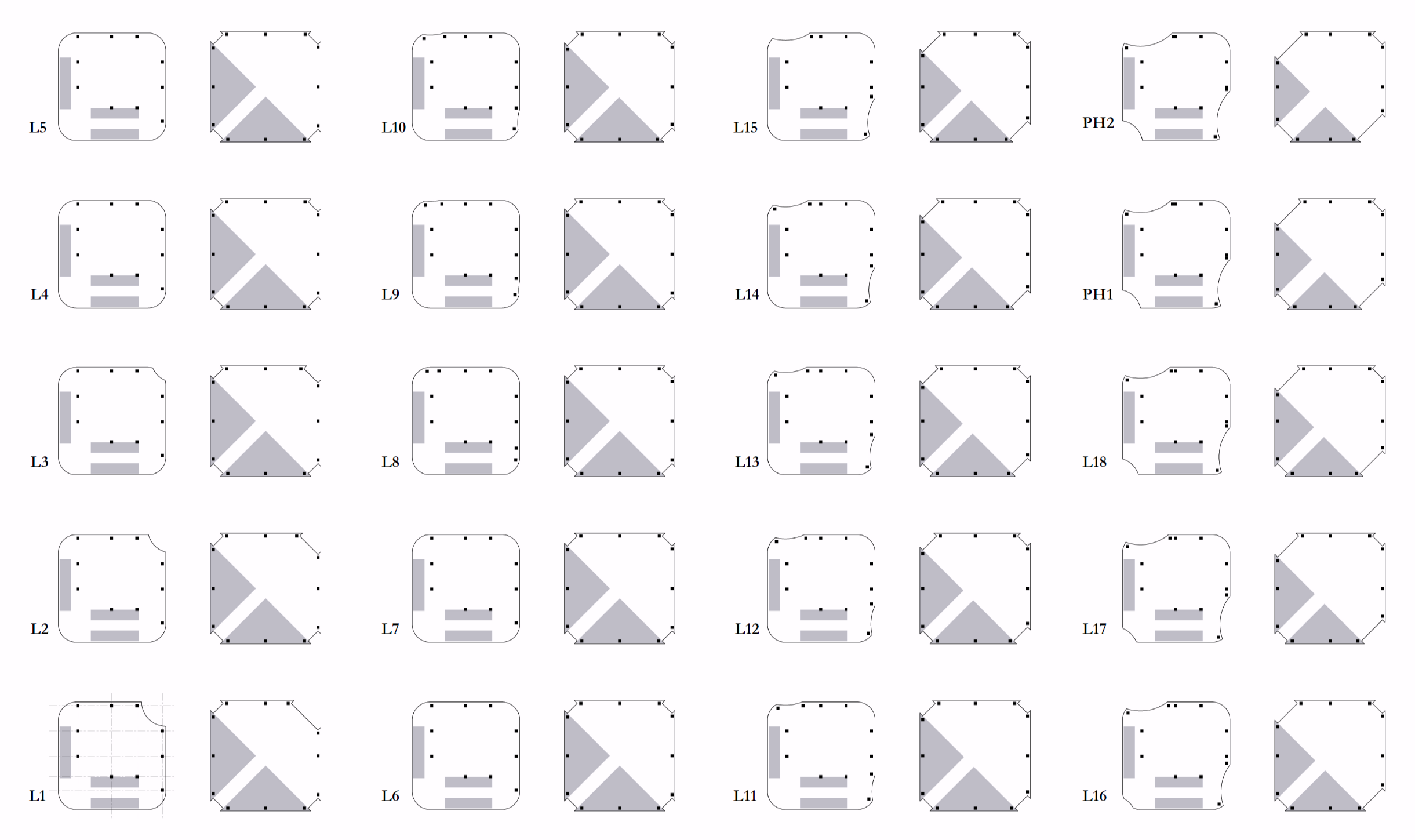
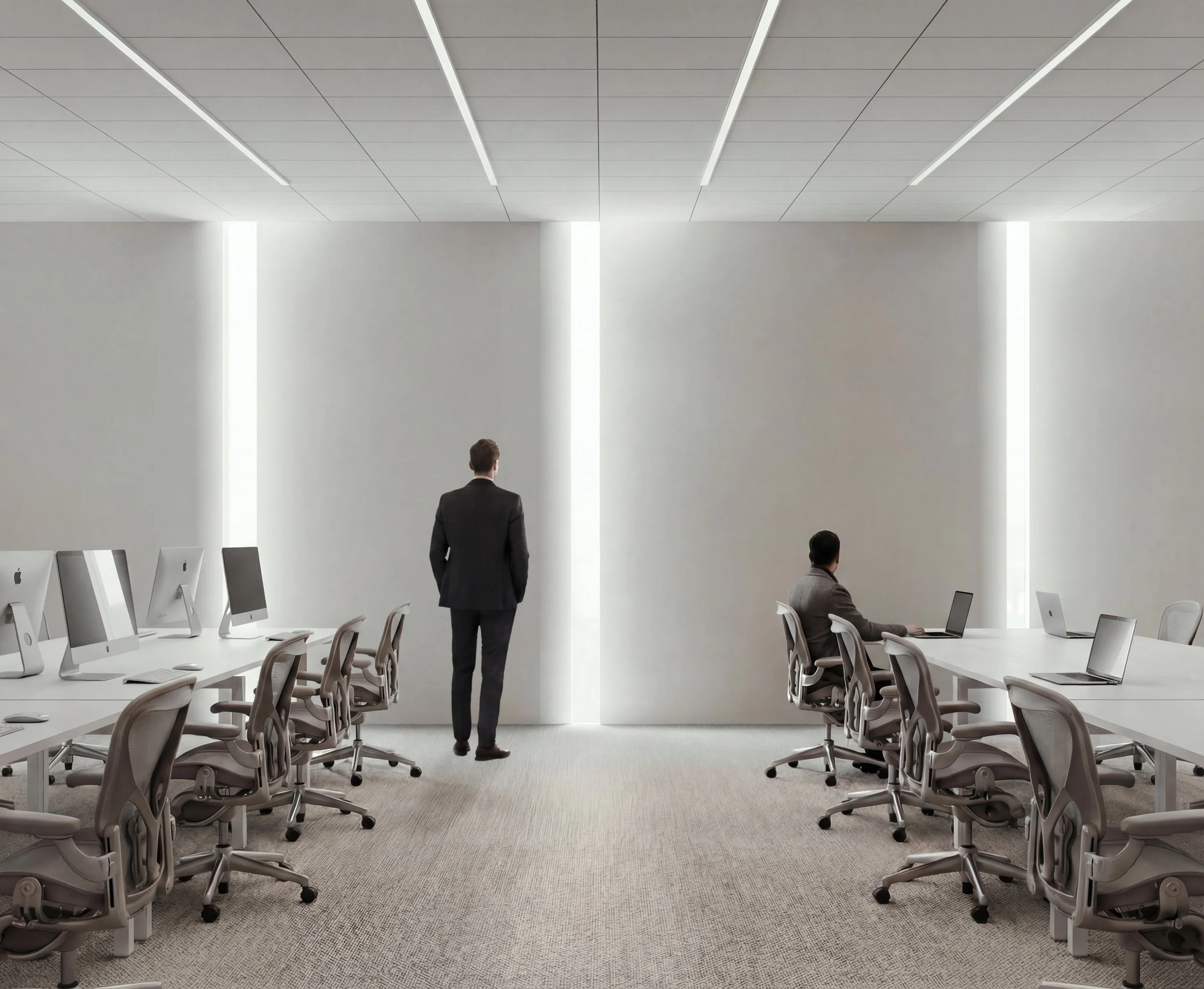
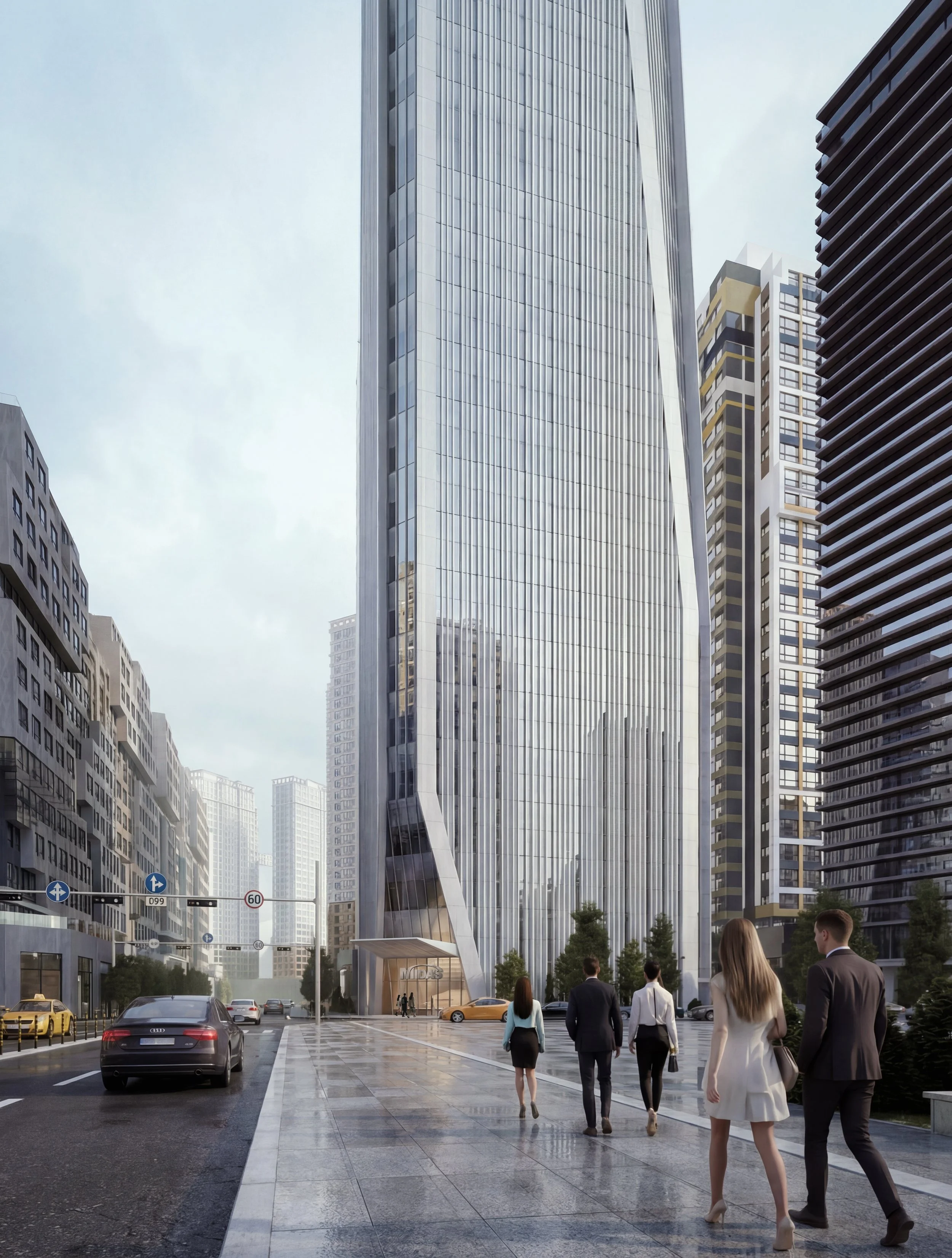
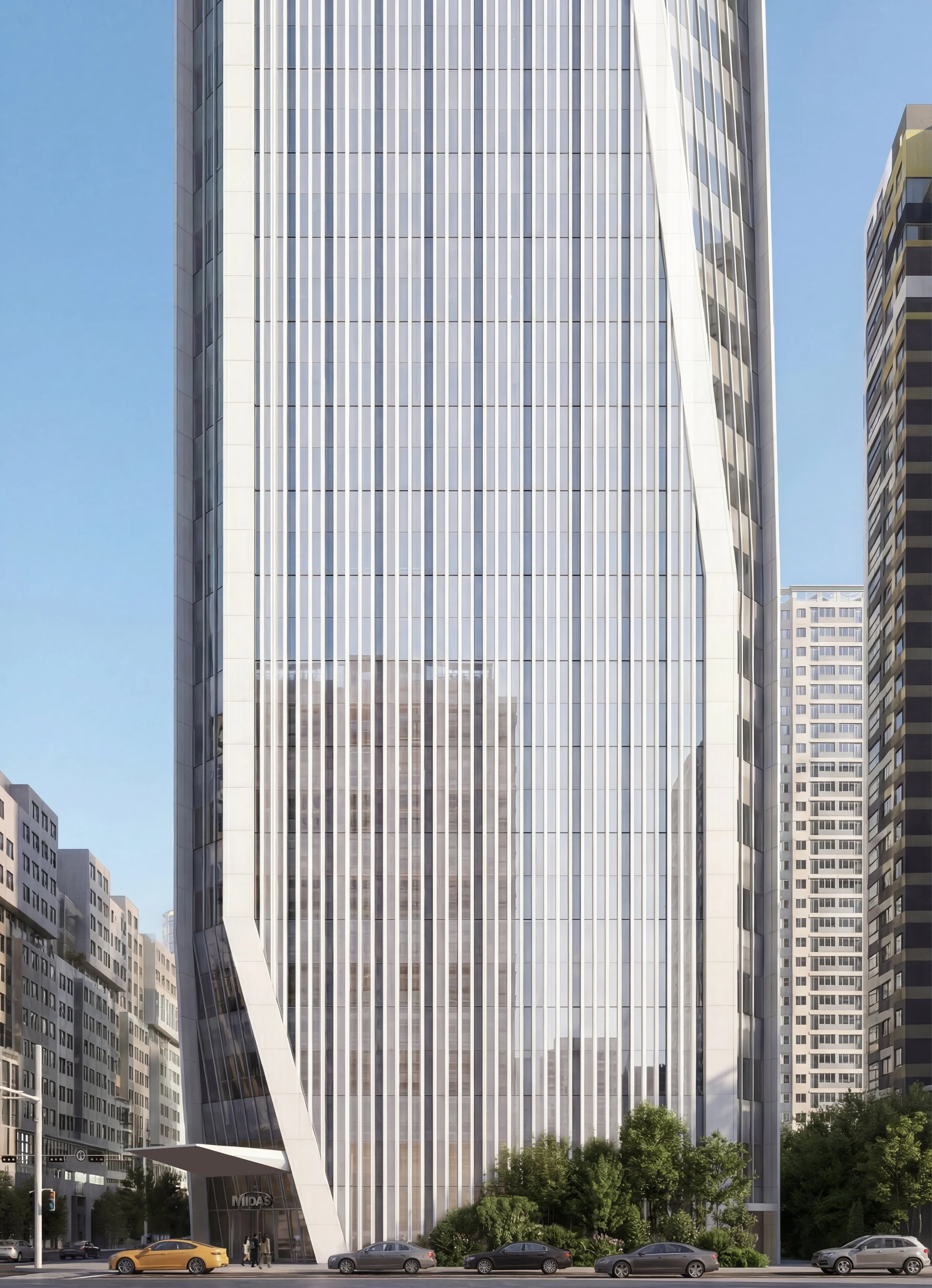
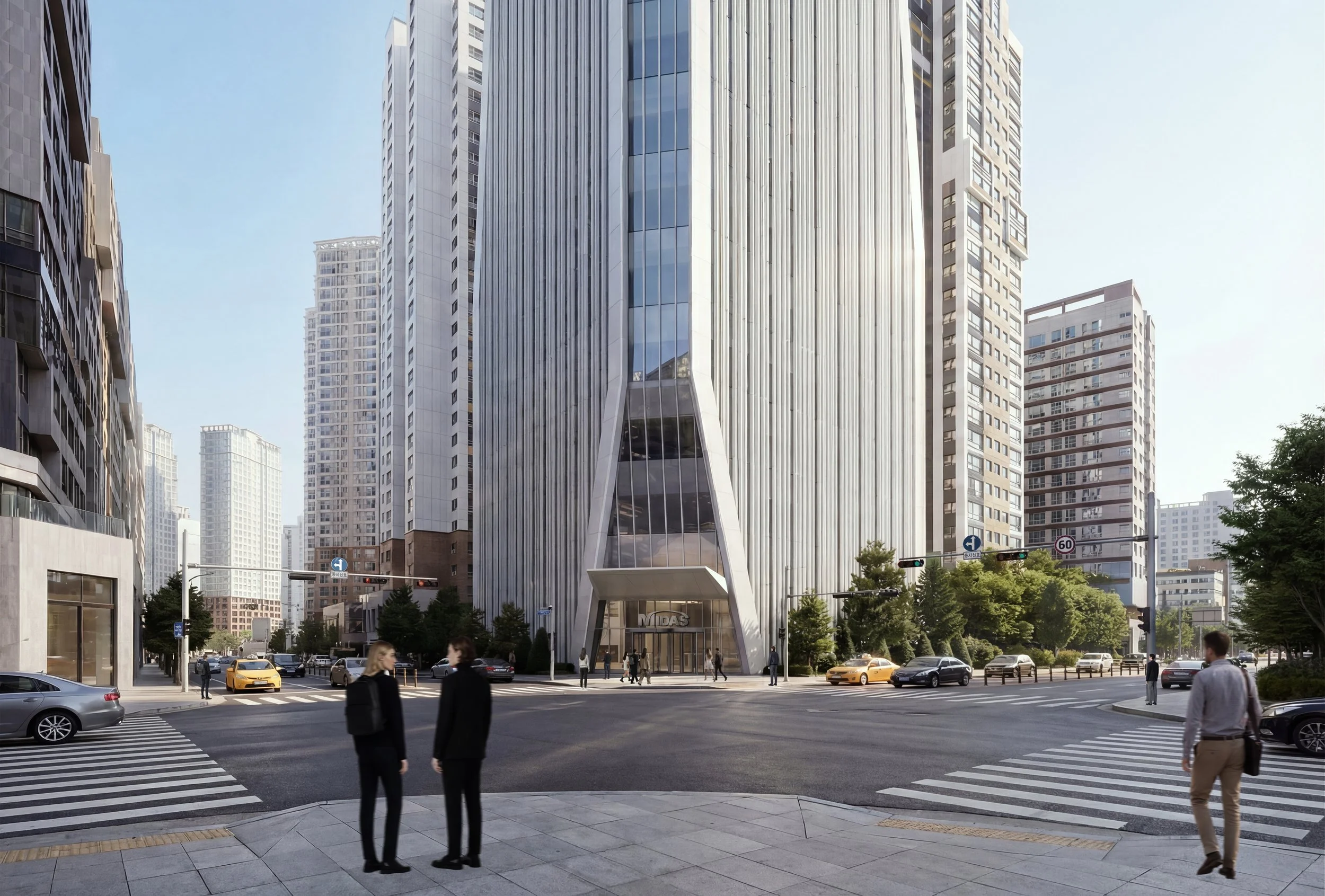
타워는 별도의 기단 없이 대지에 직접 안착한다. 경계를 지우는 이 결정은 건축을 보행자의 흐름과 연속시키기 위한 첫 번째 건축적 선언이다. 주출입구를 감싸는 브론즈 멀리언은 시간의 깊이를 머금은 물성으로 차가운 도시 맥락에 따뜻한 밀도를 더하며, 대지의 조경과 공간의 흐름은 8m 층고의 로비로 자연스럽게 이어진다. 내부 코어에는 입면과 동일한 오목한 형태가 축소된 스케일로 반복되어 내외부를 하나의 건축 언어로 연결한다. 이러한 스케일의 변주는 구조체의 무게감을 덜어내는 동시에 수직적 상승감을 더욱 선명하게 강조하고, 전면 개방된 로비는 기업과 지역 공동체, 건축과 도시 사이의 경계를 해체하는 소통의 아고라로 기능한다.
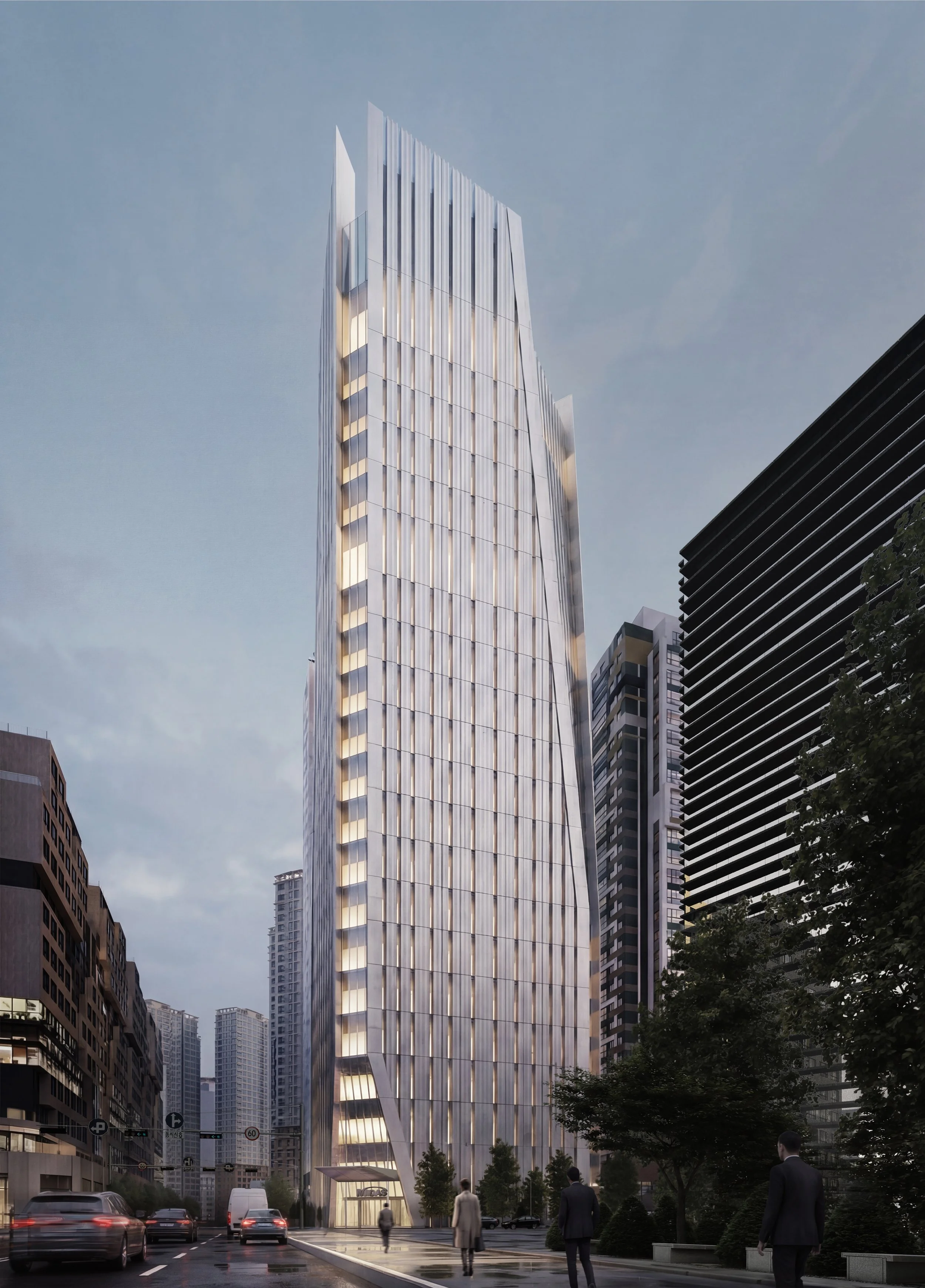
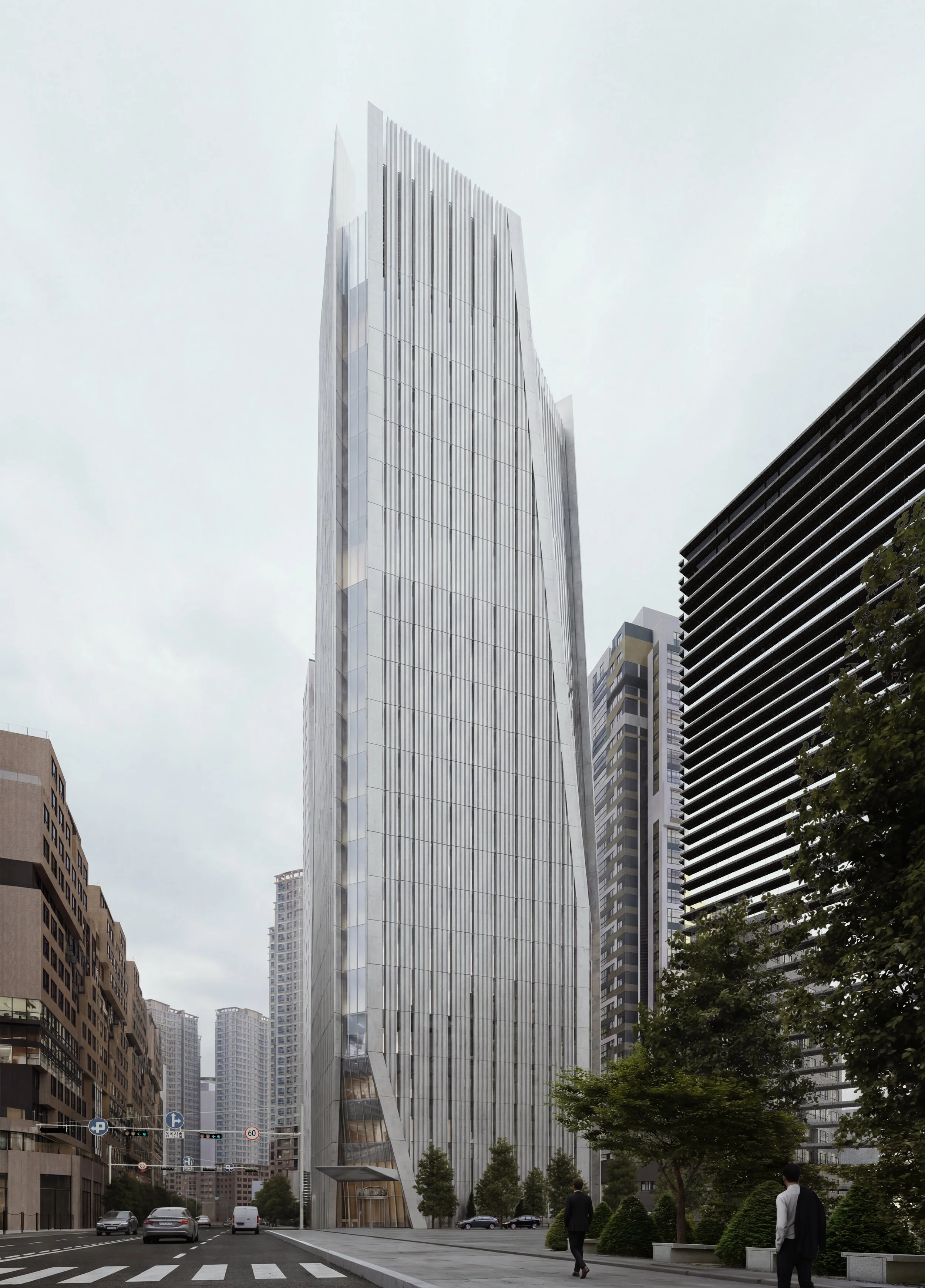
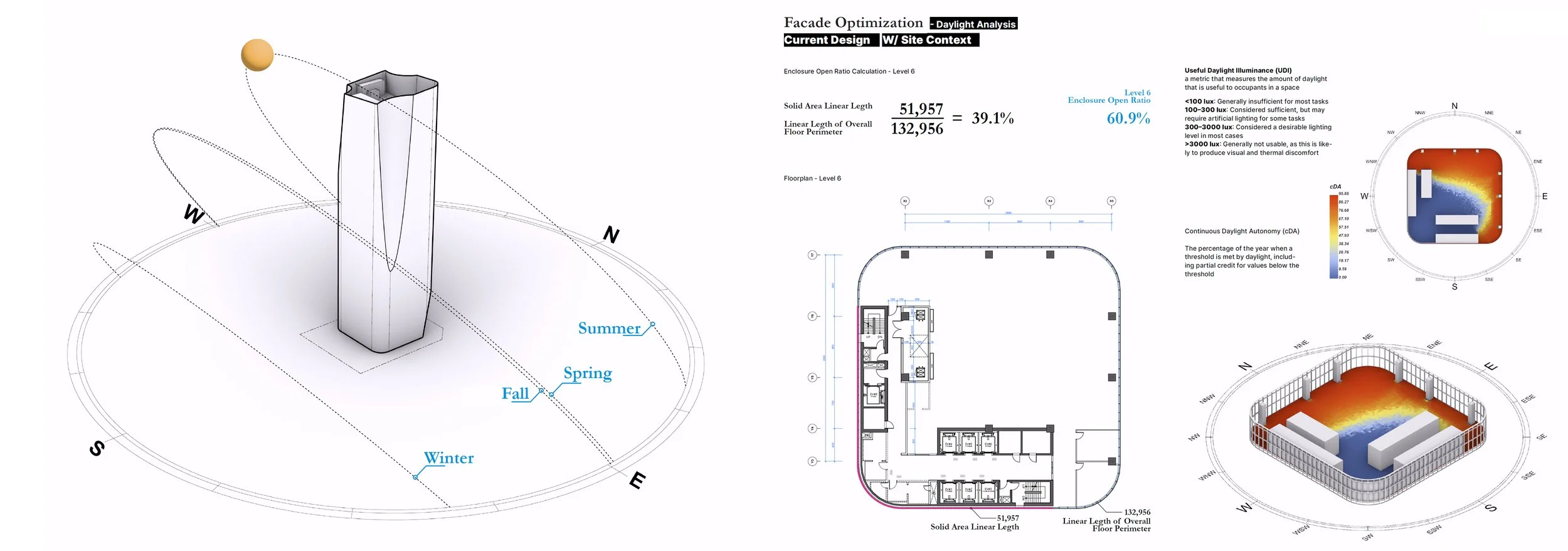
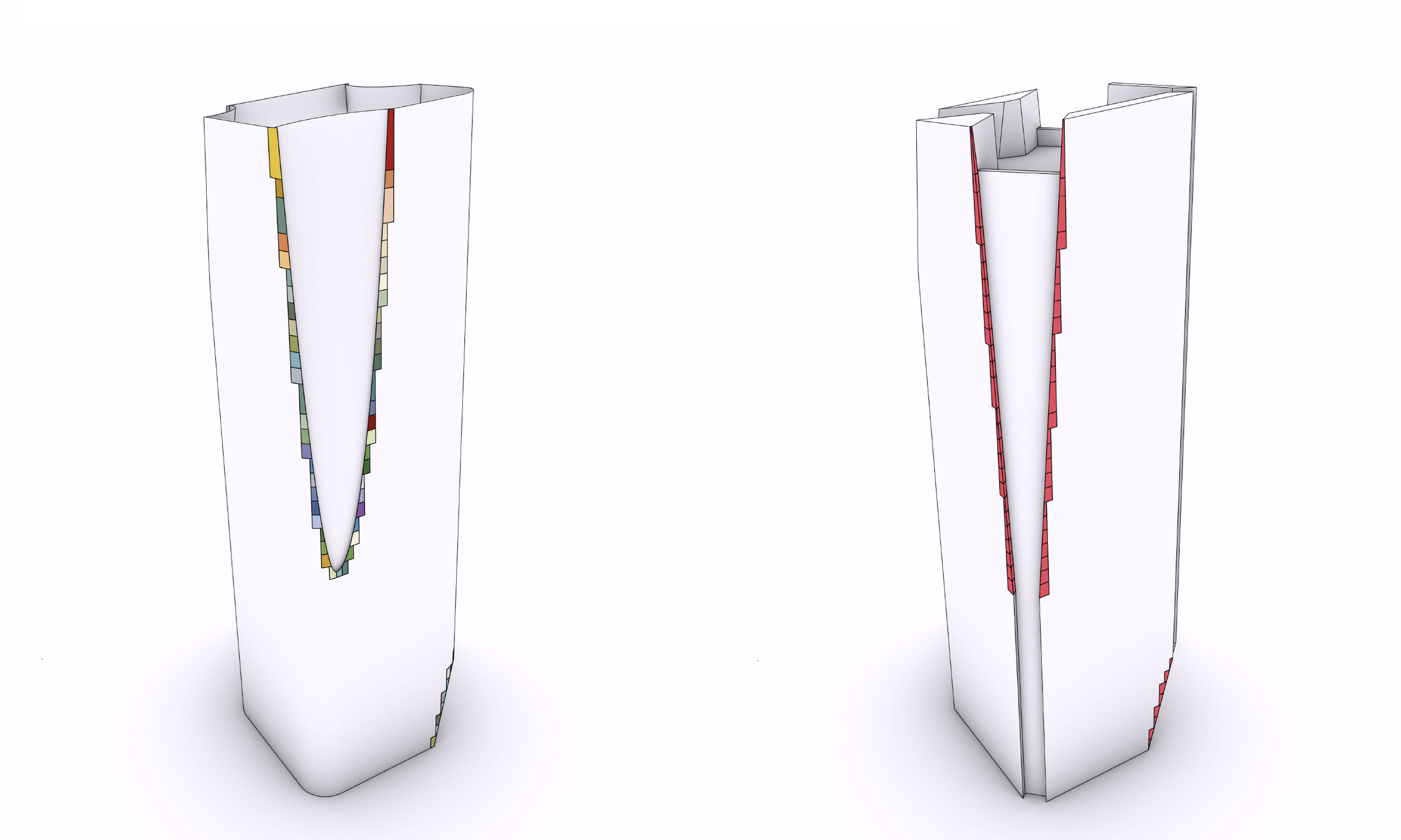
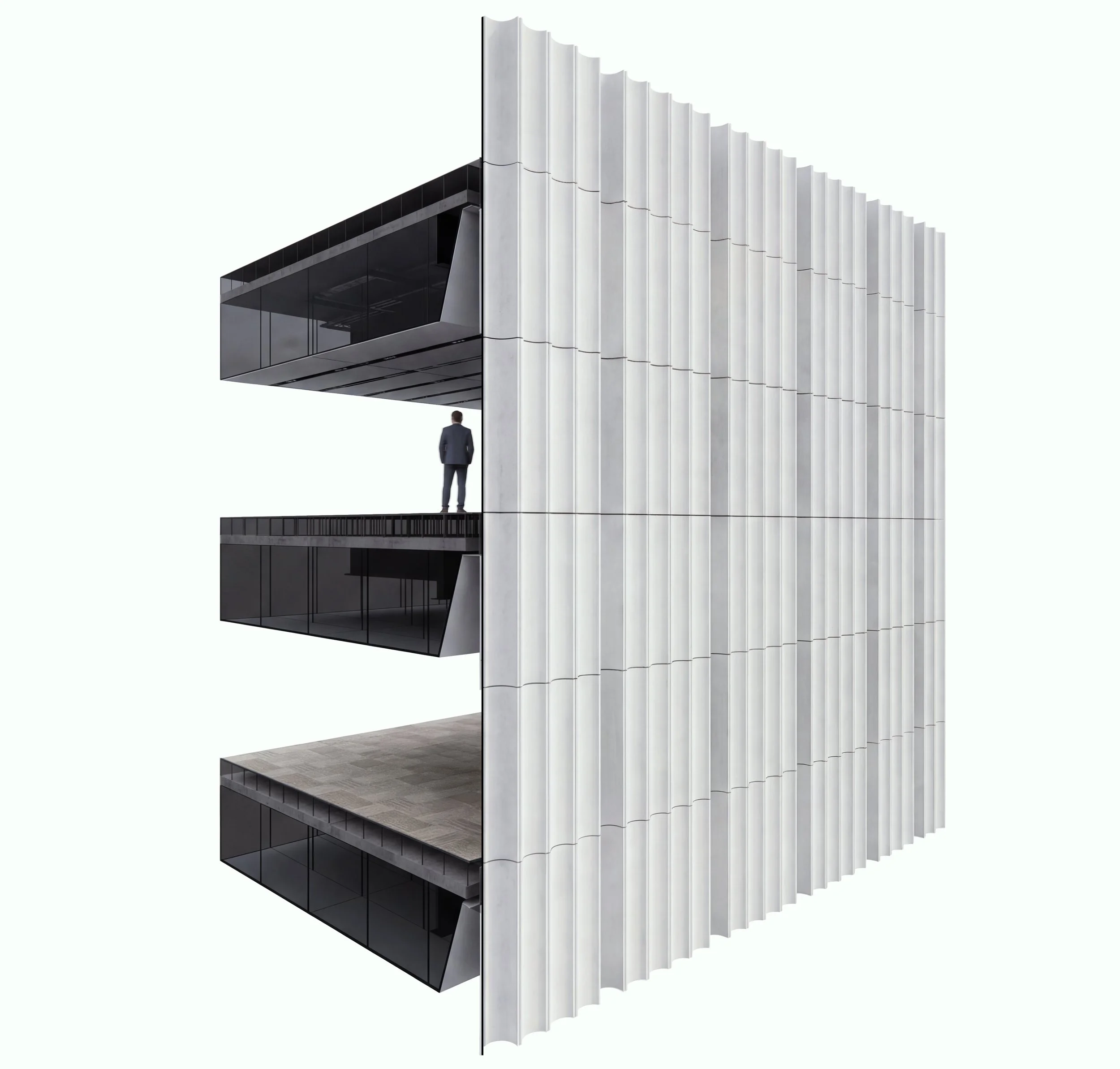
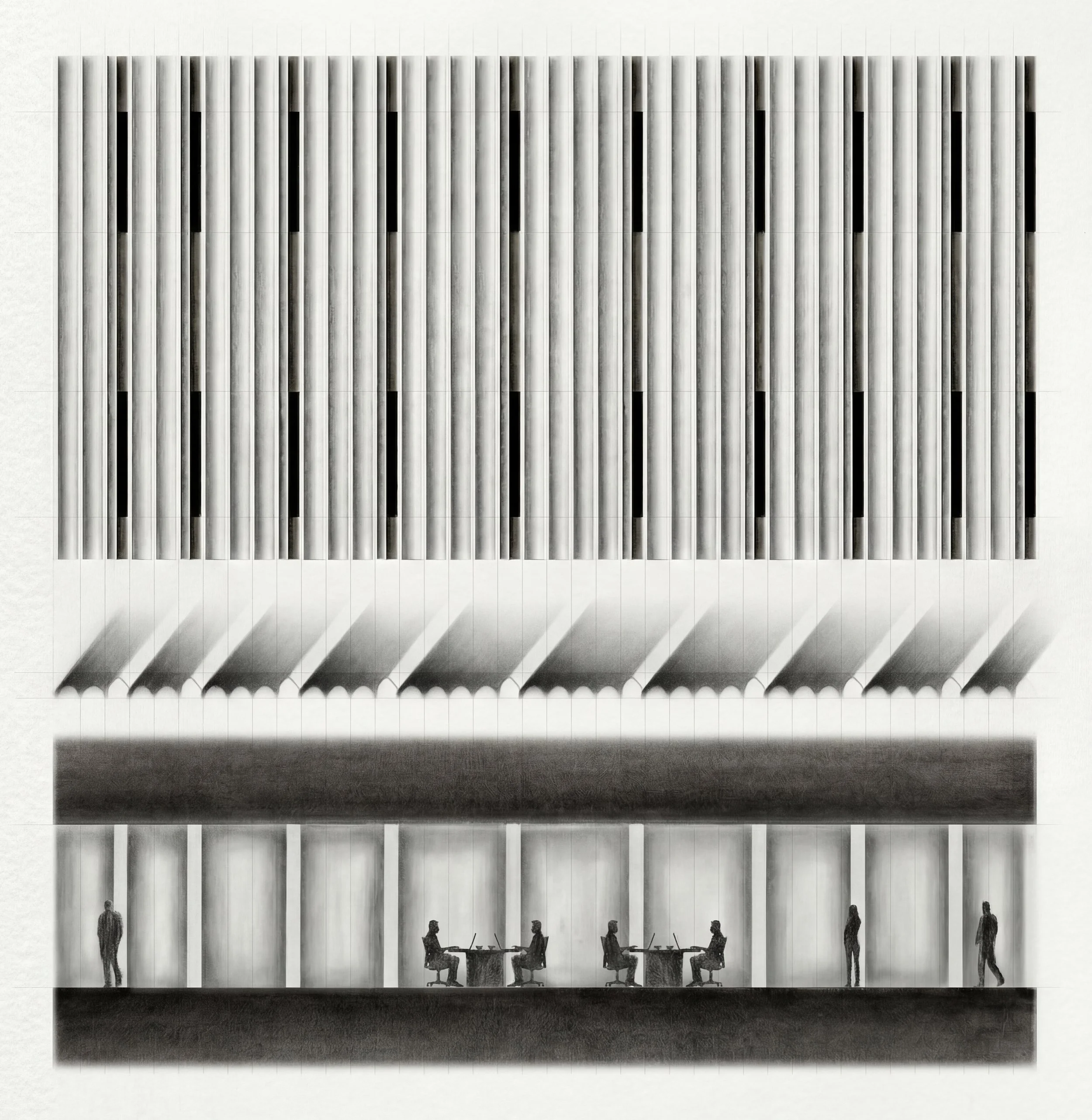
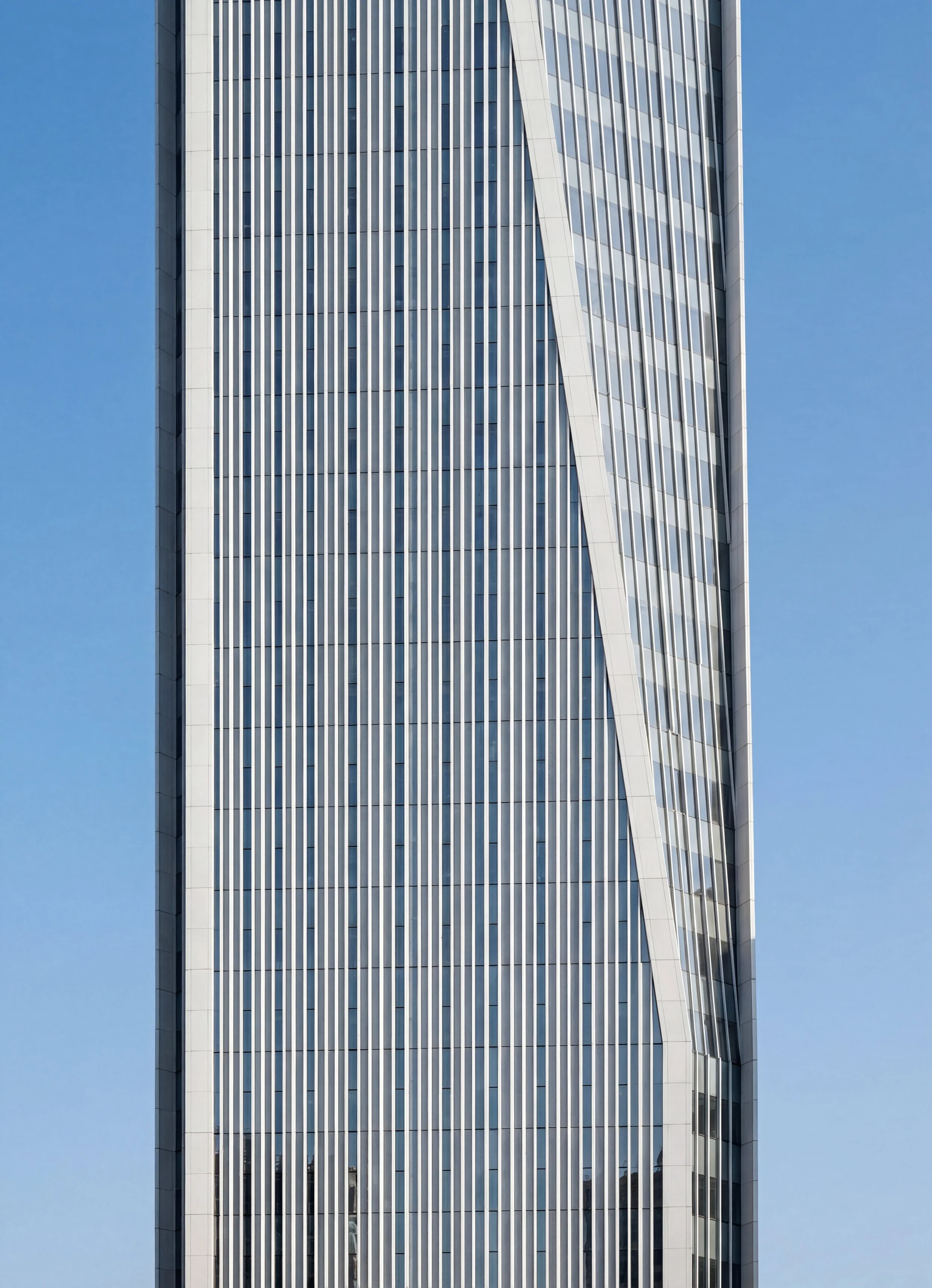
평면적 유리 상자의 관습을 거부하는 타워의 외피는 오목한 형태를 품은 입체적 GFRC 패널로 구성된다. 수직으로 연속되는 이 입면은 오더의 비례와 빛의 변주를 현대적으로 해석한 결과이다. 오목한 입면 모듈은 플루팅(fluting)을 현대적 건축 스케일과 리듬으로 치환하며, 모듈 사이에는 유리가 간헐적으로 배치된다. 입체적 GFRC 패널과 사선으로 기운 유리면은 일사광을 저감하고 시선의 깊이를 조율하여 내부의 프라이버시를 확보하는 동시에 단열 성능을 극대화하는 정교한 환경 조절 장치로 작동한다. 태양의 궤적에 따라 입면 위로 드리워지는 그림자는 건물에 살아 있는 시간의 리듬을 부여하며, 마이다스 사옥만의 고유한 시간성을 도시에 각인한다.
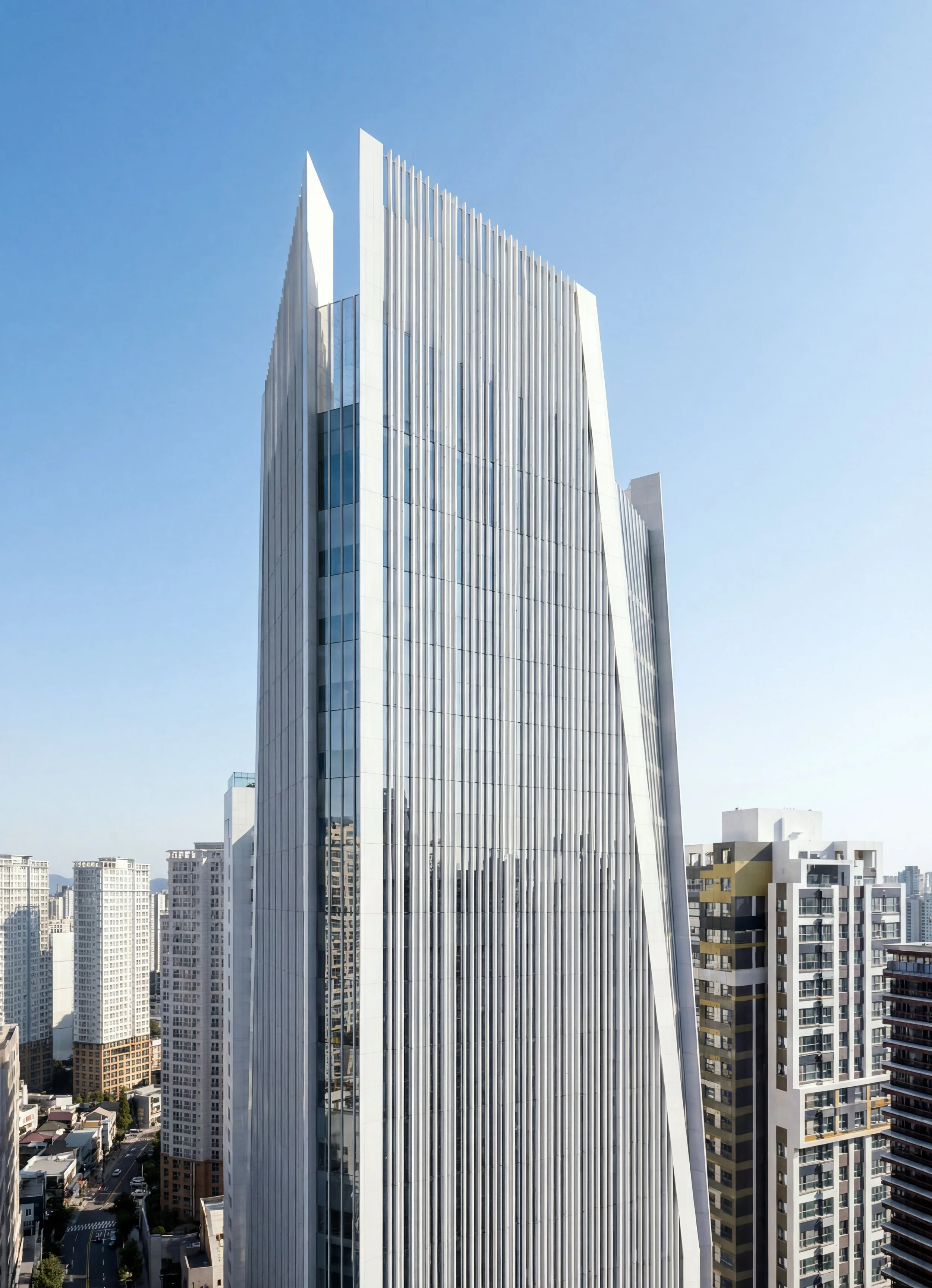
최상층에 이르러 건축은 서서히 물성을 비워낸다. 대지에서부터 수직으로 연속된 GFRC의 흐름은 최상단까지 이어진다. 이윽고 GFRC 패널 사이를 채우던 유리는 사라지고 도시를 향한 조망이 열리며, 하늘과의 경계는 희미해진다. 낮에는 구름이 입면의 틈새로 스며들고, 밤에는 내부의 빛이 은은히 새어 나와 도시를 향한 하나의 빛의 통로가 된다. 공간의 위계를 해체하고 수평적 연대를 지향하는 기업의 철학 아래, 시그니처 층은 라운지이자 이벤트 공간으로 유연하게 개방된다. 이로써 건축은 조직과 도시를 연결하는 동시에 모든 구성원을 위한 '수직의 아고라'로 완성된다.
© INTERFACE STUDIOS 2026, ALL RIGHTS RESERVED
마이다스아이티 정자동 신사옥
The site occupies the southern extension of Pangyo Techno Valley, positioned within the expanding IT and business corridor of the Seoul metropolitan region. As a concentration of major corporate headquarters and technology companies, this district has rapidly transformed into a high-density mixed-use urban fabric. Situated at the threshold where the velocity of the expressway meets the measured rhythm of Jeongja-dong, the site calls for a new architectural narrative—one capable of translating the logic of innovation into spatial form.
Responding to the geometric order and functional efficiency that define its urban context, the project reinterprets the spatial principles of classical architecture through contemporary materiality and formal expression under the vision of a Vertical Agora. At its core lies the recovery of a classical sense of human proportion, resonating with the company's philosophy of human-centered naturalism. Rising directly from the ground, the tower unfolds through a gradual interplay of GFRC panels and glass, producing a dramatic visual transition that simultaneously reflects the organization's cultural identity and responds to contemporary environmental demands.
The tower lands directly on the site without a podium. This deliberate decision serves as the project's first architectural statement, dissolving conventional boundaries between building and city while extending the continuity of pedestrian movement. Bronze mullions framing the main entrance introduce a material richness shaped by time, softening the technological character of the surrounding urban fabric. Landscape and circulation flow seamlessly into an eight-meter-high lobby, where the spatial experience begins without interruption. Within the central core, the concave geometry of the façade reappears at an interior scale, establishing a continuous architectural language between exterior and interior. This modulation of scale reduces the perceived mass of the structural frame while reinforcing the tower's upward momentum. The fully transparent lobby ultimately becomes an urban agora—a place where the boundaries between corporation and community, architecture and city, are intentionally dissolved.
Rejecting the convention of the planar glass box, the tower is enveloped by sculptural GFRC panels articulated with a concave profile. This vertically continuous façade reinterprets the proportional discipline and rhythmic expression of the classical order through a contemporary architectural language. The concave modules transform the classical notion of fluting into a larger architectural rhythm, while glass is selectively inserted between the solid elements. Together, the three-dimensional GFRC panels and inclined glazing operate as a finely calibrated environmental system, reducing solar heat gain, regulating visual depth, enhancing privacy, and maximizing thermal performance. As sunlight moves across the building throughout the day, shifting shadows animate the façade with a temporal rhythm, giving the MIDAS headquarters a distinct architectural presence that changes with time.
At the uppermost level, architecture gradually begins to dematerialize. The vertical continuity of the GFRC envelope, rising uninterrupted from the ground, extends to the summit before its material presence slowly gives way. Glass disappears from between the structural frames, opening uninterrupted views toward the city as the boundary between architecture and sky becomes increasingly indistinct. During the day, clouds drift through the openings of the façade; at night, soft interior light filters outward, transforming the crown into a luminous beacon above the city. Guided by a corporate philosophy that values openness, equality, and horizontal collaboration, the signature floor is conceived as a flexible lounge and event space shared by all members of the organization. Here, the project reaches its conclusion as a Vertical Agora—an elevated civic space that connects architecture with the city and the organization with its people.
Vertical Agora: Classical Proportions for Humanity & Horizontal Communication
MidasIT Headquarters Tower
Location 63, Jeongja-dong, Bundang-gu, Seongnam-si, Gyeonggi-do, Republic of Korea
Programme Office, Educational Research Facilities, Cultural and Assembly Facilities
Site Area 2,832.2 m2
Building Area 1,465.71 m2
Gross floor Area 33,586.89 m2
Building Scope 20F, 7 basement floors
Parking 223
Height 119.87 m
Building to land ratio 51.75 %
Floor area ratio 673.85 %
Structure Composite - Steel Frame, RC
Exterior finishing GFRC, Painted aluminum panel
Interior finishing Limestone, granite, artificial stone, eco‐friendly paint
© INTERFACE STUDIOS 2026, ALL RIGHTS RESERVED