마이다스아이티 정자동 신사옥
타워와 도시를 매개하는 연속된 인터페이스: 수직적 상징에서 수평적 경험으로의 확장
본 프로젝트의 핵심 과제는 타워의 수직적 질서와 저층부의 수평적 확장을 하나의 통합된 건축 언어로 구축하는 데 있다. 수직의 상징성은 대지의 흐름과 도시적 경험을 통해 수평으로 연장되며, 개별적으로 인식되던 요소들은 하나의 연속된 공간 체계로 재편된다.
주출입구: 상징적 아이덴티티의 전이 (Identity & Visibility)
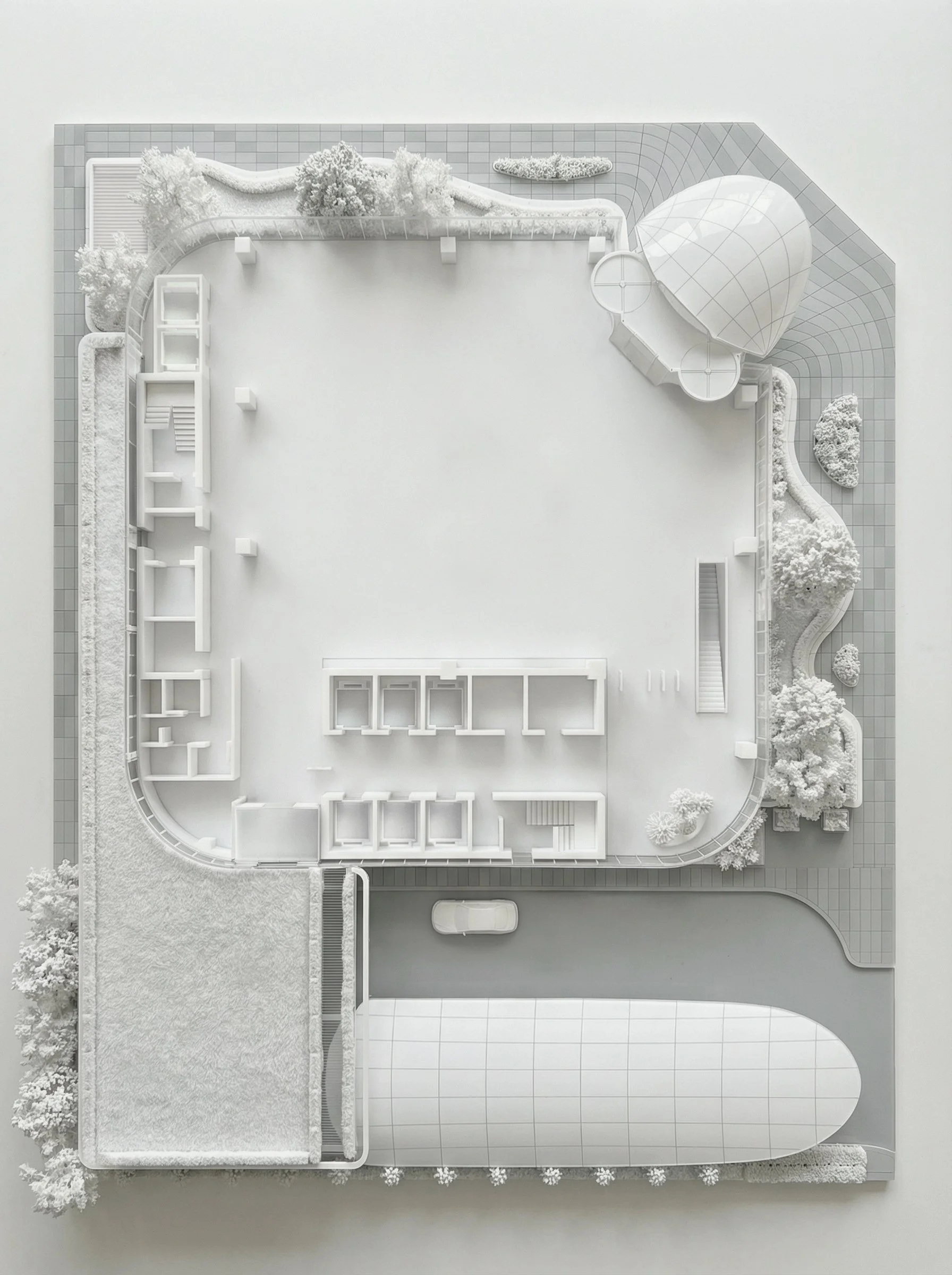
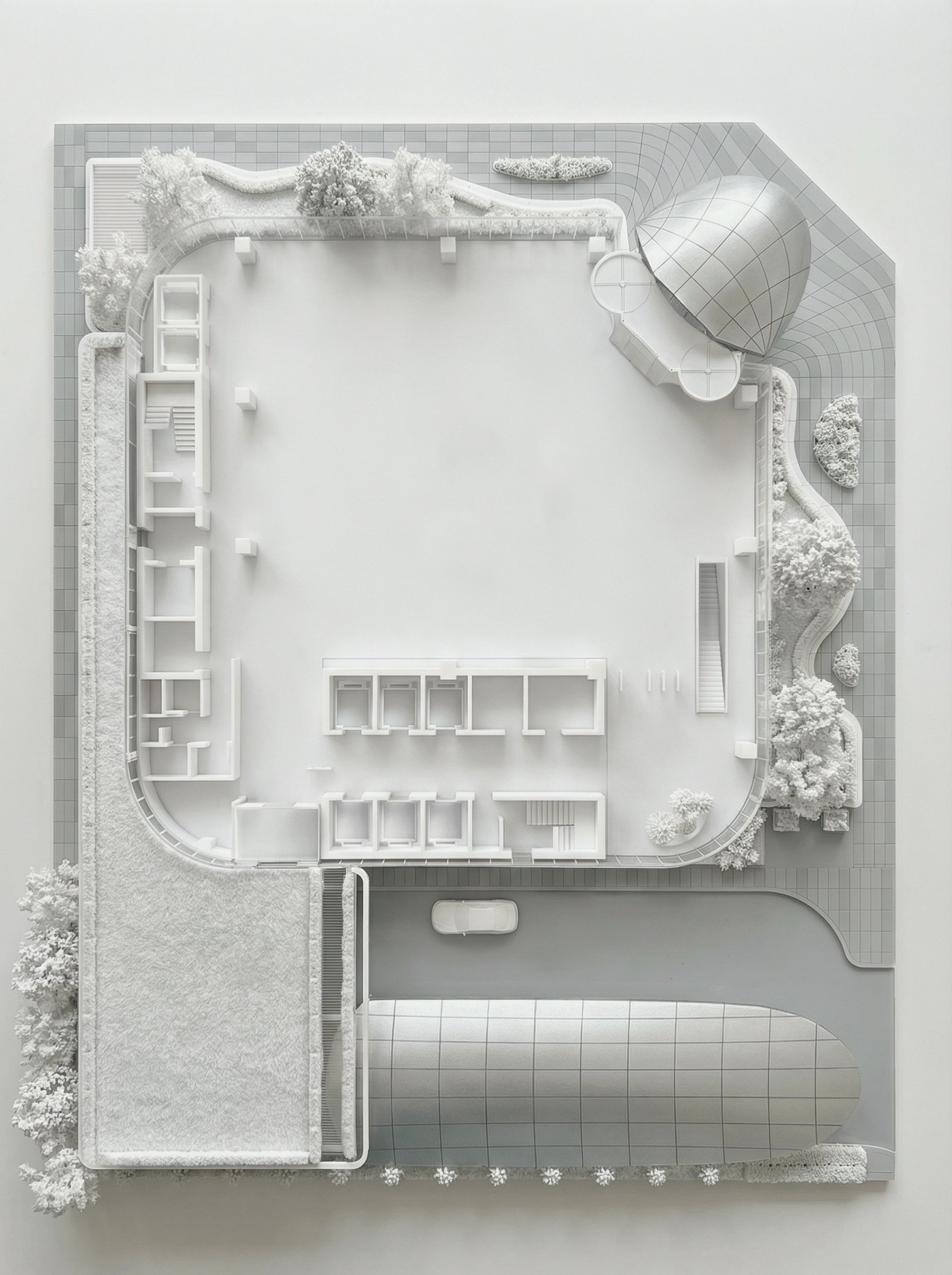
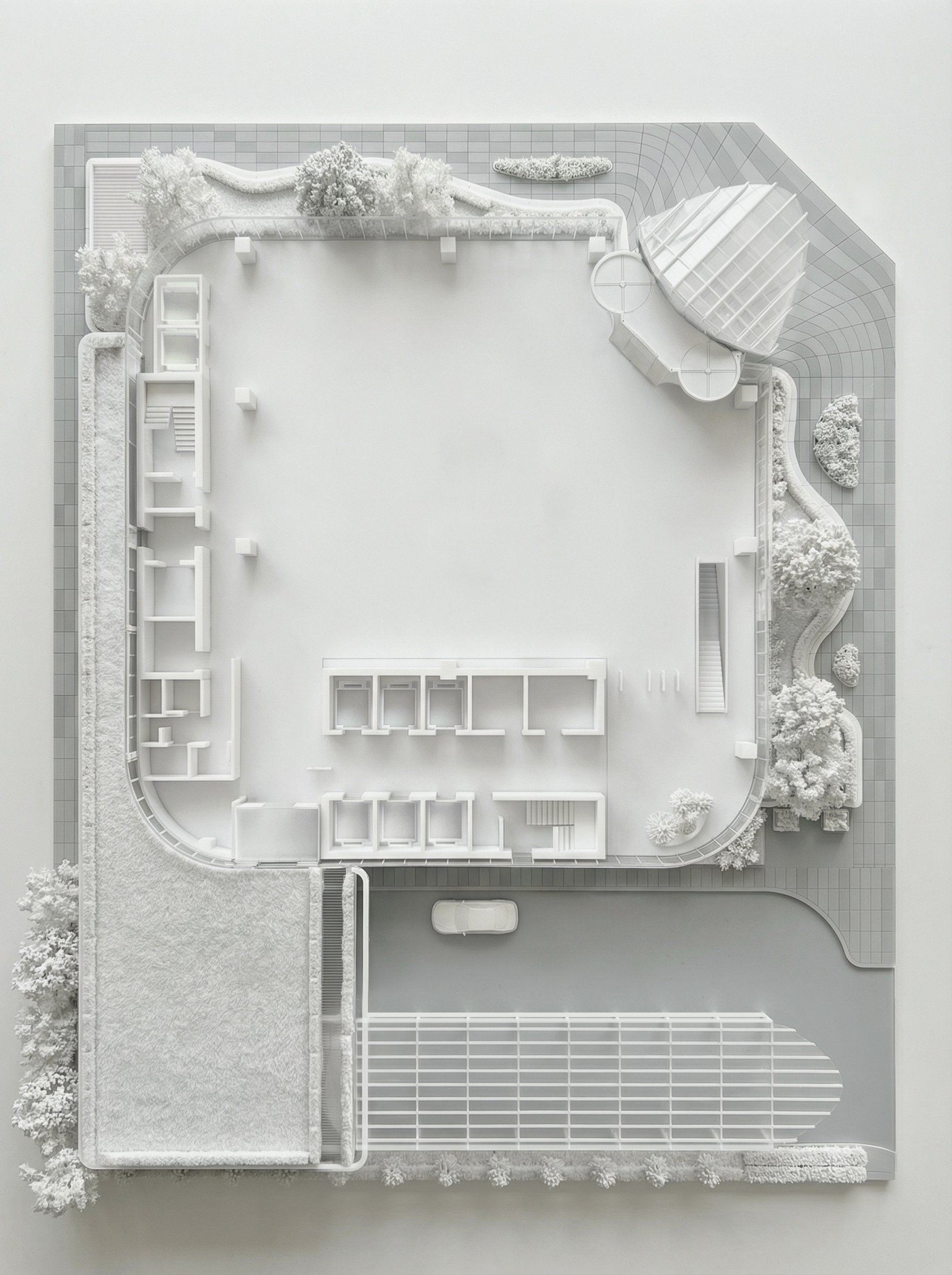
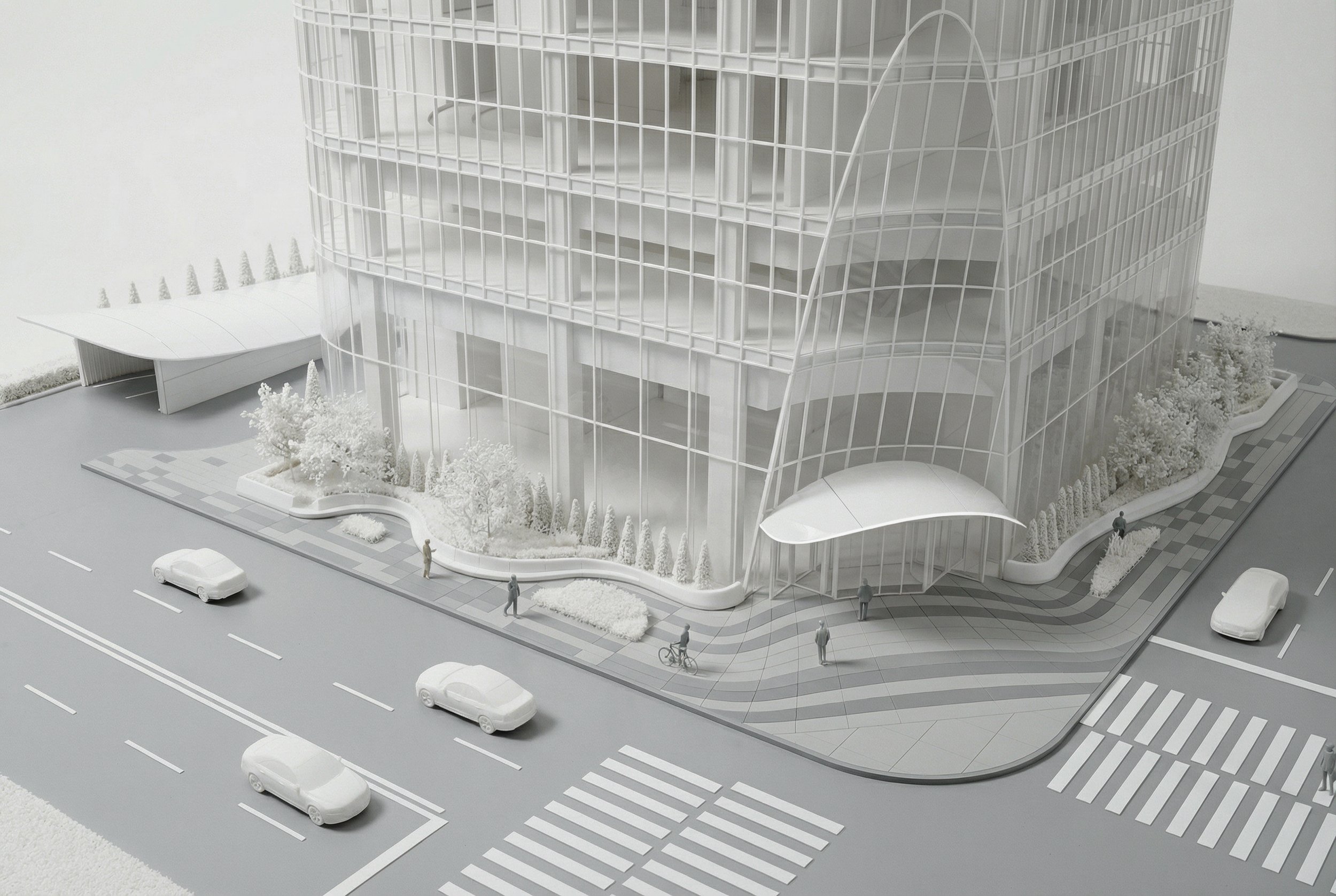
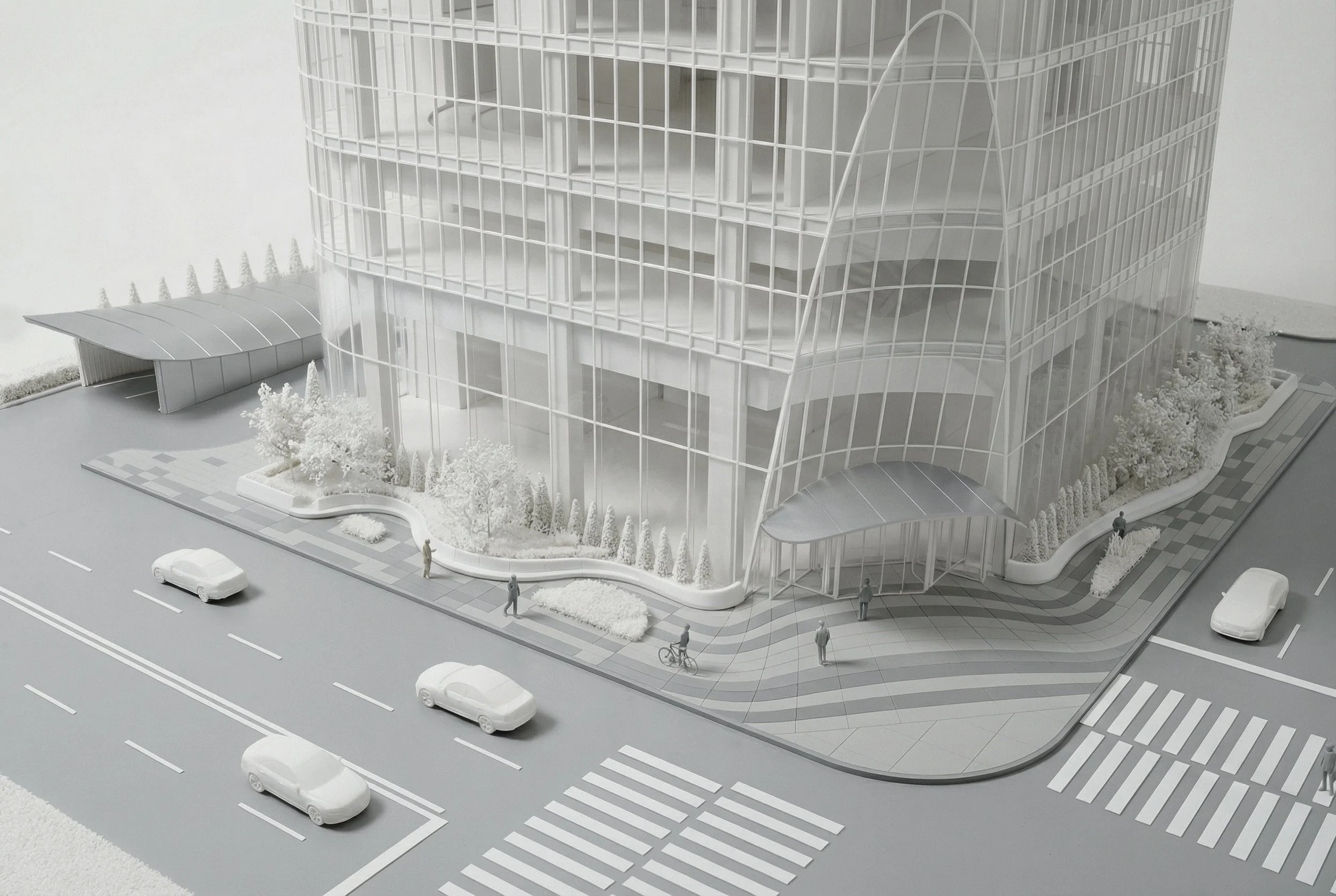
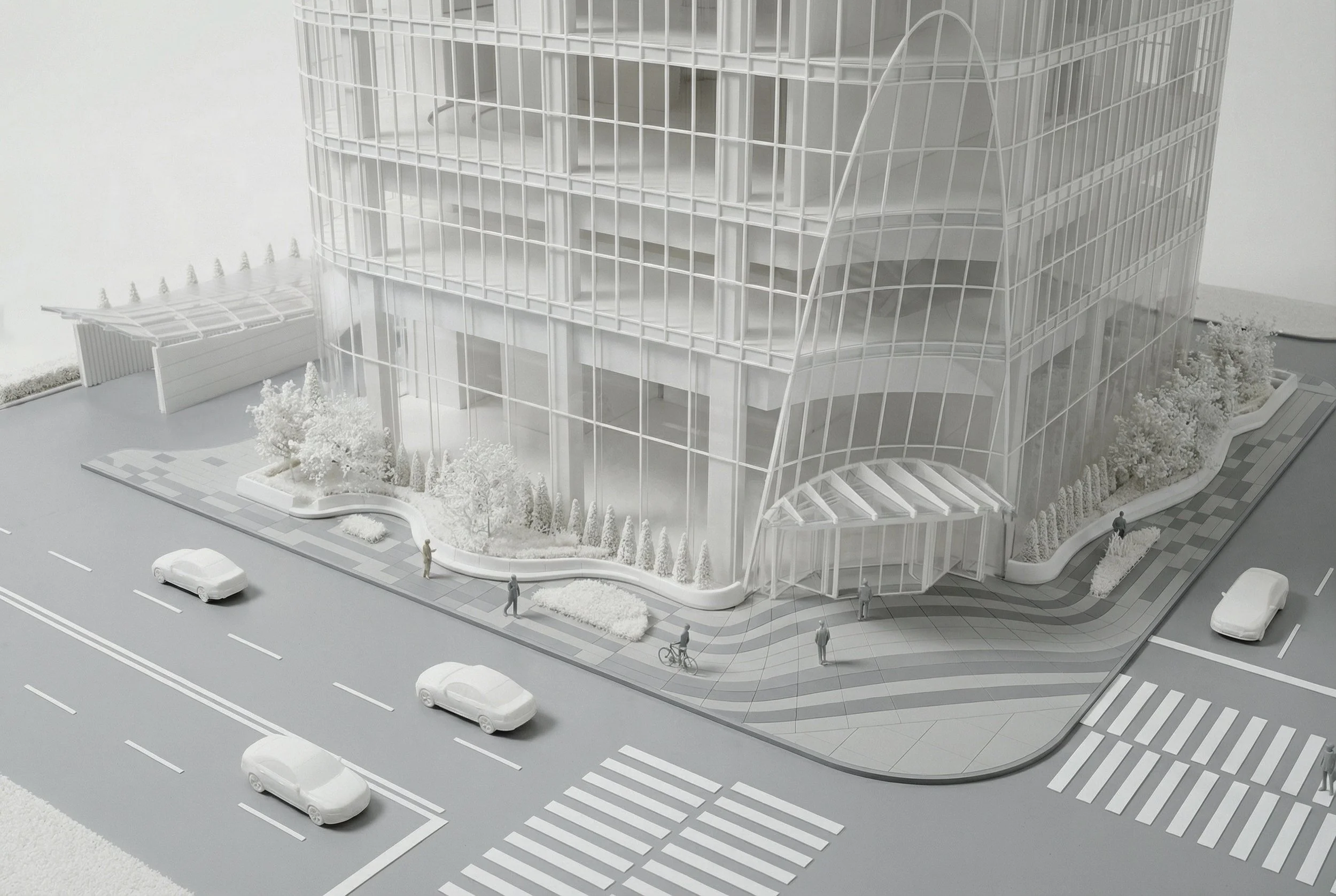
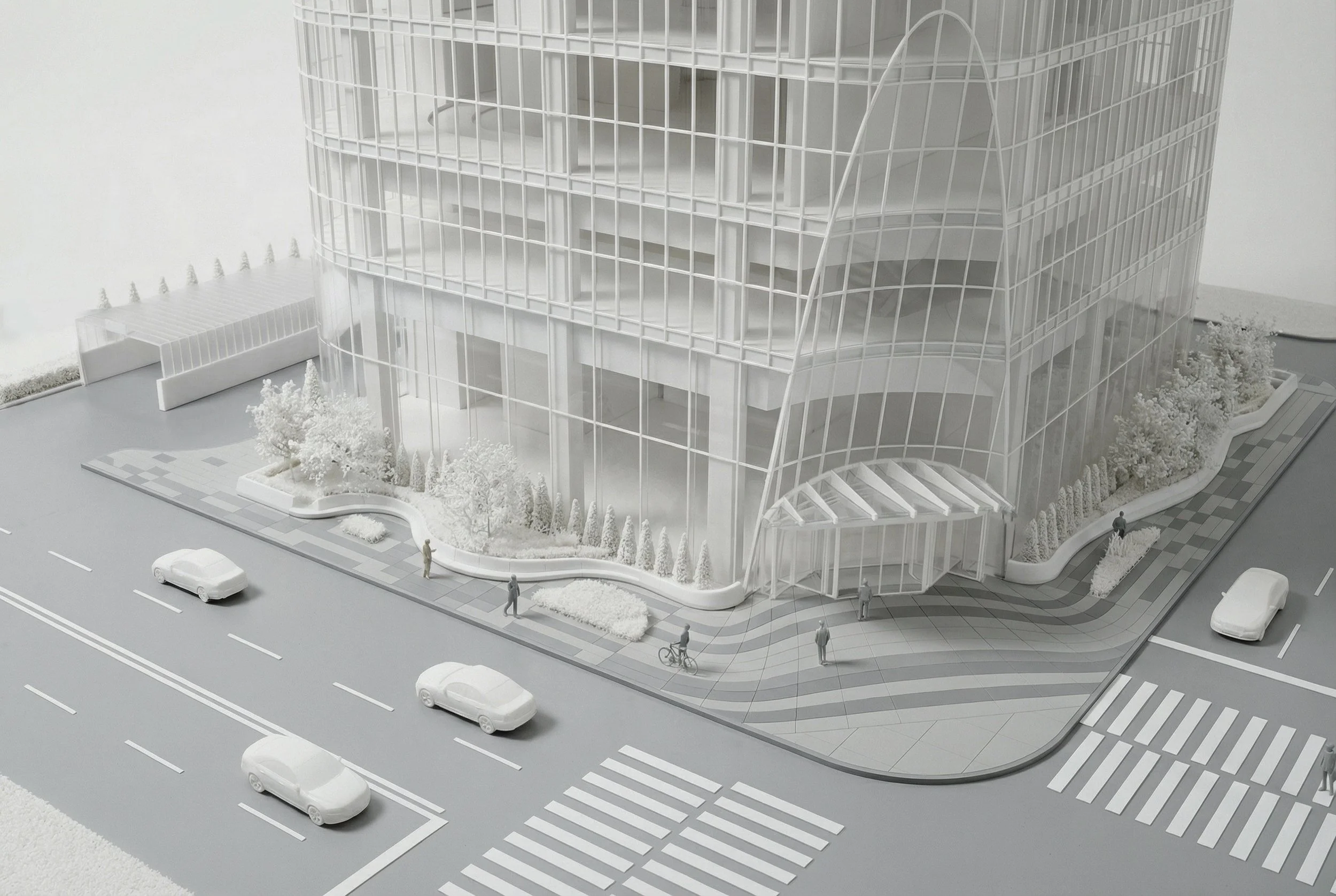
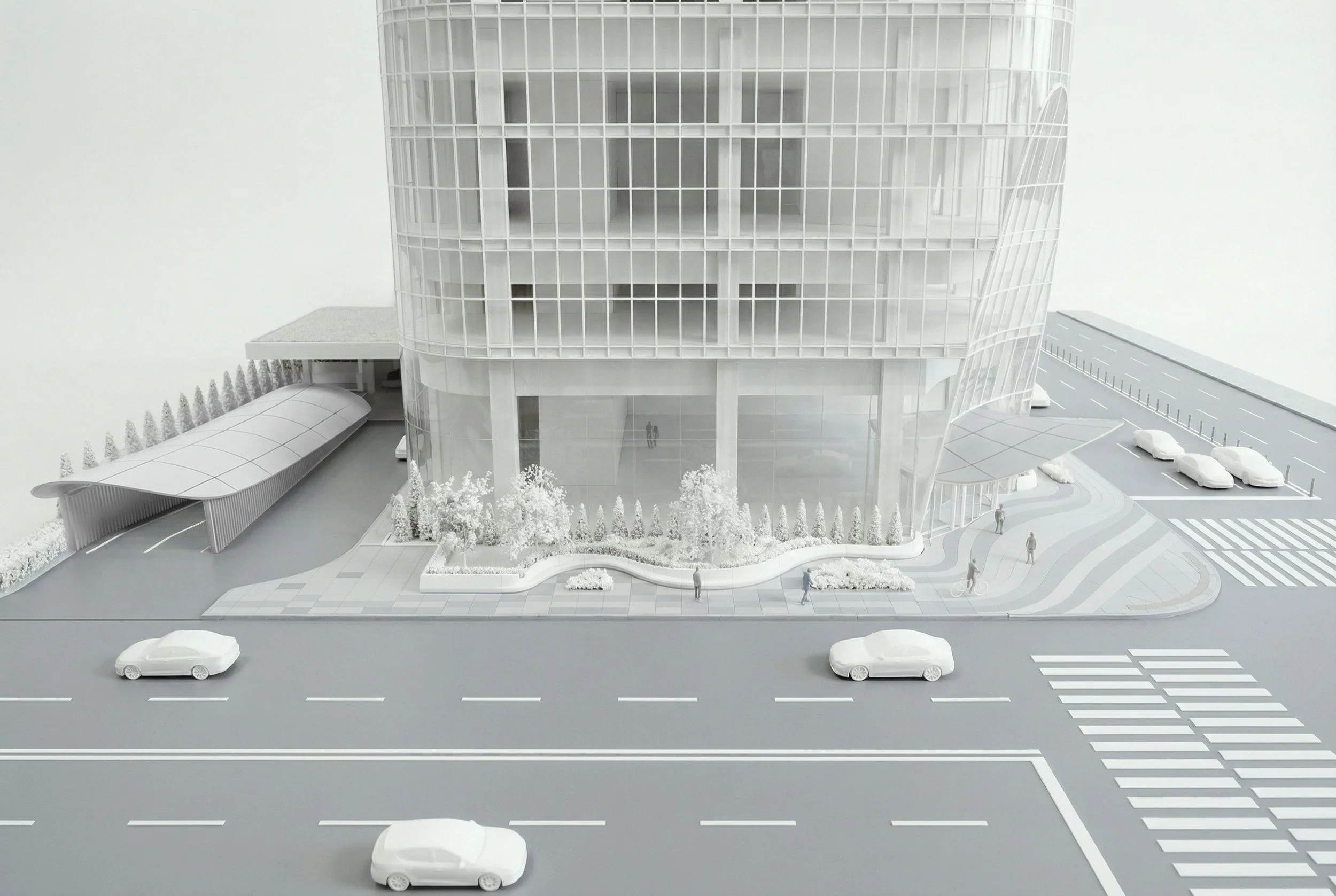
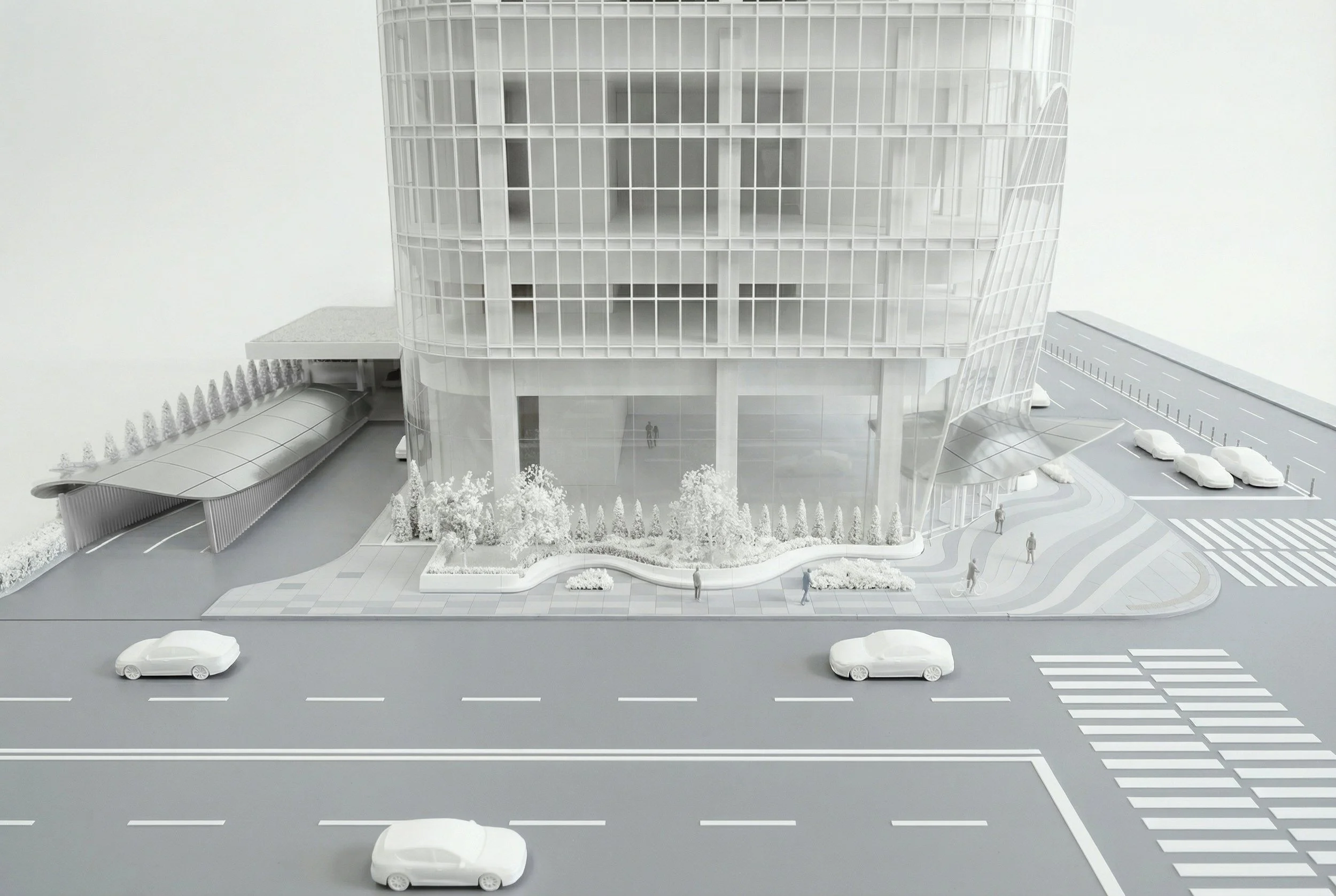
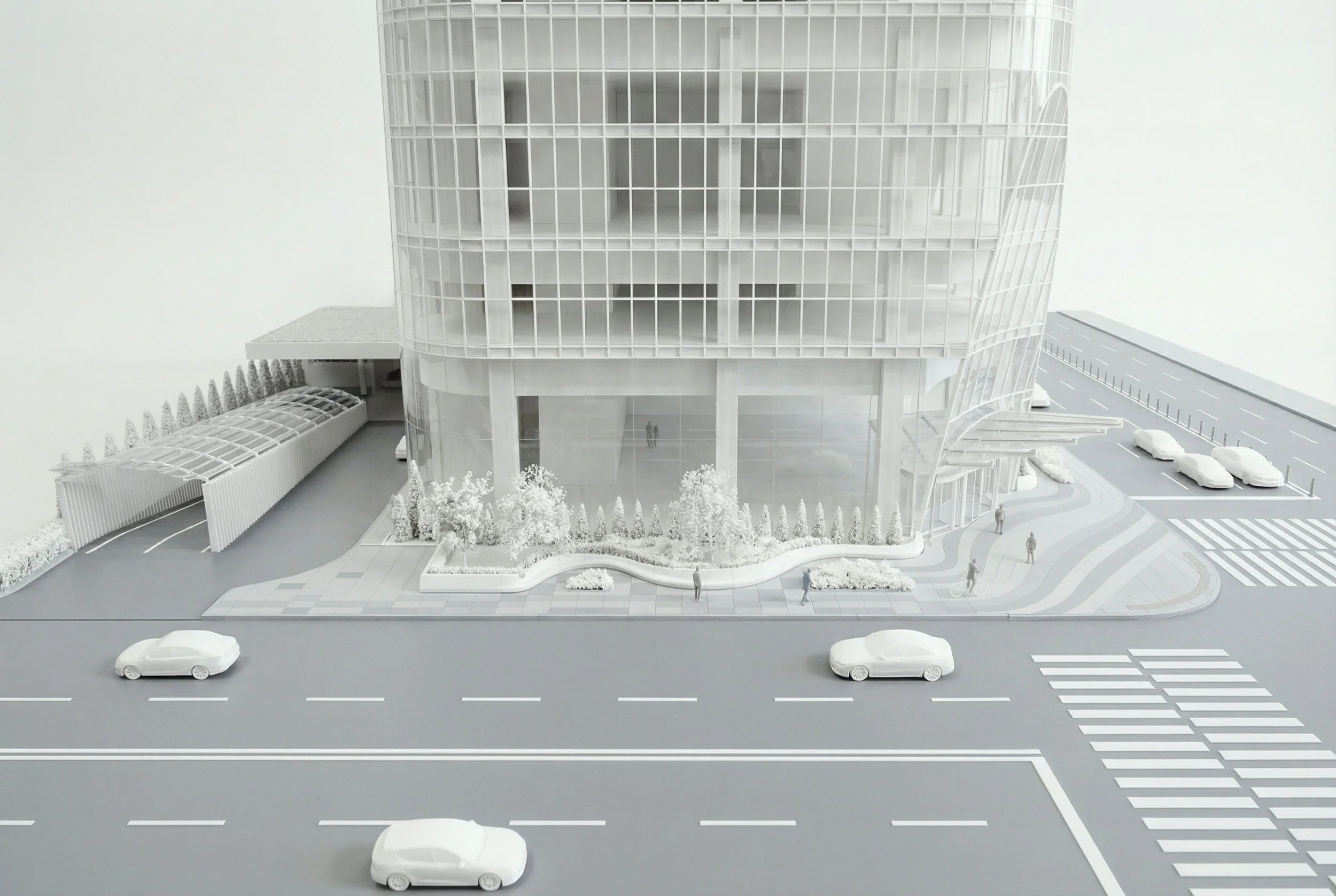
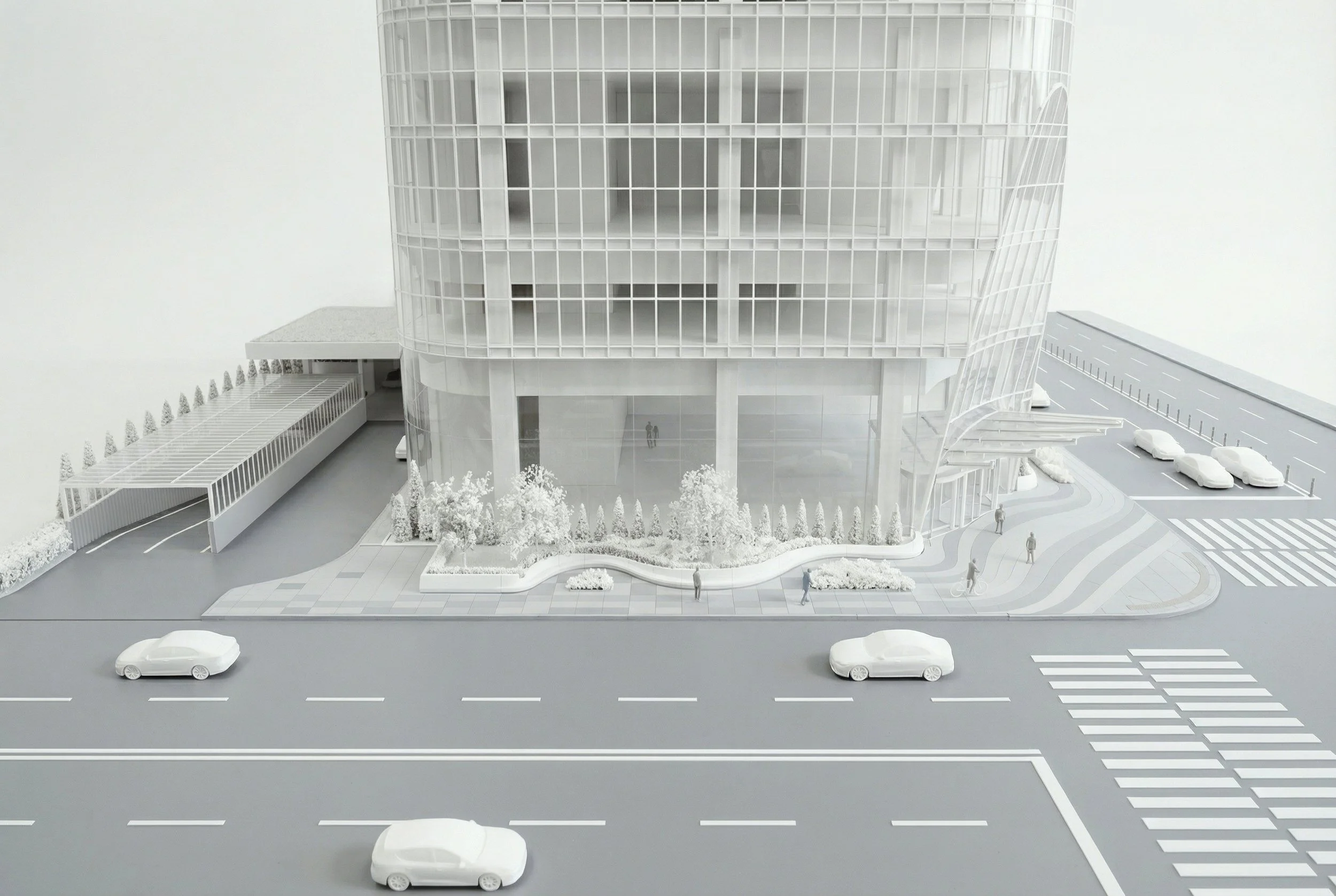
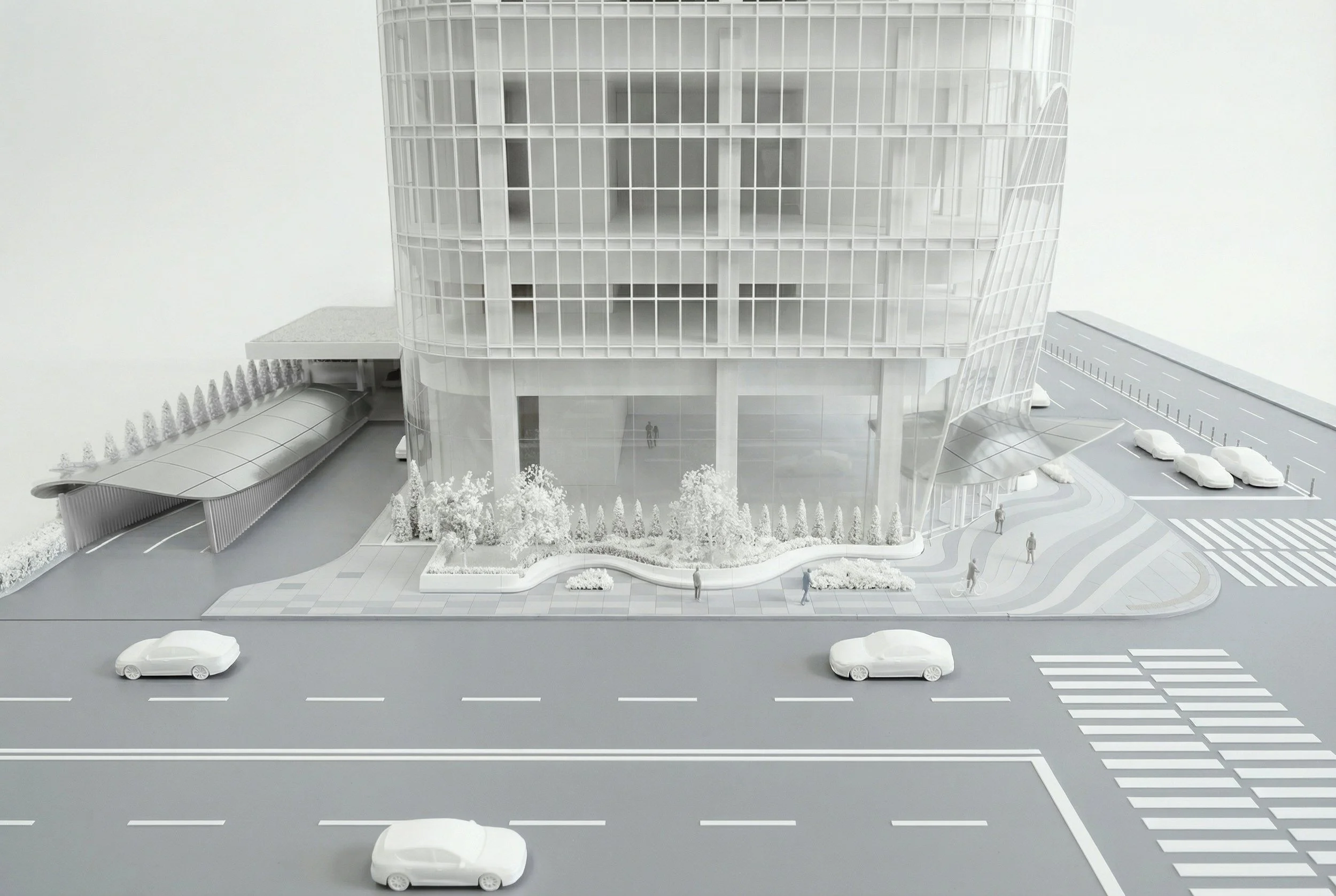
주출입구는 도시와 건축이 교차하는 접점이자 타워의 정체성이 가장 밀도 높게 드러나는 장소이다. 타워 입면의 수직적 리듬은 캐노피로 연장되어 원거리에서 인지되는 존재감을 도착의 순간까지 연결한다. 가늘고 절제된 프로파일의 캐노피는 단순한 차양을 넘어 타워 디자인의 연속체로 작동하며, 도시와 건축 사이를 매개하는 상징적 포털을 형성한다.
전면부 조경: 경계를 지우는 통합된 기단 (Unified Landscape)
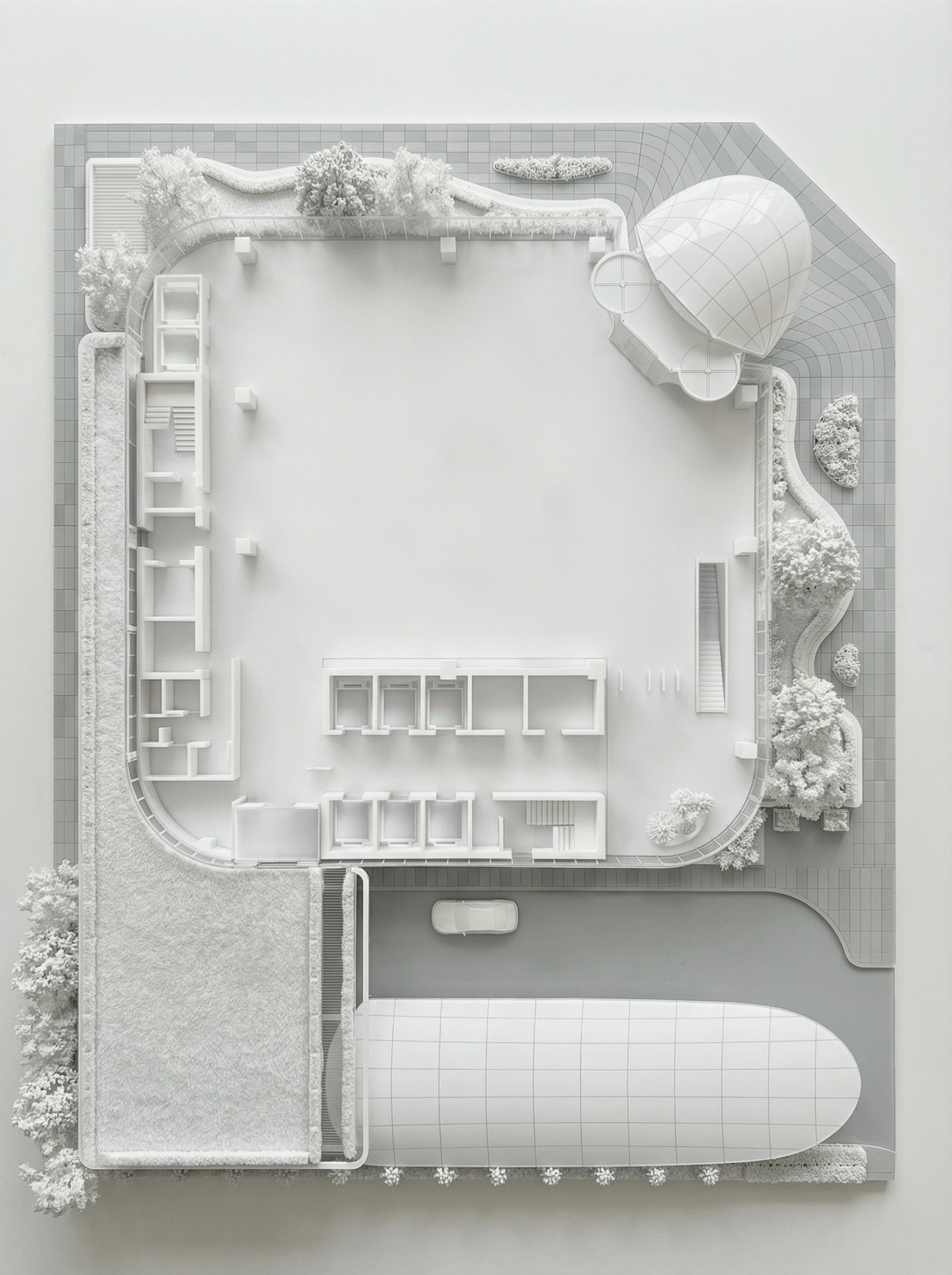
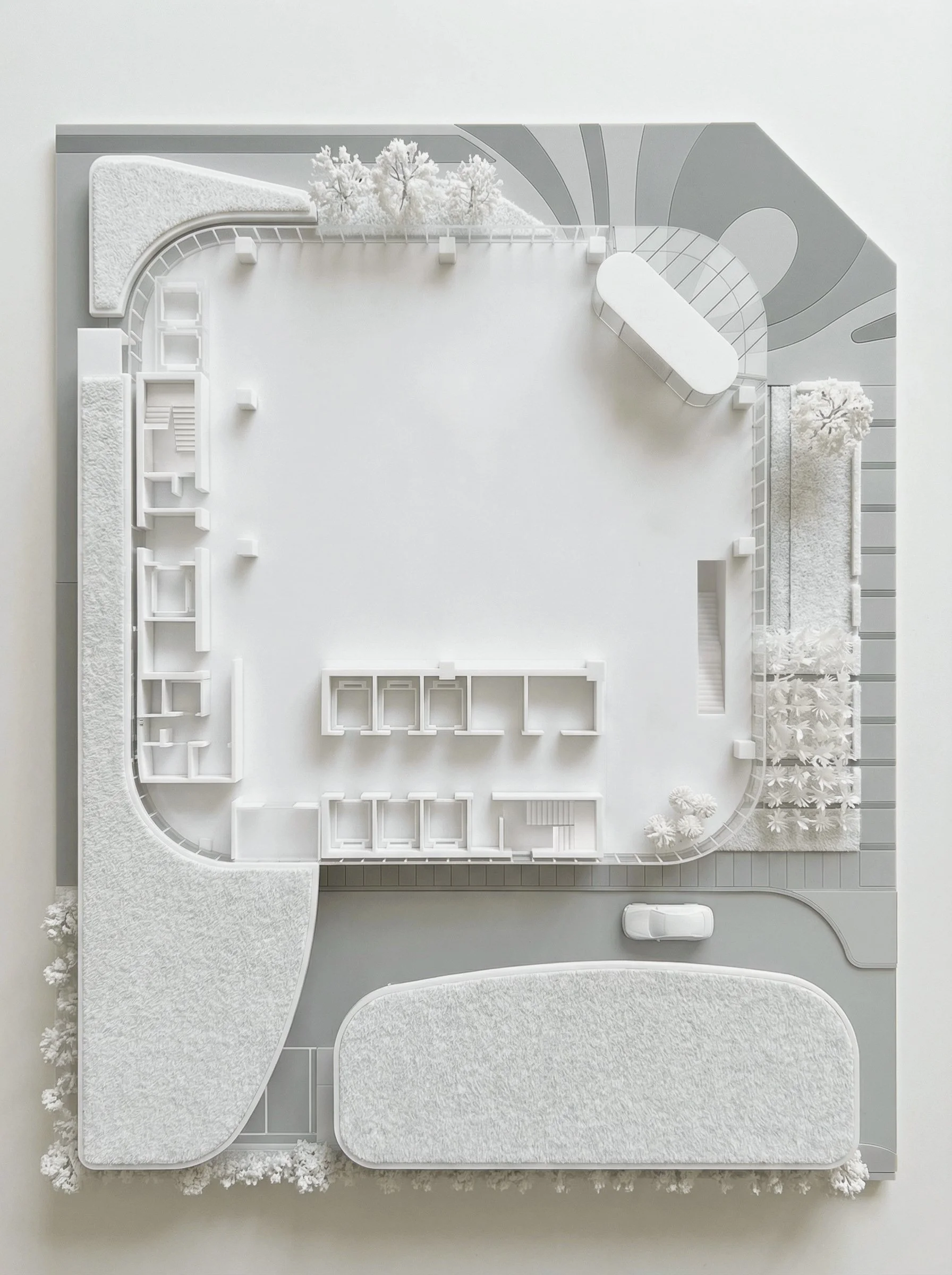
대지는 건축을 지지하는 기반인 동시에 도시와 건축이 관계를 맺는 공통의 장이다. 본 계획은 공개공지와 사적 영역을 구분하던 경계를 최소화하고, 통합된 재료 체계를 통해 하나의 연속된 기단을 구축한다. 동일한 재료 안에서 밀도와 질감, 리듬의 변주만을 허용함으로써 공간의 위계를 형성하며, 공개공지에서 건물 전면으로 이어지는 포장과 조경의 흐름은 캐노피 하부까지 확장되어 대지와 건축을 하나의 연속된 풍경으로 연결한다.
주차 램프 및 Arrival Sequence: 구조와 흐름의 미학 (Structural Flow)
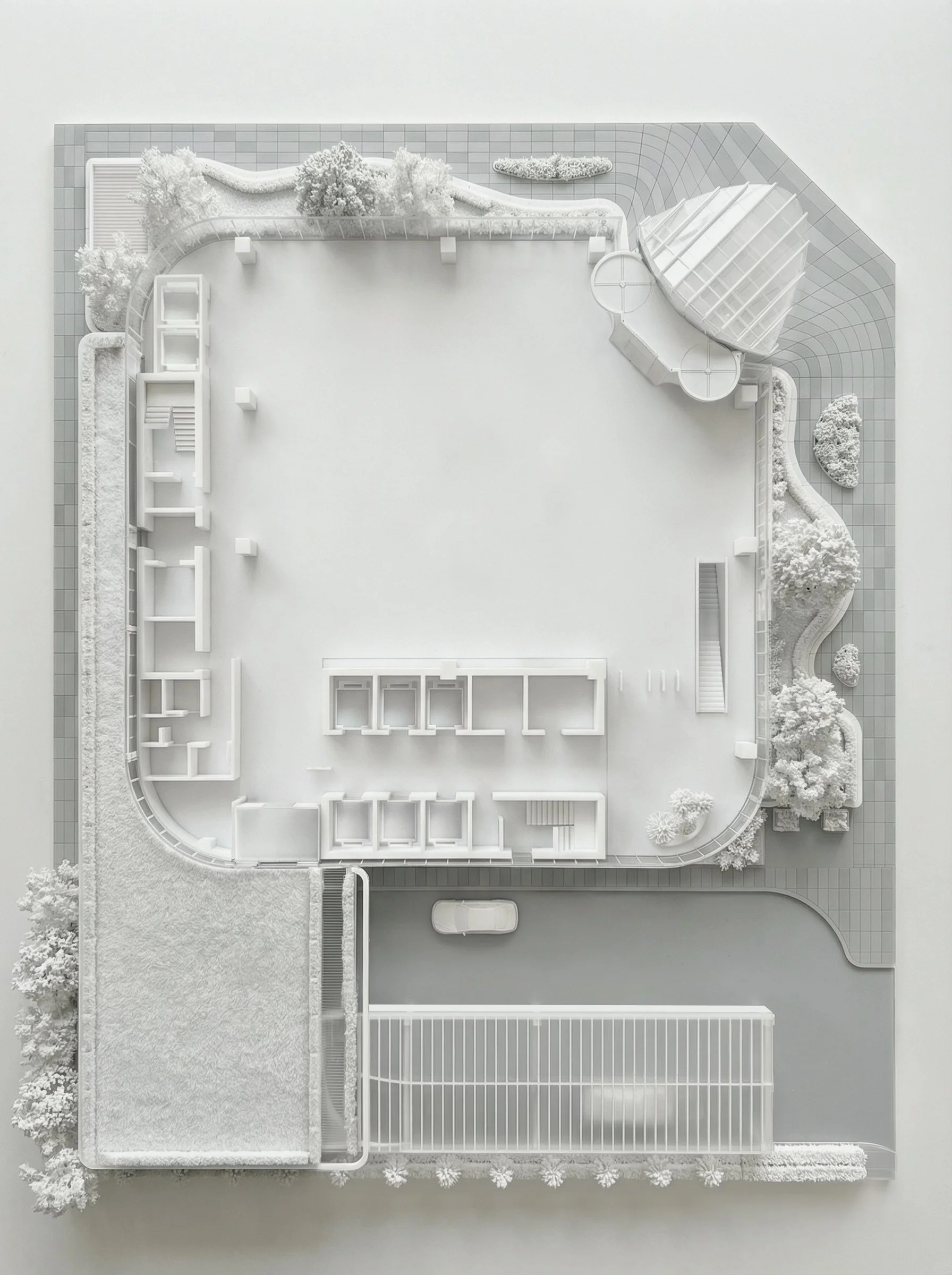
주차 램프는 기능적 시설을 넘어 도착의 경험을 구성하는 요소로 재해석된다. 램프 상부의 형상은 주출입구 캐노피의 언어를 공유하며, 구조와 입면은 하나의 체계 안에서 통합된다. 구조는 형태를 규정하고, 루버는 그 연장선상에서 빛과 시선을 조율한다. 이에 따라 주차 램프 캐노피는 독립된 부속물이 아닌 주출입구와 동일한 질서를 공유하는 장치로 기능하며, 건물 전체에 일관된 Arrival Sequence를 구축한다.
부출입구 및 후면부: 기능과 심미성의 조율 (Functional Harmony)
주출입구와 주차 램프, 후면부는 각기 다른 기능적 요구를 수용하면서도, 동일한 구조적 질서와 정교한 물성 체계 안에서 유기적으로 조직된다. 설비, 출입구, 보조 동선과 같은 기능적 요소들은 하나의 텍토닉(Tectonic)과 재료 시스템으로 정렬되며, 의도적으로 은폐되거나 배제되지 않은 채 정돈된 배경(Background)으로서 건물의 시각적 깊이를 더한다.
결과적으로 전면과 램프, 후면은 파편화된 개별 영역이 아닌, 하나의 정밀한 공간 체계로 수렴한다. 전면과 램프, 후면을 관통하는 단일한 질서는 타워의 정체성을 도시 전반으로 확장시키며, 건축과 도시 사이의 경계를 하나의 연속된 풍경으로 재구성한다.
© INTERFACE STUDIOS 2026, ALL RIGHTS RESERVED
MidasIT Headquarters Tower
A Continuous Interface Mediating Tower and City: Expansion from Vertical Symbol to Horizontal Experience
The central ambition of this project is to establish a unified architectural language that reconciles the tower’s vertical order with the horizontal expanse of the podium and site. The symbolic presence of the tower extends beyond its physical form, unfolding through the ground plane and the experience of movement across the site. Elements once perceived as discrete components are reorganized into a continuous spatial framework that binds architecture and city into a coherent whole.
Main Entrance: Transfer of Symbolic Identity
The main entrance serves as the primary point of intersection between the city and the building, and the place where the tower’s identity is most clearly expressed. The vertical rhythm of the tower facade extends seamlessly into the entrance canopy, carrying the building’s presence from the urban skyline to the moment of arrival. Slender and restrained in profile, the canopy functions not merely as shelter but as an extension of the tower’s architectural language, forming a symbolic gateway that mediates between the public realm and the building.
Front Landscape: A Unified Ground Plane
The ground is both the physical foundation of the architecture and the shared field through which the city and the building establish their relationship. The project minimizes the boundary between public open space and private domain, creating a unified ground plane through an integrated material strategy. Spatial hierarchy is achieved not through contrasting materials, but through calibrated variations in density, texture, and rhythm within a consistent palette. Paving and landscape elements extend from the public realm toward the building and continue beneath the canopy, merging ground and architecture into a continuous urban landscape.
Parking Ramp & Arrival Sequence: Structural Flow
The parking ramp is reinterpreted as more than a functional necessity; it becomes an integral component of the arrival experience. The canopy above the ramp shares the formal language of the main entrance canopy, while structure and facade are conceived as parts of a single architectural system. Structure defines form, and the louvers, as an extension of that logic, modulate light, views, and perception. As a result, the parking ramp canopy operates not as an isolated accessory but as an architectural element that reinforces the same spatial order as the main entrance, establishing a coherent arrival sequence across the entire development.
Secondary Entrance & Rear Façade: Functional Harmony
The main entrance, parking ramp, and rear elevation accommodate distinct functional requirements while remaining unified within a common structural order and refined material system. Mechanical infrastructure, service entrances, and secondary circulation are integrated within a single tectonic framework. Rather than being concealed or excluded, these functional elements are carefully composed as a disciplined background, contributing visual depth and richness to the building as a whole.
Ultimately, the frontage, parking ramp, and rear elevation converge not as fragmented zones but as components of a precise and unified spatial system. A singular architectural order runs through each of these elements, extending the tower’s identity into the broader urban context and transforming the boundary between architecture and city into a continuous landscape of experience.