重疊의 中正
중첩된 프로그램을 매개하는 공간: 삶과 돌봄의 층위 사이에서
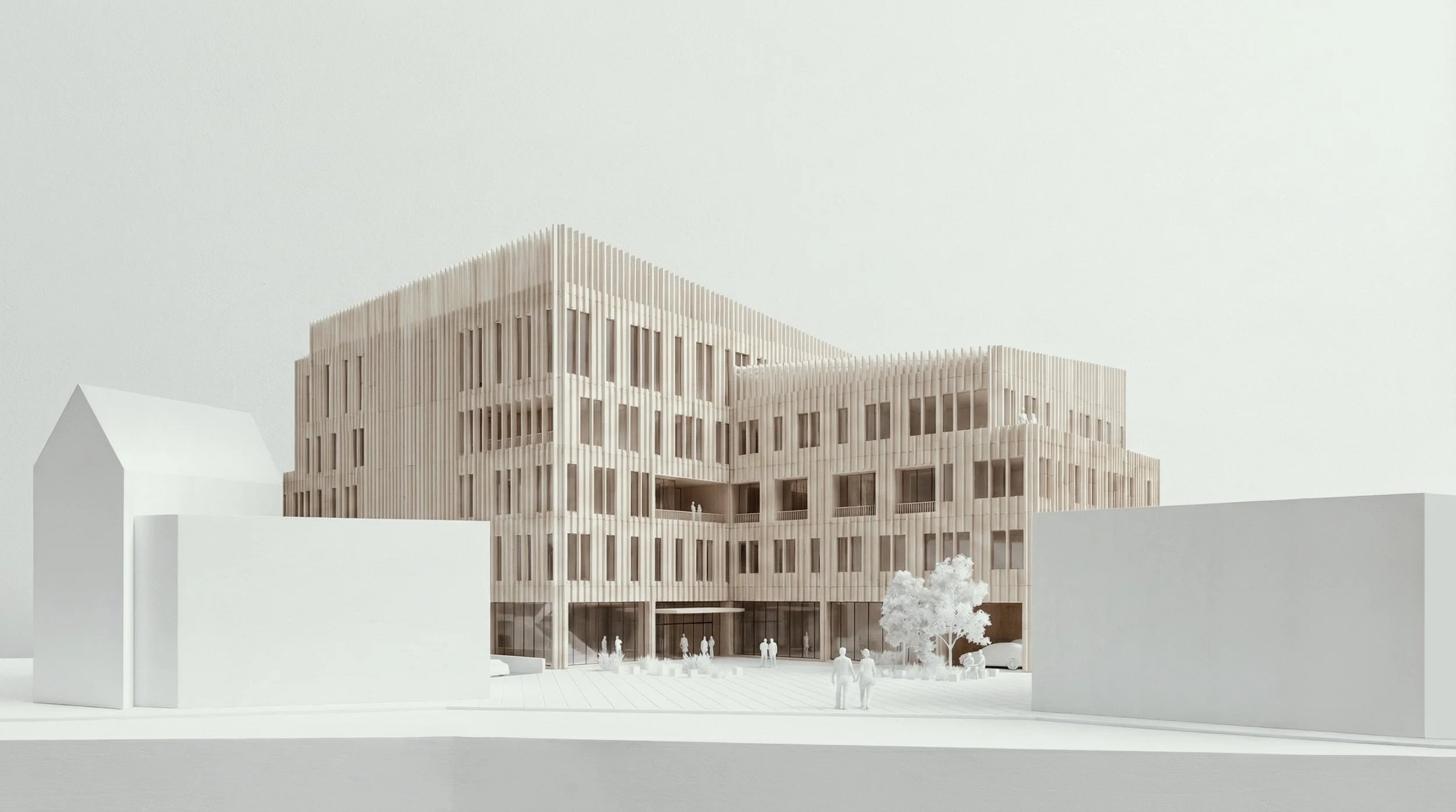
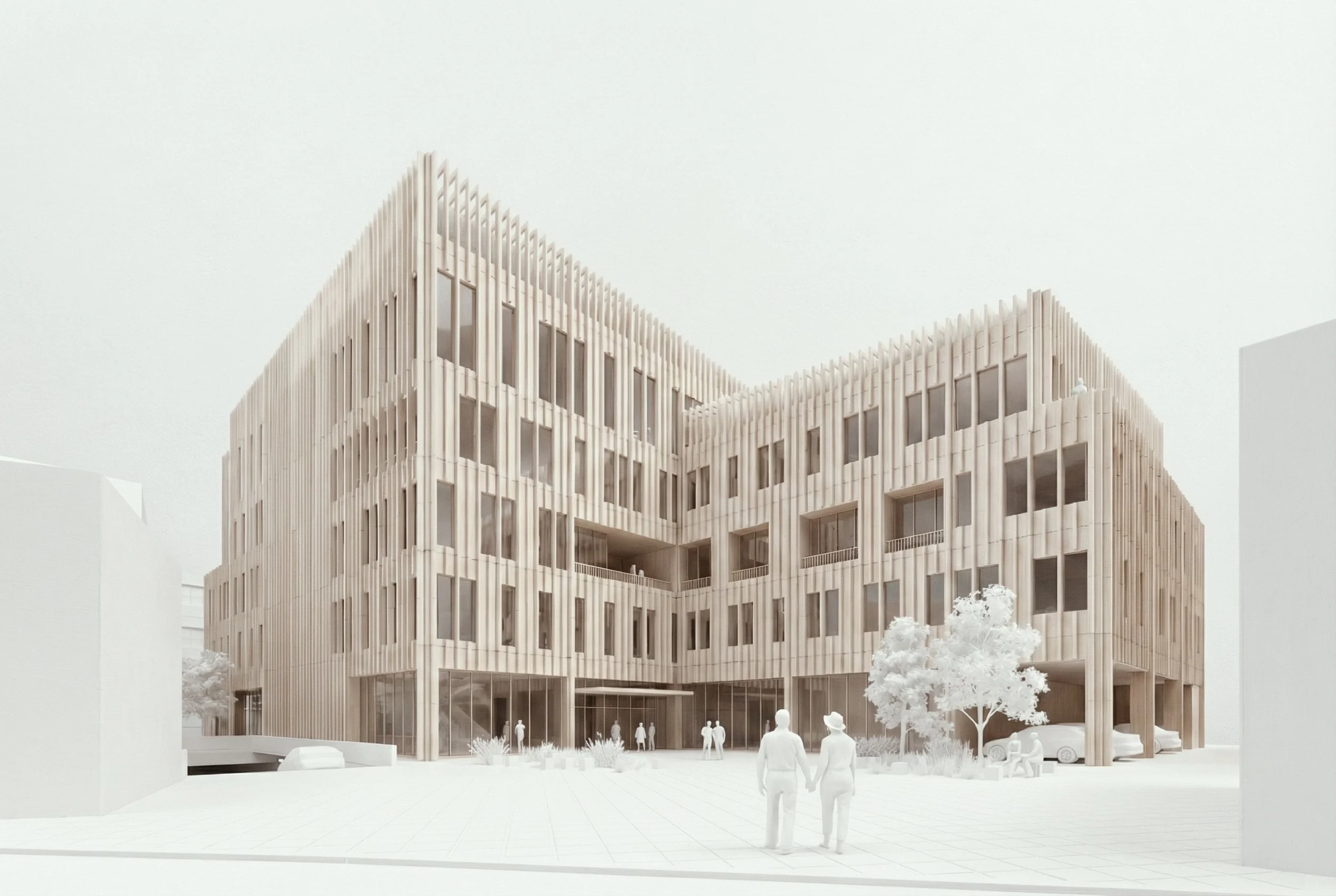
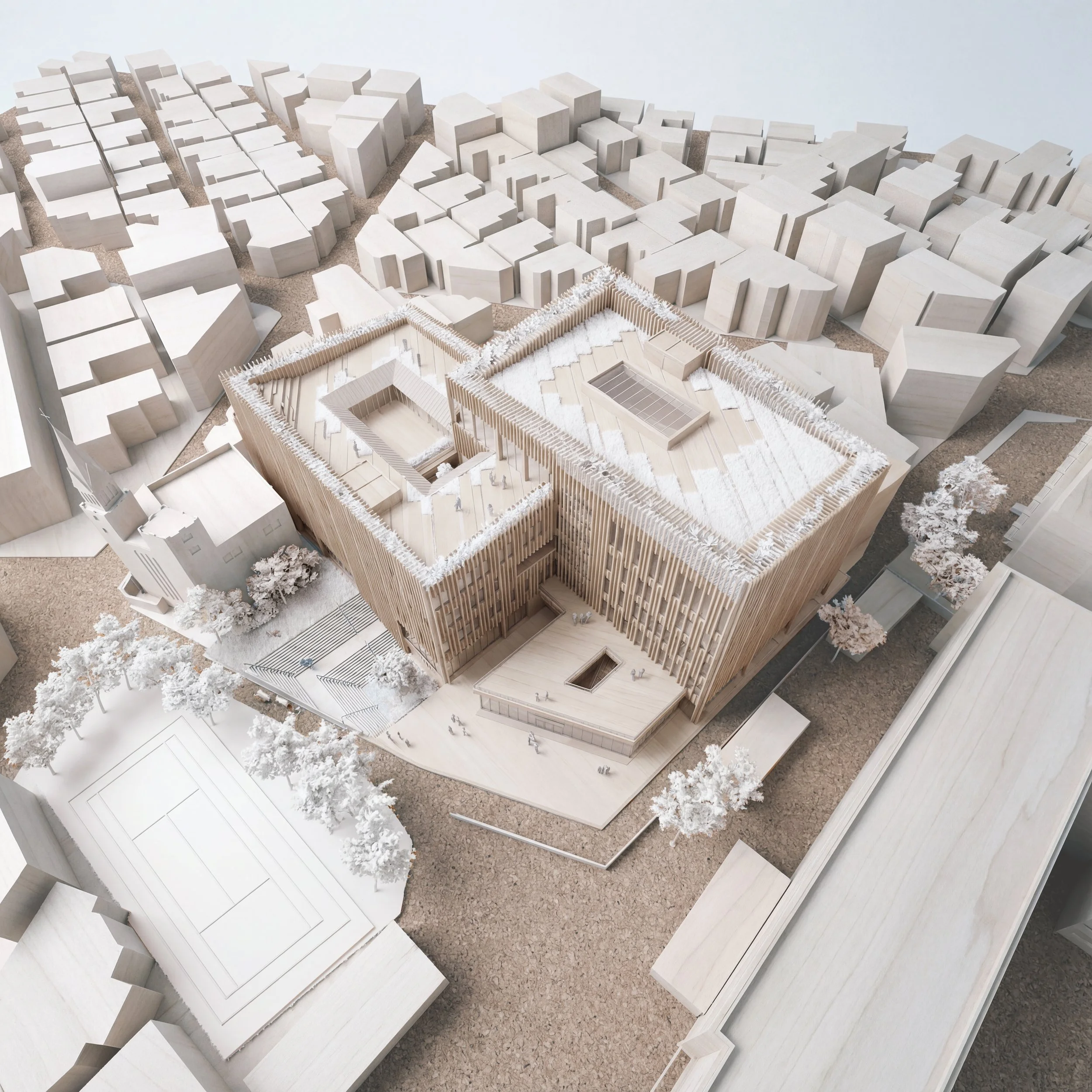
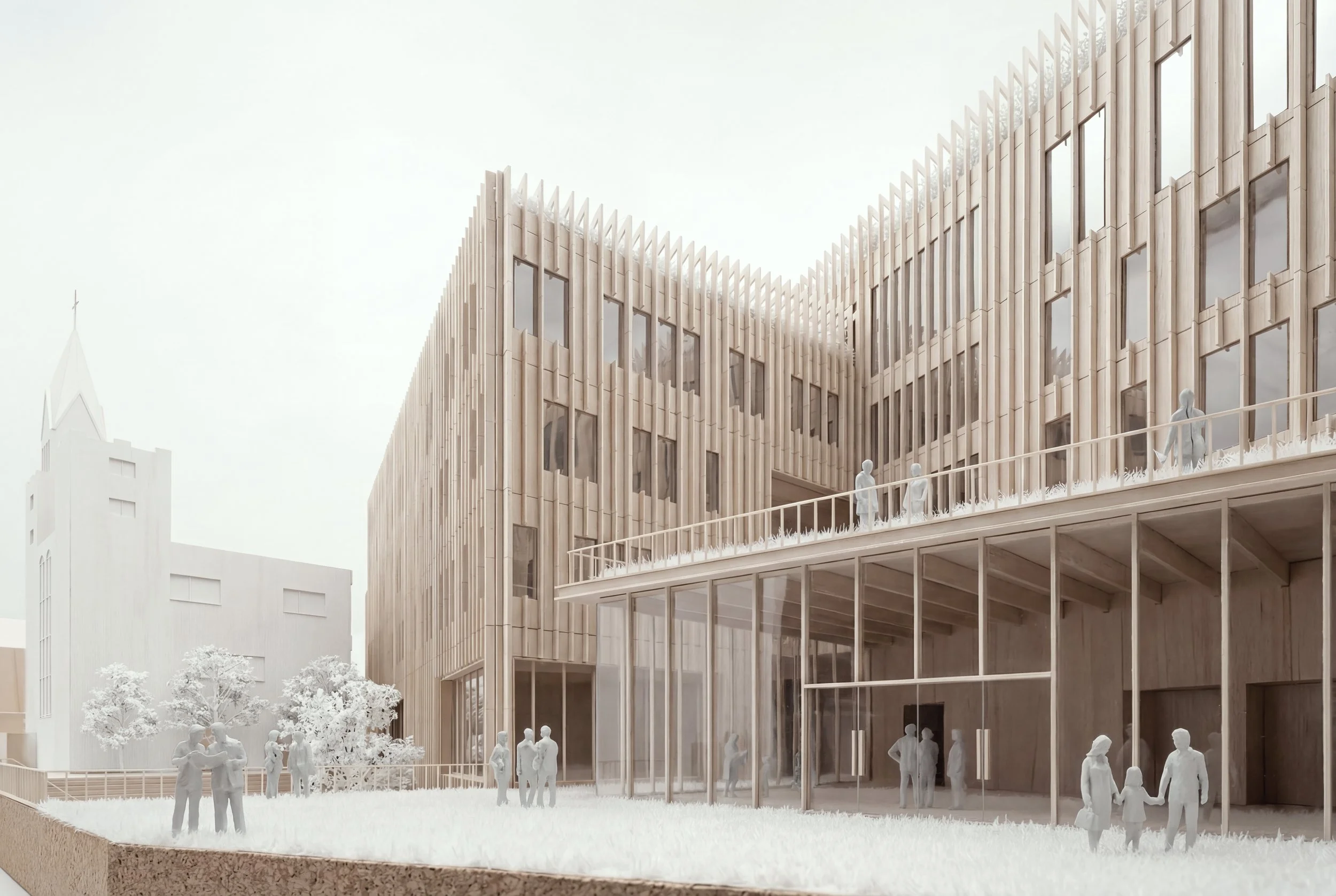
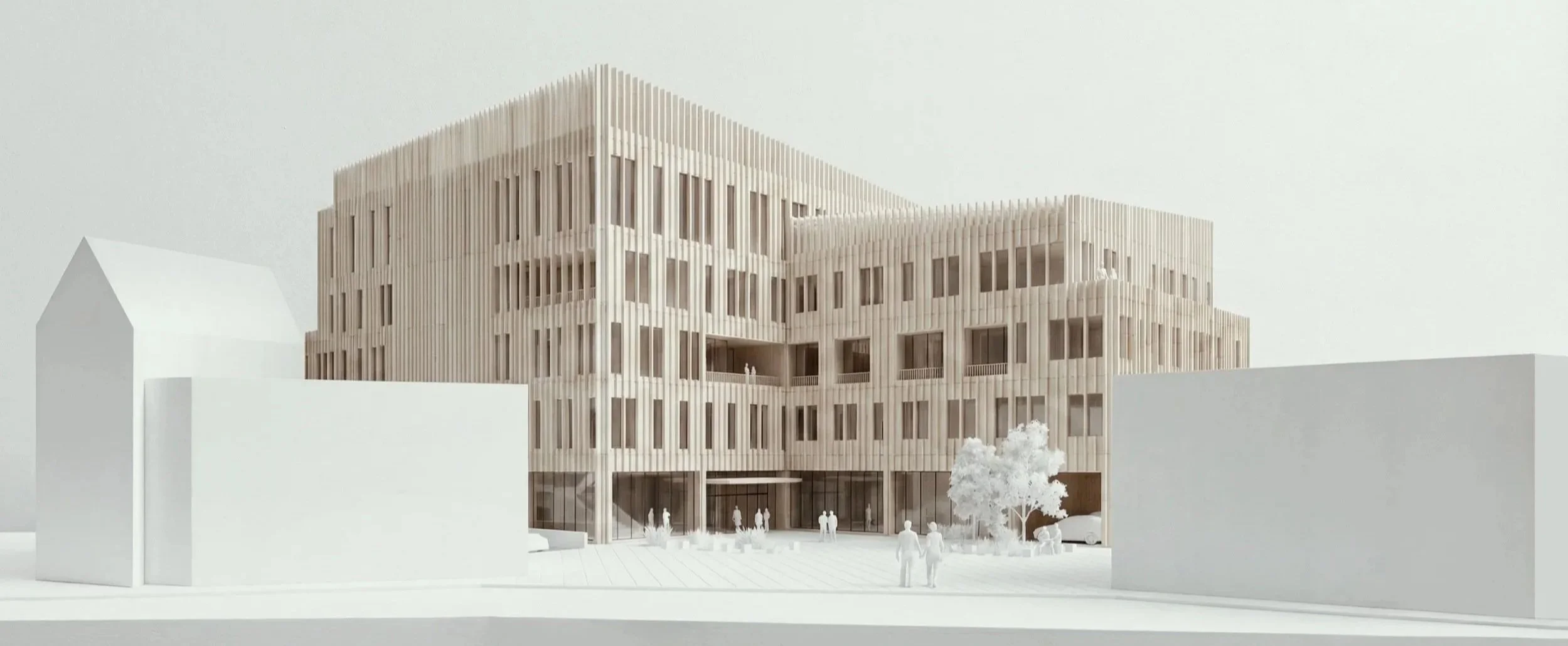
제안된 매싱의 구성(composition)은 대지의 전면부와 후면부에 자연스럽게 오픈스페이스를 형성하며, 주요 출입구에 대한 명확한 인지성을 확보한다. 이는 주택 밀집 지역이라는 대지의 제한적인 조건을 효율적으로 활용한 전략으로, 주변 주민들에게 개방형 복지 기능의 공간을 제공함으로써 퍼블릭 동선을 적극적으로 유입시키고, 대지가 지닌 문화적 잠재력을 극대화한다. 오픈스페이스와 연계하여 지상층에 배치된 편의 공간은 조경 요소와 휴식 공간을 함께 수용하며, 모든 프로그램 이용자를 포용하고 머무르게 하는 일상적 쉼터로 기능한다. 특히 오픈스페이스는 본네프(Woonerf) 개념을 적용한 요철 포장을 통해 차량의 속도를 자연스럽게 제어하고, 보행자 중심의 안전한 환경을 조성한다.
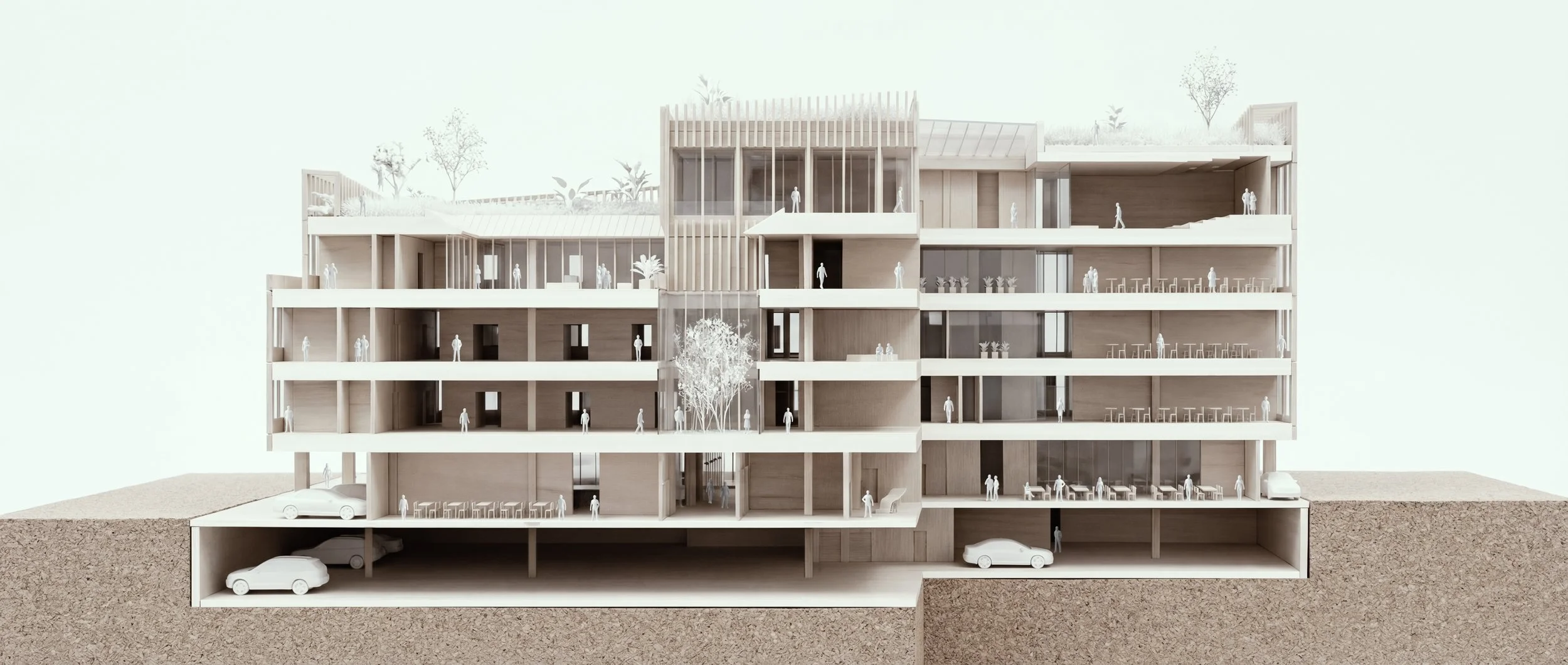
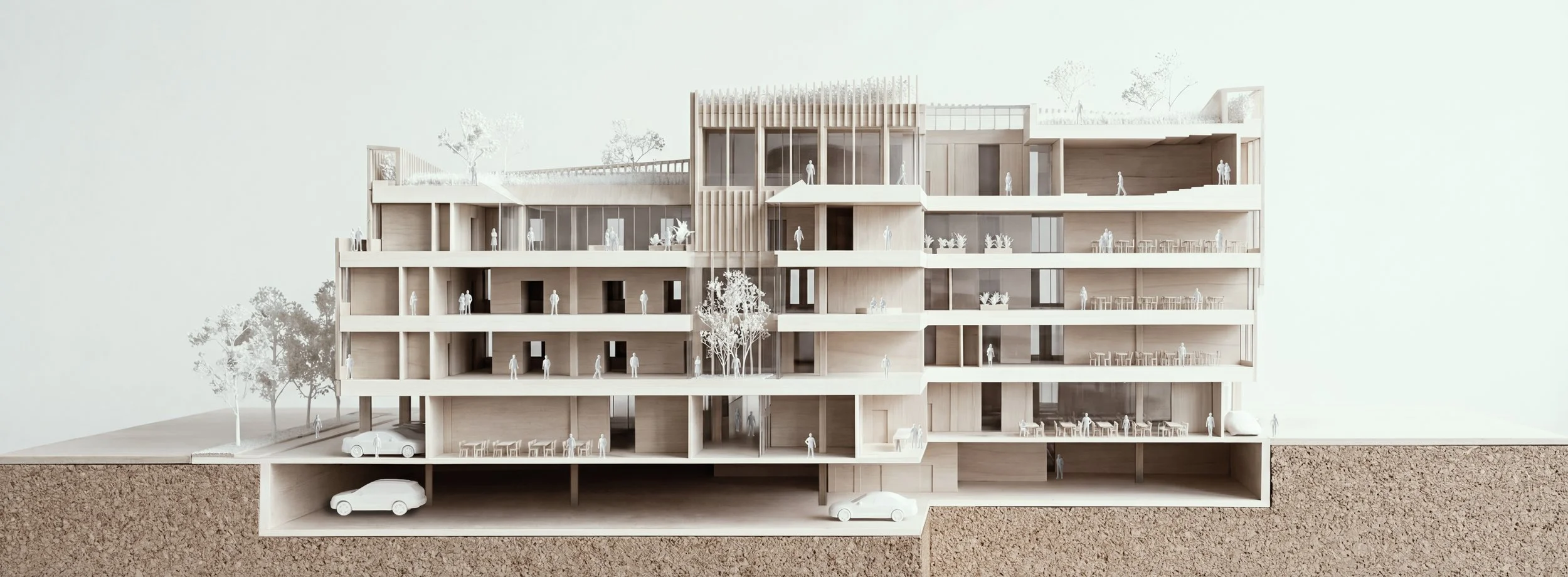
8미터 베이에 기반한 단순하고 명료한 철근콘크리트 구조 모듈 시스템은 반복 적용을 전제로 계획되었다. 이는 지하에 계획된 주차장 확장에 있어 주차 면적 배치의 효율성을 극대화함과 동시에, 상부 프로그램 구성에 유연성을 부여한다. 또한 불필요한 절토를 최소화하는 지속가능한 개발 전략으로서, 시공 효율과 비용 절감 측면에서도 합리적인 대안이 된다.
매싱의 구성에 의해 생성된 ‘중첩의 공간’ 속에서 각 프로그램은 개별성을 유지하면서도 상호 소통과 교류를 유도하며 유기적으로 연결된 복합 공간을 형성한다. 목적, 운영 주체, 운영 시간이 상이한 두 유형의 시설은 기본적인 독립성을 유지하되, 세부 프로그램 간의 연계를 고려한 매싱의 중첩(overlap)을 통해 건축적으로 상호 관계성과 소통을 제안하는 장소로 작동한다. 이러한 중첩은 다양한 외부 공간의 형태로 드러나며, 프로그램 간의 완충이자 연결의 장으로 기능한다.
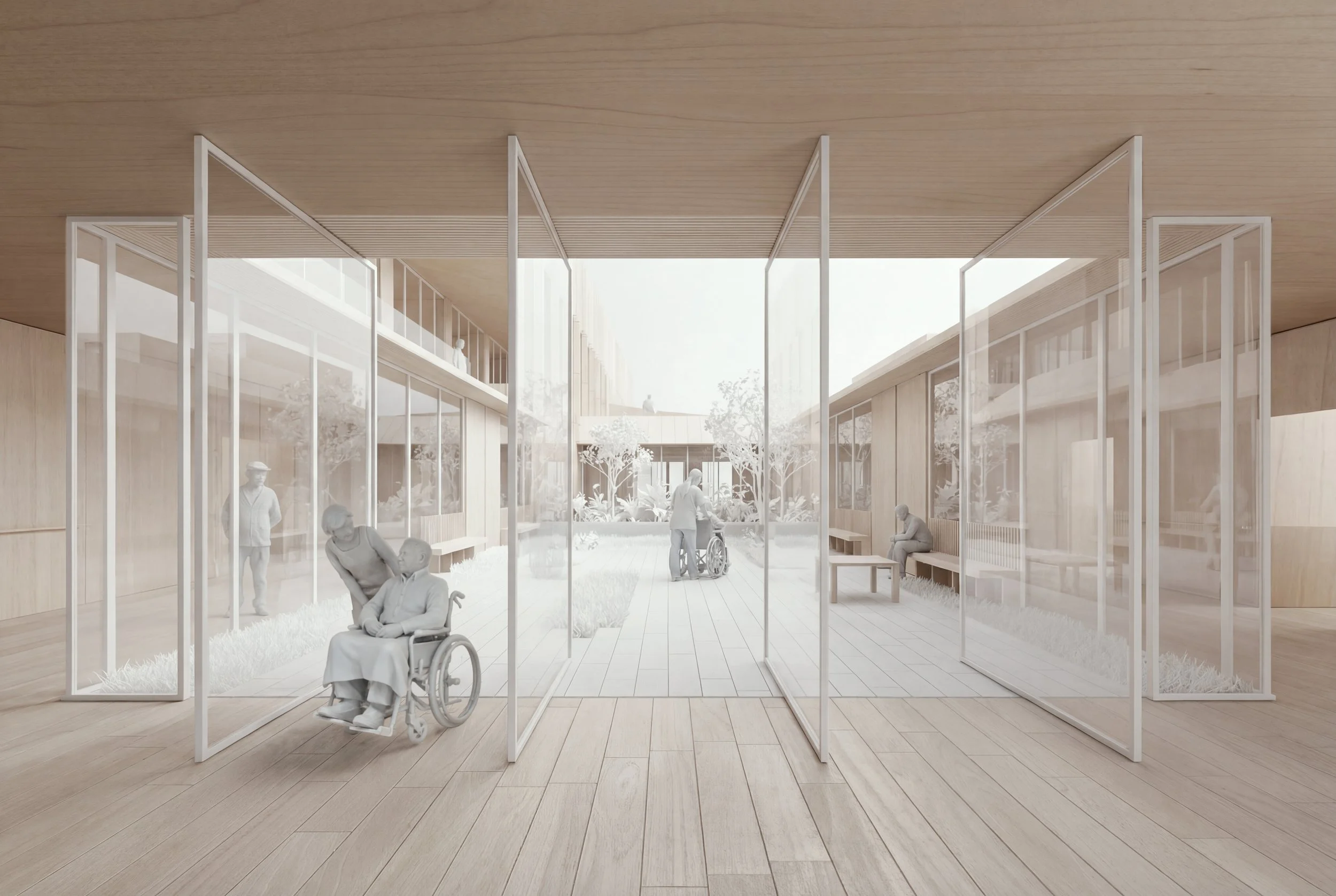
다층적으로 구성된 외부 조경 공간은 본 프로젝트에 고유한 성격을 부여한다. 요양원에 계획된 보호된 안뜰 형태의 열린 공간은 인간적인 스케일의 자연 친화적 환경으로, 실내 공간에 풍부한 채광과 조망을 제공함과 동시에 과거의 기억과 정서를 환기시키는 장소로 작동한다. 이는 폐쇄적이고 단조로워질 수 있는 요양원 생활에 조경과 결합된 오픈스페이스를 도입함으로써 일상에 활력을 더하는 전략이다. 또한 요양원에 제공된 다양한 조건의 테라스와 옥상 정원 등 보호된 외부 공간에서 어르신들은 마치 자신의 뒷마당에 머무는 듯한 감각 속에서 휴식과 사색의 시간을 누릴 수 있을 것이다.
Atrium of Overlaps
A Spatial Mediator of Overlapping Programs: Between Layers of Life and Care
The proposed massing composition naturally generates open spaces at both the front and rear of the site, while ensuring clear legibility of the main entrances. This strategy effectively responds to the site’s constrained conditions within a dense residential context, introducing publicly accessible welfare-oriented spaces that actively draw in pedestrian circulation and amplify the site’s latent cultural potential. At the ground level, amenity spaces integrated with the open areas function as inclusive shelters, combining landscape elements and resting zones to encourage lingering and social interaction among all users. The open spaces adopt a woonerf strategy through articulated paving, subtly regulating vehicular speed while prioritizing pedestrian safety.
A simple and lucid reinforced concrete structural module based on an 8-meter bay is repetitively applied throughout the project. This modular system optimizes parking layouts within the planned underground expansion while simultaneously affording flexibility in the organization of above-ground programs. By minimizing excessive excavation, the approach supports sustainable development principles and contributes to construction efficiency and cost reduction.
The spatial overlaps generated through the massing composition create a layered condition in which individual programs retain their autonomy while fostering communication and exchange, ultimately forming an organically interconnected complex. Although the two primary facilities differ in purpose, operational structure, and hours of use, their architectural overlap is carefully calibrated to preserve independence while encouraging programmatic linkage. This overlap becomes a spatial mediator that promotes interaction and dialogue between programs, materialized through a series of diversified exterior spaces.
The richly articulated landscape spaces lend the project its distinctive character. The protected courtyard conceived for the care facility functions as a humane, nature-oriented environment at an intimate scale, evoking a sense of nostalgia while maximizing daylight and visual connection to the outdoors. By introducing landscaped open spaces into what might otherwise be a closed and monotonous daily routine, the project infuses vitality into the lived experience of the care facility. Within the various terraces, rooftop gardens, and sheltered outdoor spaces provided, residents are invited to rest and reflect, as if spending time in a familiar backyard, reconnecting with memories and a sense of calm.