
새로운 건축을 향하여 201
포스트 팬데믹 시대의 회복탄력성(Resiliency)
적정한 공간의 규모와 볼륨
COVID-19 팬데믹은 무엇보다도 대규모 재택근무 실험이라 할 수 있다. 미국 노동자의 최대 절반이 현재 재택근무를 하고 있으며, 이는 2017–18년에 비해 두 배 이상 증가한 수치이다. 팬데믹은 엄청난 변화를 가져왔고, 그 규모와 속도는 누구도 예측할 수 없었다. 집에 머무는 시간이 길어지면서 개별 실과 주거 유닛에 필요한 적정한 크기와 공간 볼륨에 대한 질문이 제기되었으며, 주거 공간 내에서 다기능성이 어떻게 적용될 수 있는지에 대한 고민이 시작되었다.
스마트 홈 시스템
팬데믹에 대한 대응이 본격화되면서 주거 공간, 디지털 기술, 데이터는 새로운 방식으로 교차하고 있다. 격리, 업무, 학습을 위한 가정 내 기술의 빠른 도입과 사회적 수용은 스마트 홈의 개념을 재구성하고 있다. 더 똑똑한 집은 다양한 측면에서 더 안전한 집이 될 수 있다. 스마트 기기는 재택 시간이 늘어나면서 발생한 문제들—예를 들어 업무나 학습을 위한 독립된 공간 확보—에 대한 해결책을 제공하며, 공간을 보다 효율적으로 구성하는 데 기여할 수 있다.
실내 스케일의 회복탄력성 – 변형 가능성(Transformability)
봉쇄 기간 동안의 생활을 통해 주거 공간에 대한 중요한 교훈이 도출되었다. COVID-19 팬데믹은 ‘집’에 대한 인식을 근본적으로 변화시켰다. 새로운 일상에서는 업무, 학습, 운동을 위한 영구적이면서도 유연한 주거 공간에 대한 요구가 증가할 것이며, 에너지 효율성과 외부 공간은 필수 요소가 되었다. 미래의 주거는 시간대와 상황에 따라 변화할 수 있는 다목적 공간—전용 업무 공간이나 홈짐, 또는 가변적으로 재구성 가능한 방—을 전제로 설계되어야 한다.
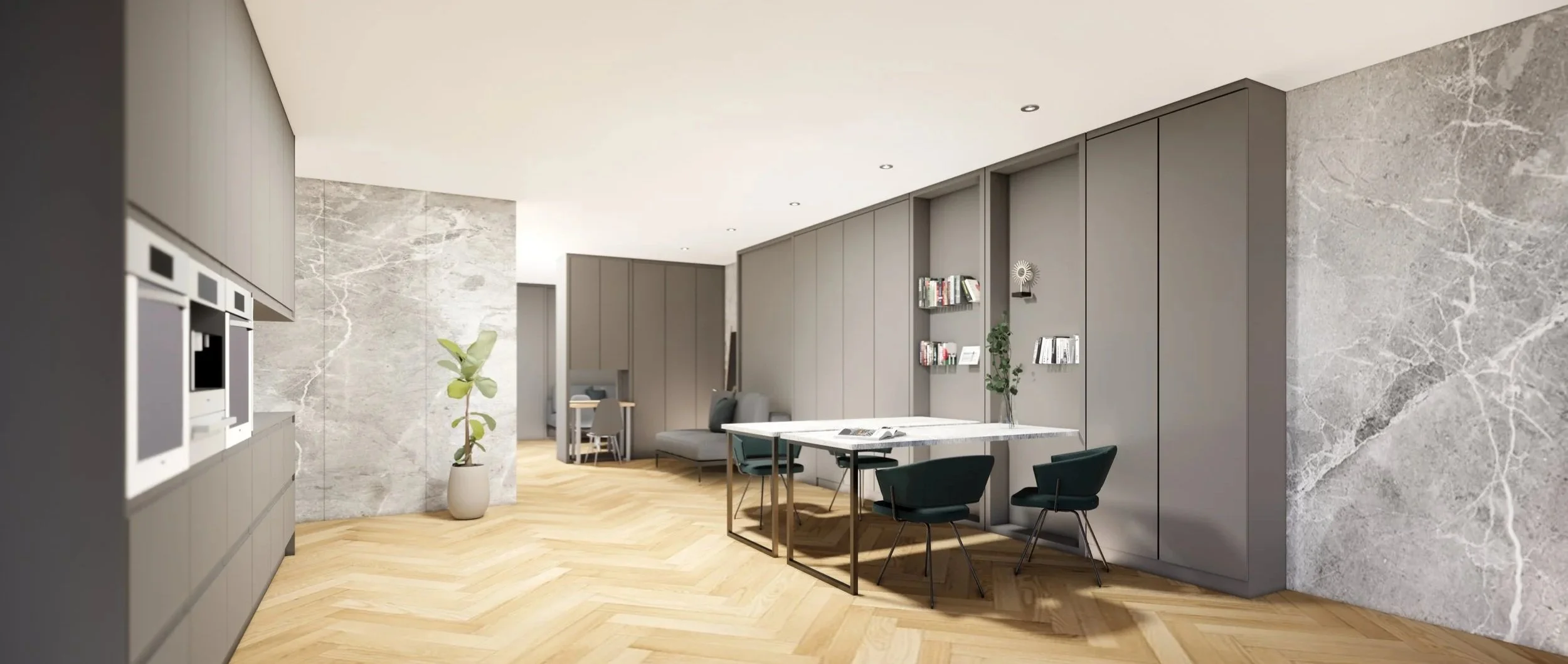
공간을 다양한 상황에 맞게 활용하는 것은 주거 면적의 모든 부분을 효율적으로 사용하기 위해 매우 중요하다. 현실적이면서 비교적 쉽게 적용할 수 있는 방법 중 하나는 가변형 가구의 도입이다. 예를 들어, 고정형 침대를 접이식 침대로 대체하면 해당 공간을 다목적 서재, 홈짐, 놀이방 등으로 전환할 수 있다. 이러한 가구는 독립형으로 설치될 수도 있고, 수납 벽체에 통합되어 옷장처럼 보이도록 설계될 수도 있다.
밀도와 거리 인식의 변화
바이러스 감염 위험은 ‘밀도’와 ‘거리’에 대한 우리의 인식을 변화시켰다. 인구가 밀집된 컴팩트 시티는 팬데믹의 진원지가 되었고, 이는 지속 가능한 고밀 도시와 건강한 개방형 도시 사이의 잠재적 갈등을 드러냈다. 소규모 스케일에서는 전 세계 많은 사람들이 강제 격리를 경험하면서, 주거 공간이 개인의 삶의 질에 미치는 역할이 재조명되었다.
아파트가 이러한 변화에 대응해야 할 필요성이 커짐에 따라, 본 연구는 주거 아파트의 유연성과 관련된 결정 요인을 탐구한다. 설계의 유연성 부족은 기능적, 문화적, 구조적 측면에서의 한계와 밀접하게 연관되어 있다.
장기적 회복탄력성 – 구조적 유연성
장기적 회복탄력성은 건물이 시간의 흐름과 변화하는 요구에 따라 공간과 프로그램을 전환할 수 있는 능력을 확보하는 것을 의미하며, 이는 구조 시스템과 시공 방식과 직접적으로 연관된다. 비용상의 이유로 주거 건축에서 널리 사용되는 벽식 구조는 향후 공간 전환에 많은 제약을 가진다.
플랫 슬래브 구조는 시공이 용이하고, 거주 시간이 늘어나며 중요성이 커진 층간 소음 문제에서도 비교적 우수한 성능을 보인다. 반면 라멘 구조(슬래브, 보, 기둥으로 구성된 구조)는 거푸집 공정이 복잡해 시공성이 떨어지는 단점이 있으나, 장기적인 관점에서 가장 높은 공간 전환 가능성을 제공하며, 구조 부재 간 접촉이 최소화되어 이웃 세대로의 소음 전달 가능성도 가장 낮다.
외부 공간
외부 공간은 팬데믹 기간 동안 정신적·사회적 웰빙에 필수적인 요소로 입증되었으며, 휴식과 사회적 교류를 위한 장소로 중요한 역할을 수행했다. 발코니와 파티오는 더 이상 사치적 선택이 아니라 표준적인 요구 조건으로 변화하고 있으며, 다양한 스케일의 분산된 외부 공간 제공이 주거 건축 설계의 핵심 요소로 부상하고 있다.
커뮤니티 스케일에서는 중정과 같은 공동 공간을 주거의 필수 요소로 재해석할 필요가 있다. 지상 주차 공간을 축소하여 사람과 조경을 위한 공간으로 환원하고, 사회적 거리두기를 고려한 순환형 산책로(promenade)를 도입하여 비접촉 보행 환경을 조성할 수 있다.
결론
본 연구는 포스트 격리 시대의 사회·문화적 변수에 대응하는 유연한 주거 설계의 기반을 제시하고, 주거 공간이 회복탄력성을 발휘할 수 있는 역할을 활성화하는 것을 목표로 한다. 이는 향후 주거 규제 및 기준으로 발전하여 공공과 이해관계자 모두에게 기여할 수 있을 것이다. COVID-19 초기 대응 과정에서 드러난 준비 부족은 회복탄력성을 고려한 설계의 중요성을 명확히 보여주었다.
이제 단기적 수요나 특정 시장을 위한 건축을 넘어, 불확실한 미래에 대응할 수 있는 유연성과 지속가능성을 갖춘 주거를 구축해야 할 시점이다. 팬데믹이 초래한 급격한 변화는 건축이 스스로 전환하고 적응할 수 있는 회복탄력성을 갖추어야 함을 요구하며, 이는 장기적인 관점에서 지속 가능한 건축 설계를 달성하기 위한 핵심 과제가 될 것이다.
Towards A New Architecture 201
Resiliency in Post Pandemic Era
Appropriate Volume of Space
The COVID-19 pandemic is, among other things, a massive experiment in telecommuting. Up to half of American workers are currently working from home, more than double the fraction who worked from home in 2017-18. The pandemic has brought about tremendous changes, and we couldn’t have anticipated the scale or speed at which they have occurred. Increased duration of stay at home started to question what the appropriate size and volume of individual room and units need to be. And how multi-functionality can be adapted to home?
Smart Home System
Home, digital technologies and data are intersecting in new ways as responses to the pandemic emerge. Rapid adoption and acceptance of technologies in the home for quarantine, work and study, enabled by the pandemic, is rescripting smart home. A smarter home can be a safer home in various aspects. Smart devices can help to streamline a space and provide solutions for problems generated by more time at home, such as the need to carve out specific work or study space.
Interior Scale Resiliency – Transformability
Big lessons have been learned from home during lockdown. The Covid-19 pandemic has brought about a revolution in the way we think about home. The new normal will see many more of people needing permanent and flexible home for working, studying and exercise, in energy-efficient property with outside space became mandatory. It is crucial for future homes to be designed with multiple uses in mind, such as carving out dedicated workspaces or gyms, or creating rooms that are reconfigurable depending on the time of day. Making spaces work for multiple occasions is critical to being able to utilize every inch of space in the home. A realistic and relatively easy way would be the adaptation of transformable furniture: replacing a divan or fixed-frame bed in the spare room with a simple folding bed. This can be a stand-alone piece of furniture or built into a storage wall, disguised as wardrobes. This will free up space elsewhere to create a multipurpose study, home gym or playroom.
The risk of viral infection has influenced our perception of ’density’ and ’distance’. Compact cities with their high concentration of citizens have become epicenter of the pandemic. This has made it clear that there is a limit on how closely we can live and created a potential conflict between the sustainable, densely populated city and the healthy, open city. In smaller scale, the COVID-19 pandemic resulted in the compulsory quarantine of many of the world's inhabitants. Several functional developments to emerge in residential space design with understanding the role of the house as a contributor to individuals' quality of life under the pressures of quarantine. Given the necessity of the apartments to adapt to these emerging developments, this study attempts to explore the determinants associated with the flexibility of residential apartments. The deficiencies of flexibility in design relates to the functional, cultural and structural aspects of residential buildings.
Longterm Resiliency - Structural Flexibility
Longterm resiliency is about securing the flexibility of the building and capability to adapt desired usage of space and program based on different needs of each time and it is related to building structural system and construction. Wall column structure which widely adapted for cost reason in residential buildings has limitation for converting the space to desired usage in the future. Flat slab structure has advantages on ease of construction and outperforms in acoustical criteria which is becoming major concern of residential building design due to increased duration of stay of residents. Rahmen structure, consists of floor slab, beam and column has disadvantage on ease of construction because of relativelyz more complicated formwork, but provides the most flexible convertibility in longterm perspective and has least chance of noise transmission to other neighbor units since each structural member has minimal contact to each other.
Outdoor Space
Outside areas have proved to be crucial to our mental and social well-being and have served both as recreational breathing spaces and places for social interactions especially in this pandemic era. Balconies and patios are being changed from a luxurious additional choice to a standard requirement, so providing dispersed outdoor space in different scale becomes the key elements for residential building design.
In community scale, communal spaces such as the courtyard areas of units may also need to be rethought as an integral part of homes. Reducing the ground level parking to give the space back to people and landscape, looped Promenade system with assurance of social distancing to allow untact walking could be integrated.
This study suggests developing the foundations for flexible housing design and activate its role under the post-quarantine context according to social and cultural variables, which could become future requirements and regulations for residential apartments to benefit officials and stakeholders to develop housing flexibility and contribute to the public. People witnessed and underwent what happened at the start of the Covid 19 outbreak due to lack of preparation with precautious consideration of resilience. It is desirable to stop building for the short term and for niche markets, and build to invest in a more sustainable future resiliency with new design goal to maximize flexibility to cope with uncertain future.
As describe before, the pandemic has brought tremendous changes, and we couldn’t have anticipated the scale or speed at which they have occurred. It is time to consider how buildings could have resiliency and flexible enough to convert itself to become another for potential upcoming demands to eventually achieve the sustainable building design in longterm perspective.
