기능 이후의 공간
원환(圓環)의 인프라: 비워낸 중심과 작동하는 풍경
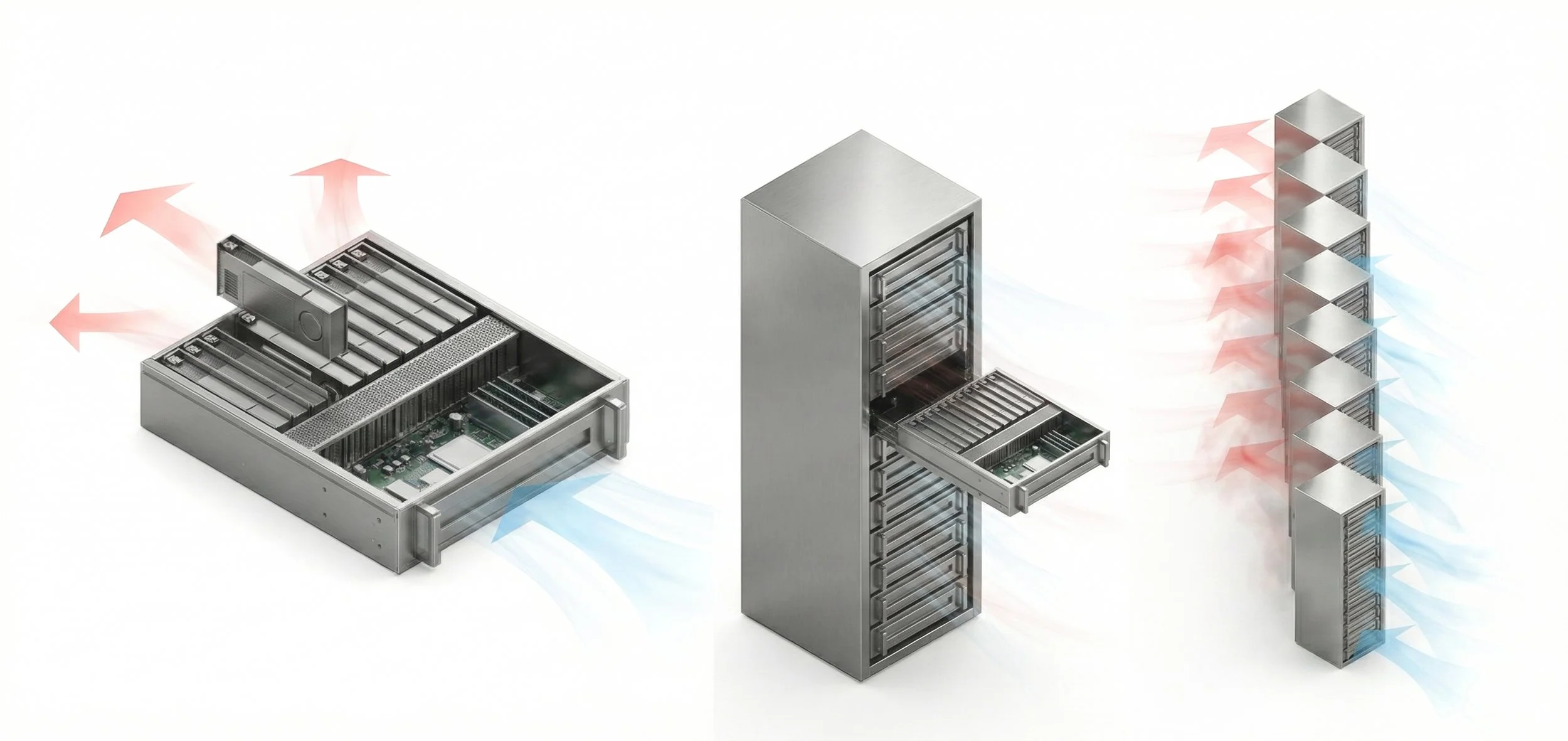
오늘날 데이터 센터는 고밀도 연산과 지능형 저장을 통해 현대 문명을 지탱하는 물리적 토대가 되었다. 지난 20년간 전력 용량은 5배, 데이터 생성량은 30배 가까이 폭증하며 하이퍼스케일의 시대를 열었다. 디지털 환경은 이제 보조적 수단을 넘어 사회 구조를 지탱하는 핵심 기반 시설로 자리 잡았지만, 이 ‘디지털 심장’의 건축적 문법은 여전히 효율 지상주의와 폐쇄적 기능주의에 머물러 있다. 보안과 냉각을 명분으로 세워진 외피는 도시 맥락으로부터 스스로를 고립시키며 인간의 체류 경험을 배제해 왔다. 데이터는 확장되었으나, 장소의 기억은 축소되었다.
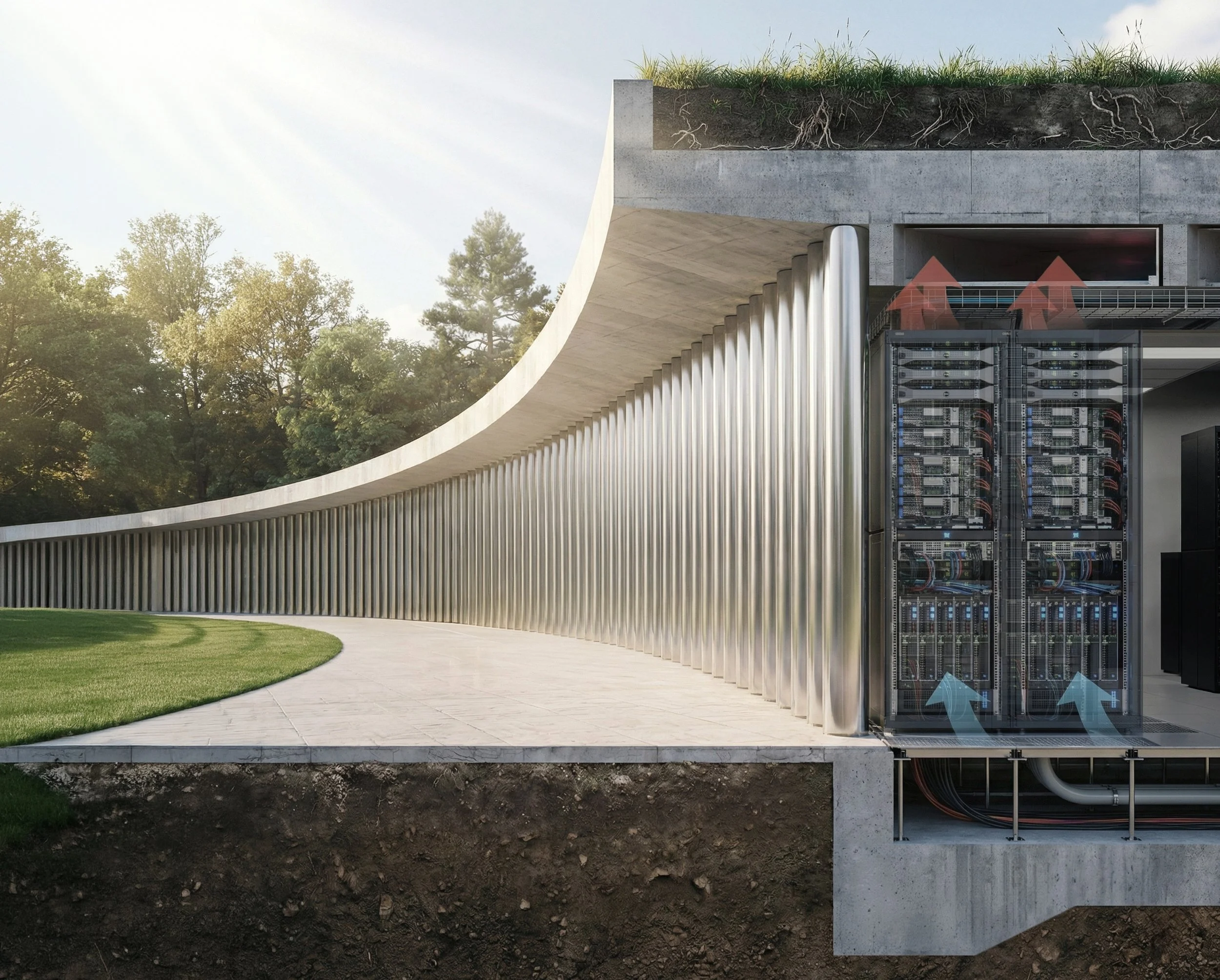
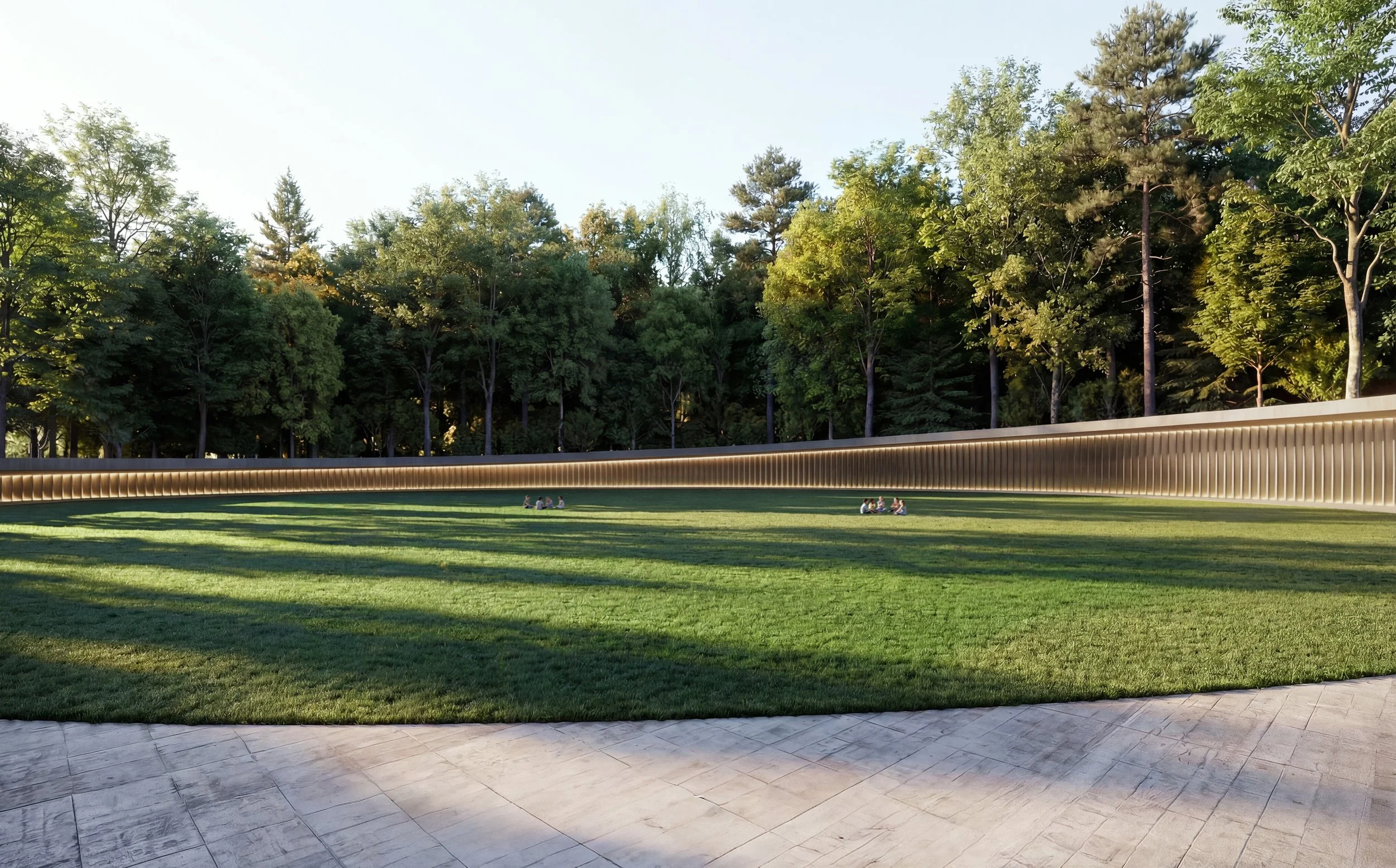
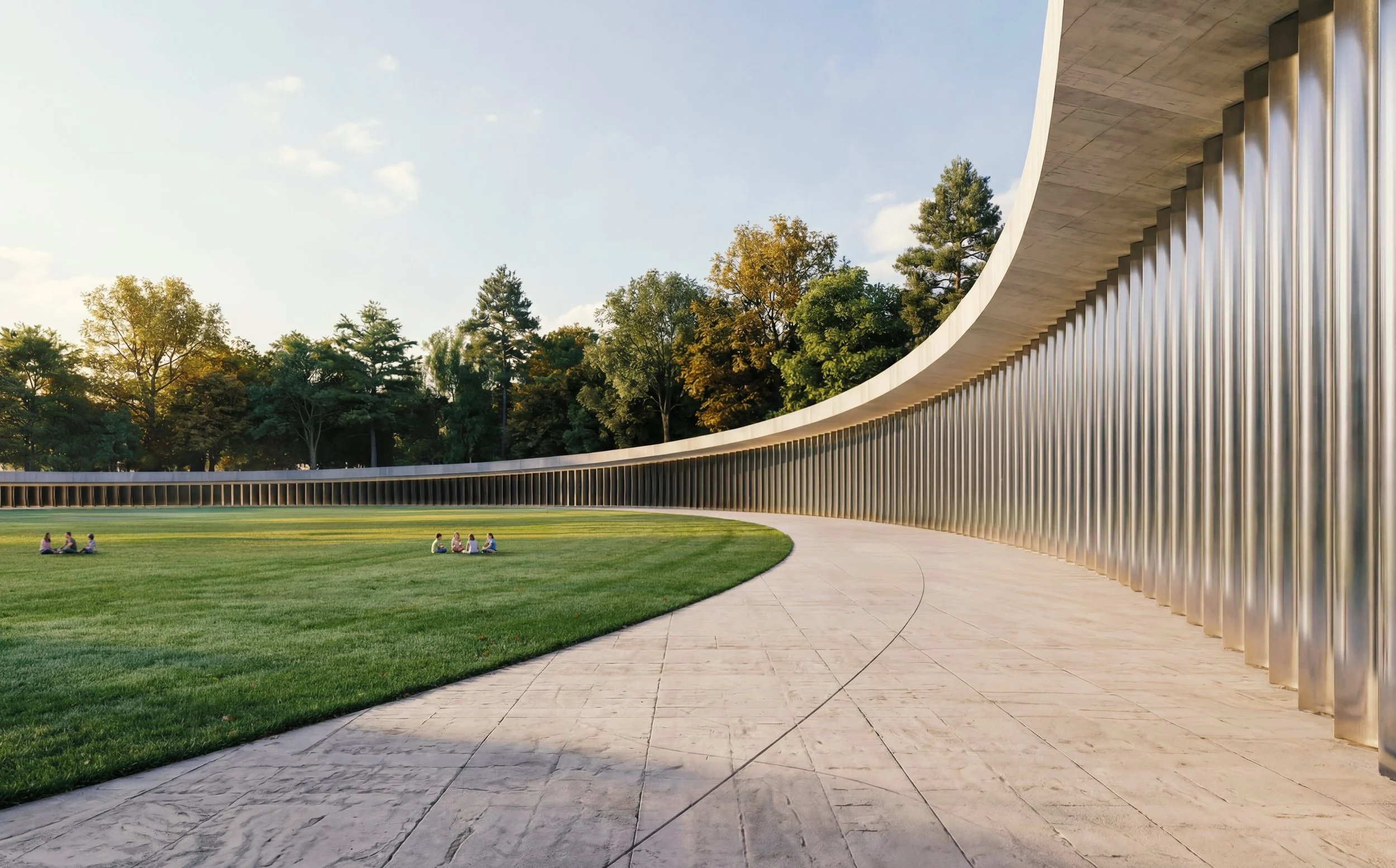
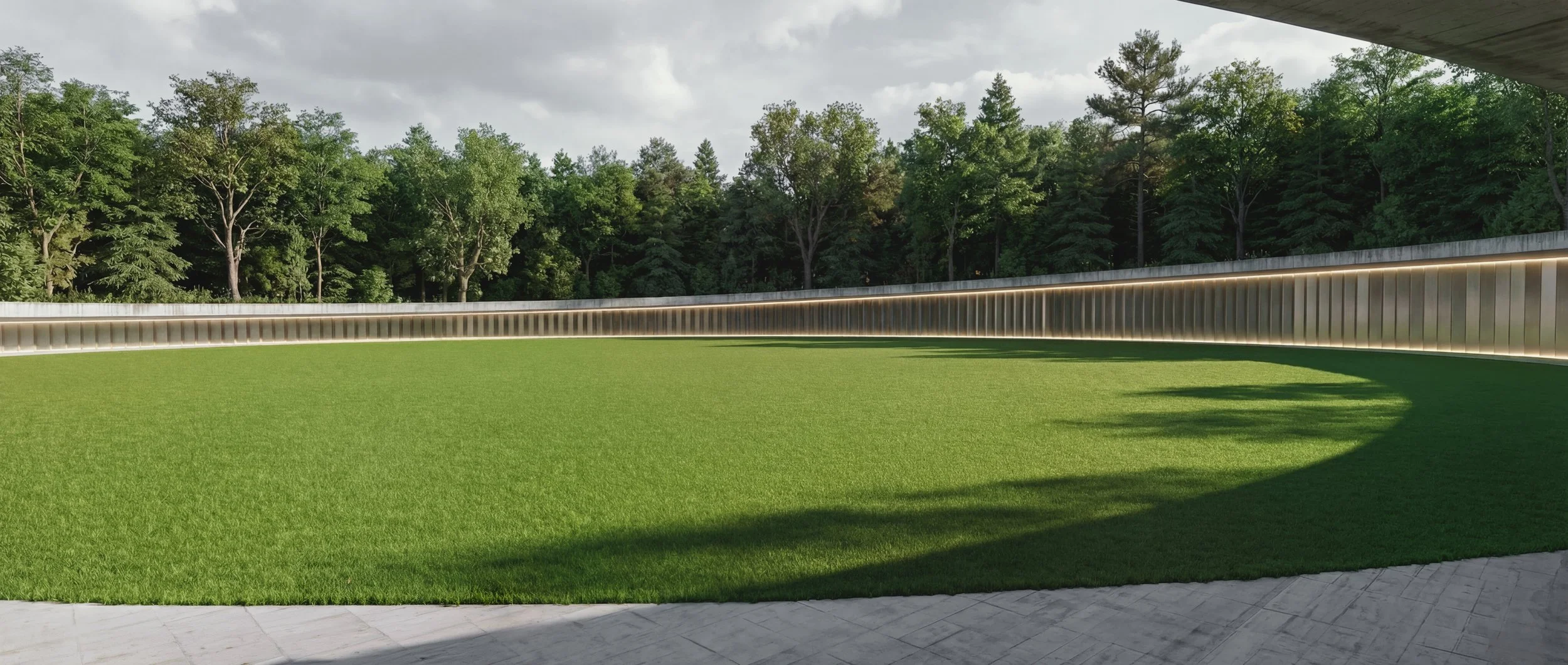
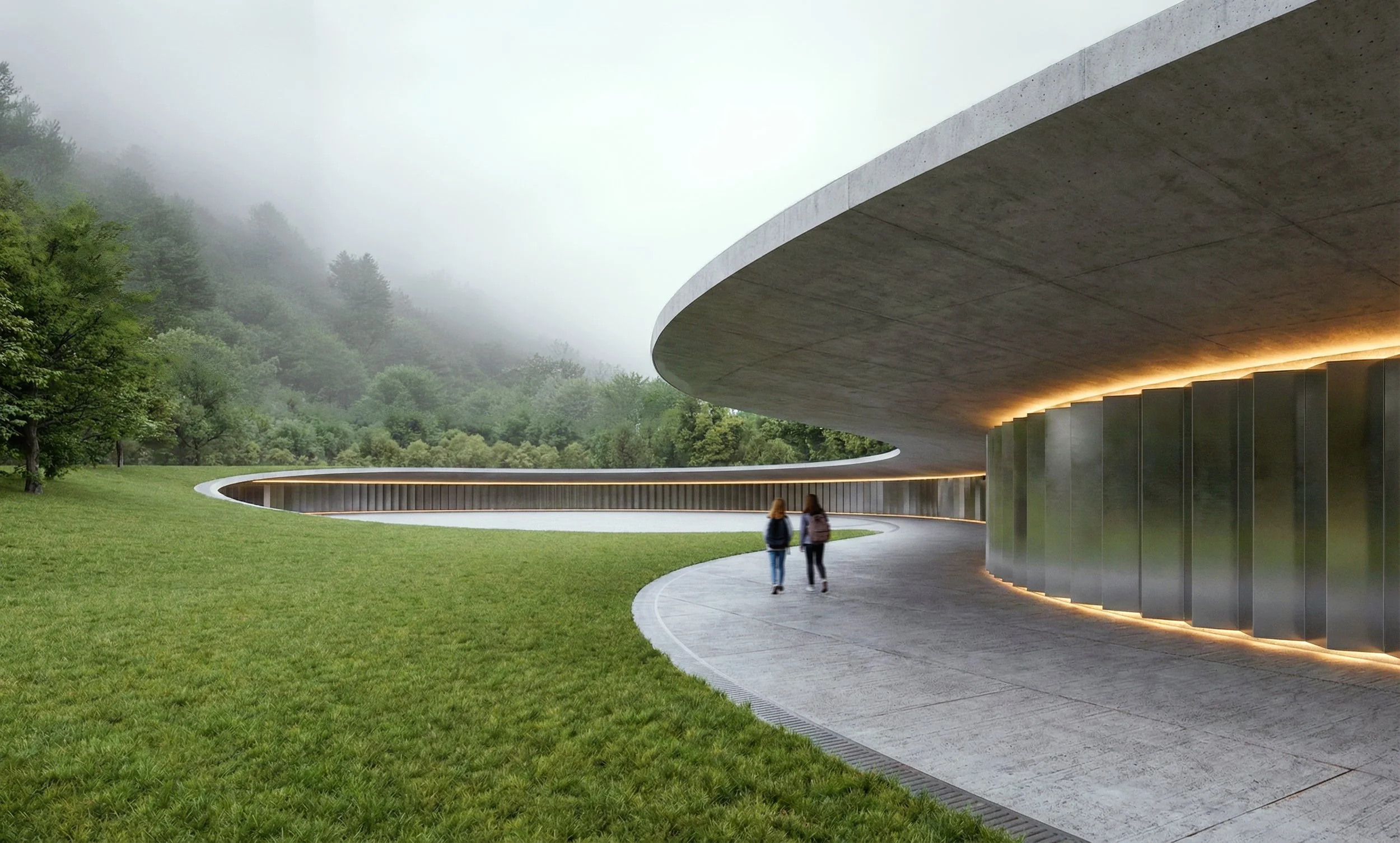
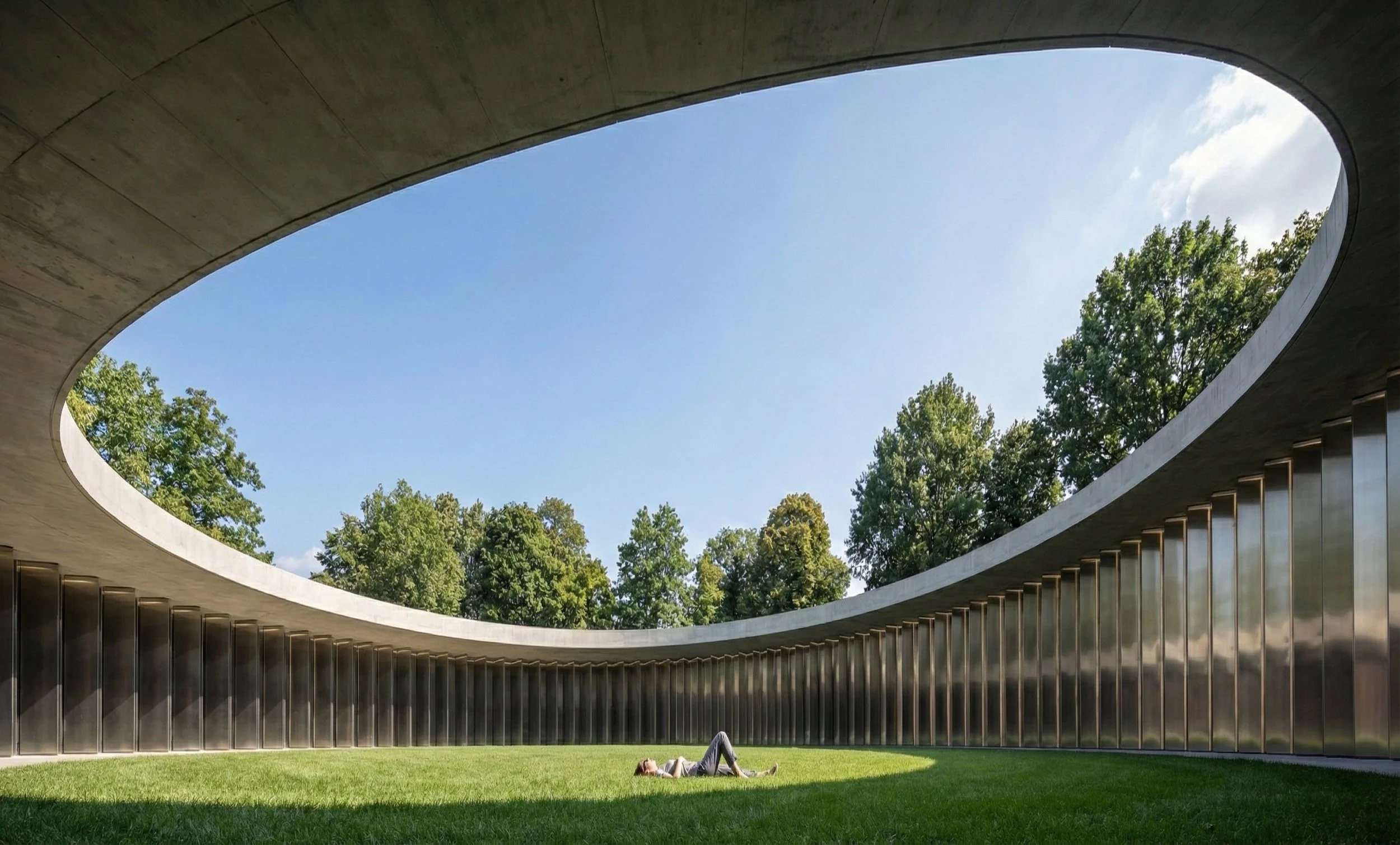
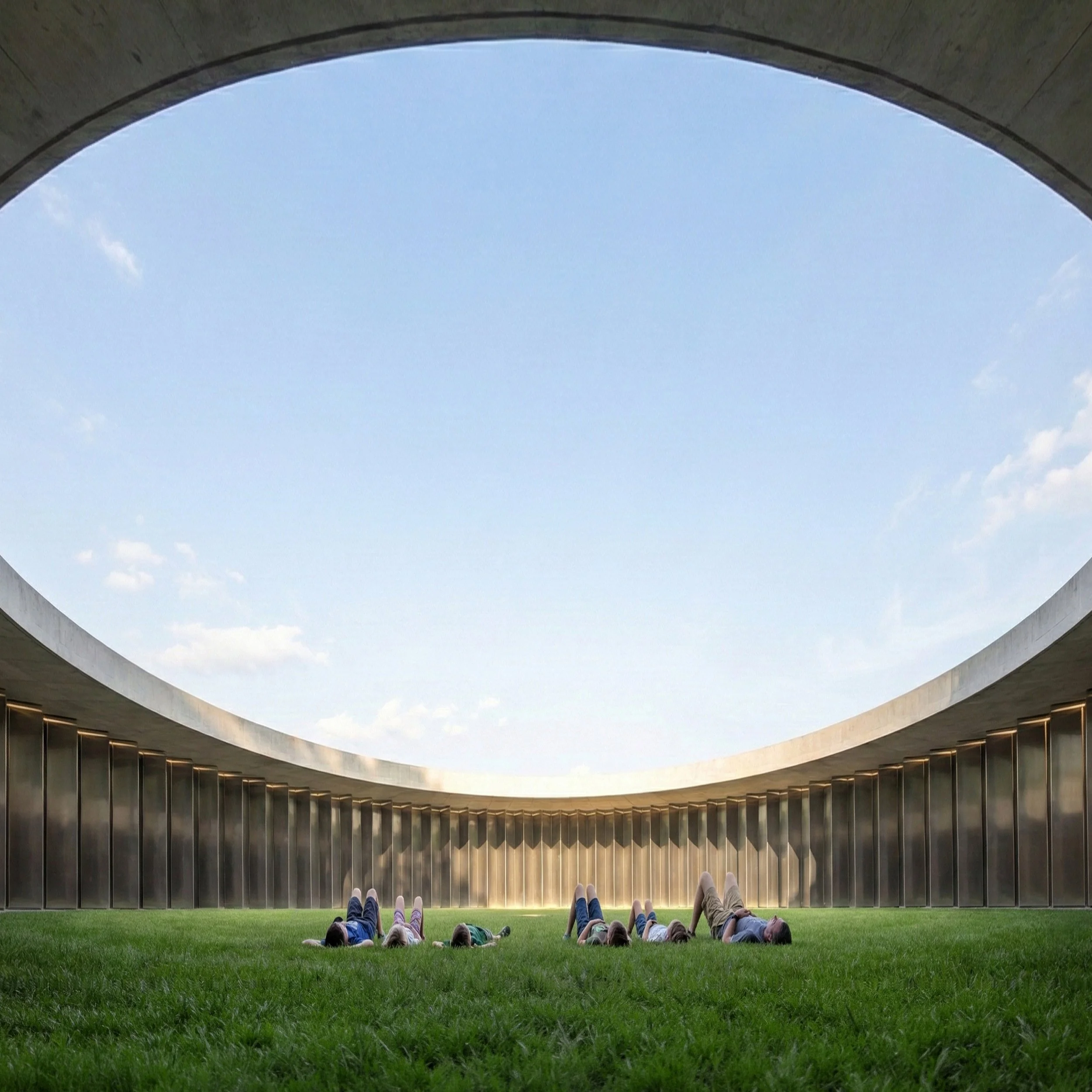
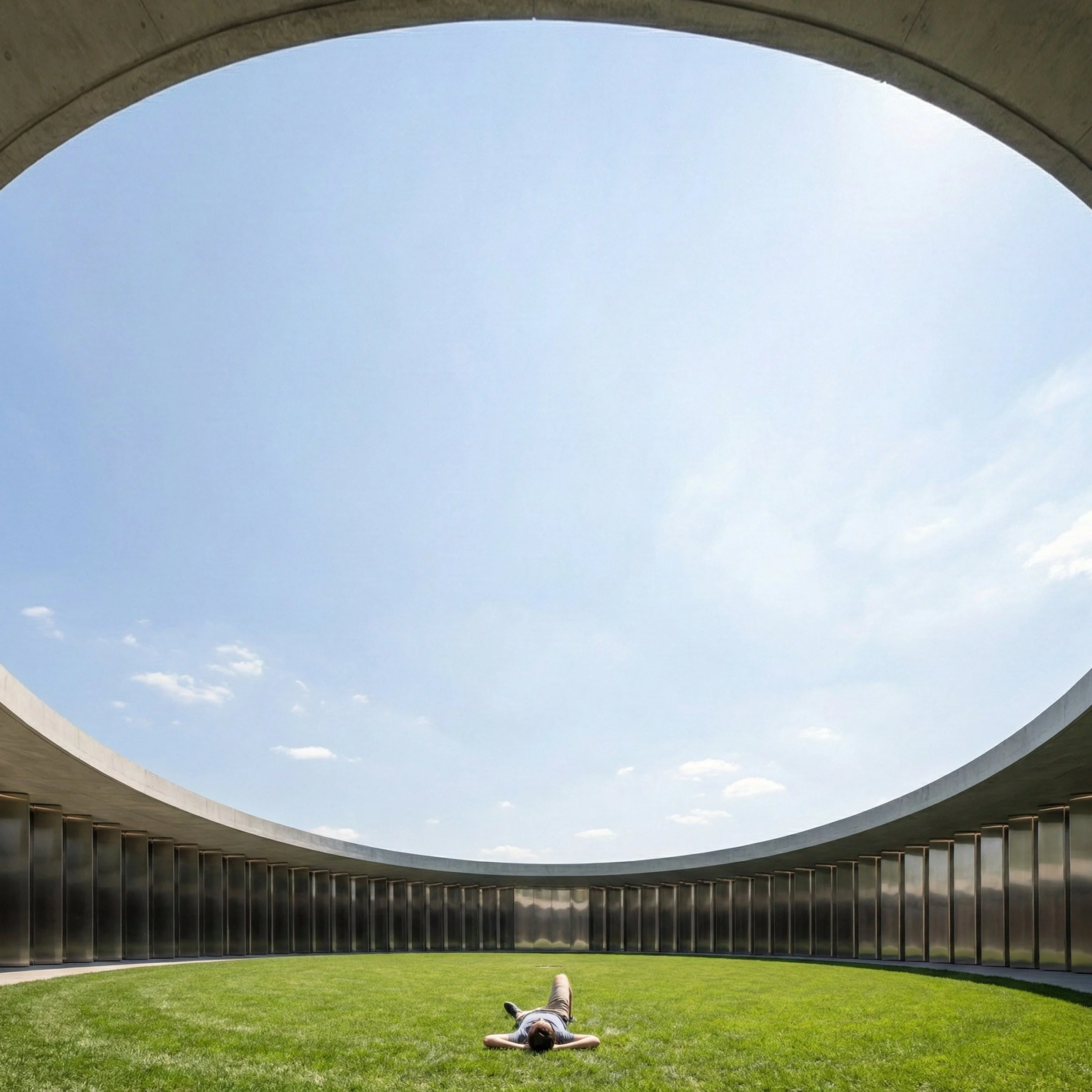
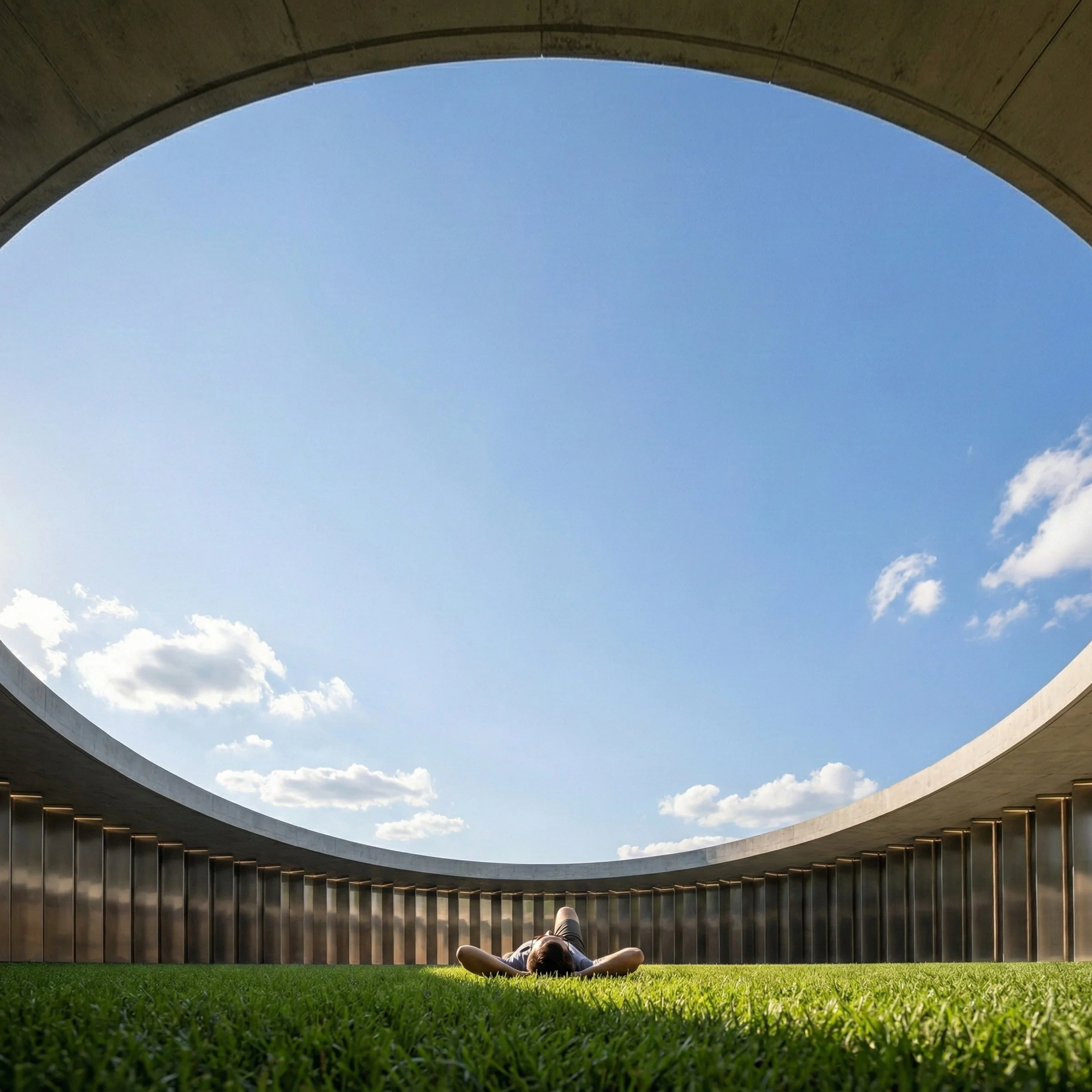
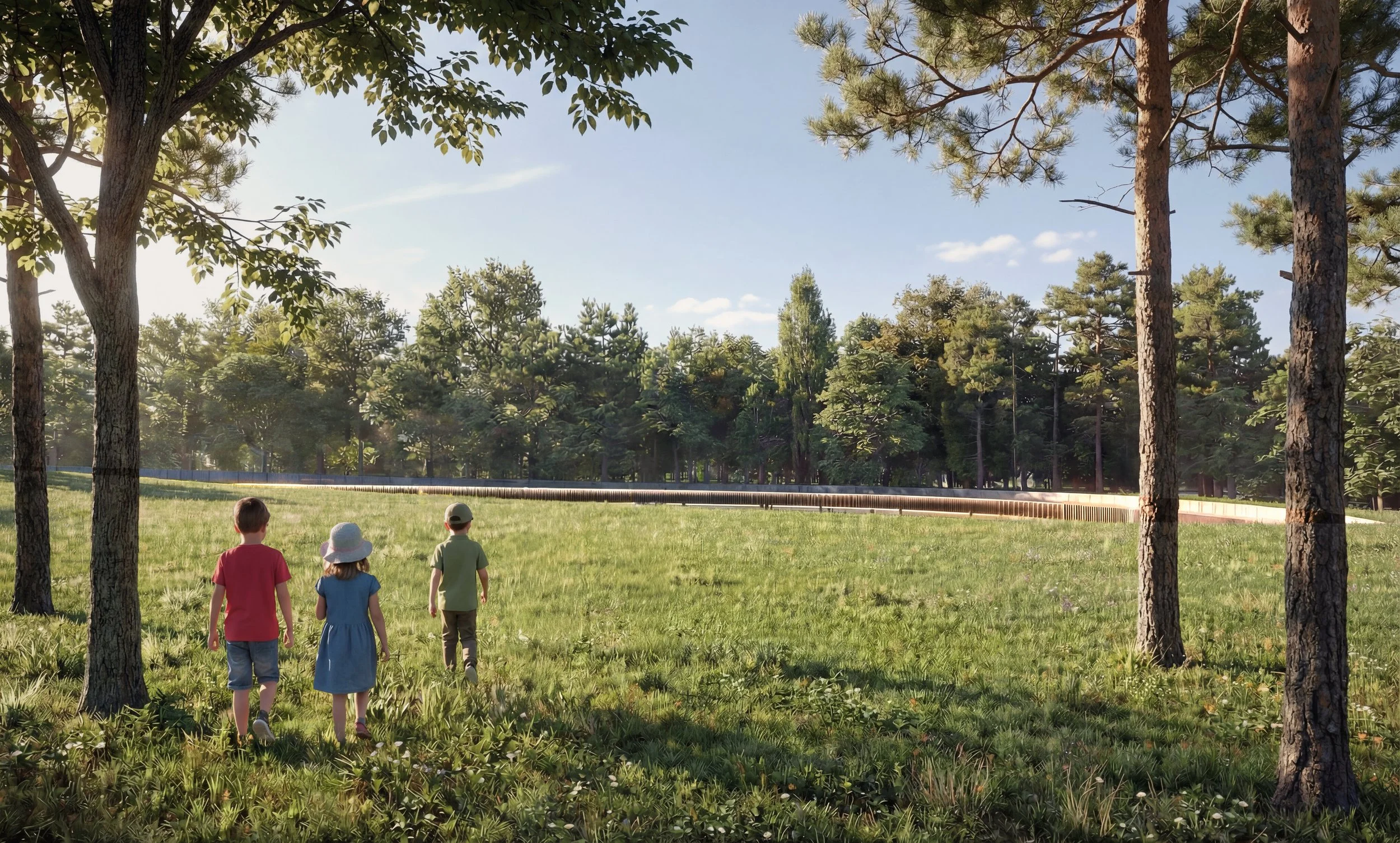
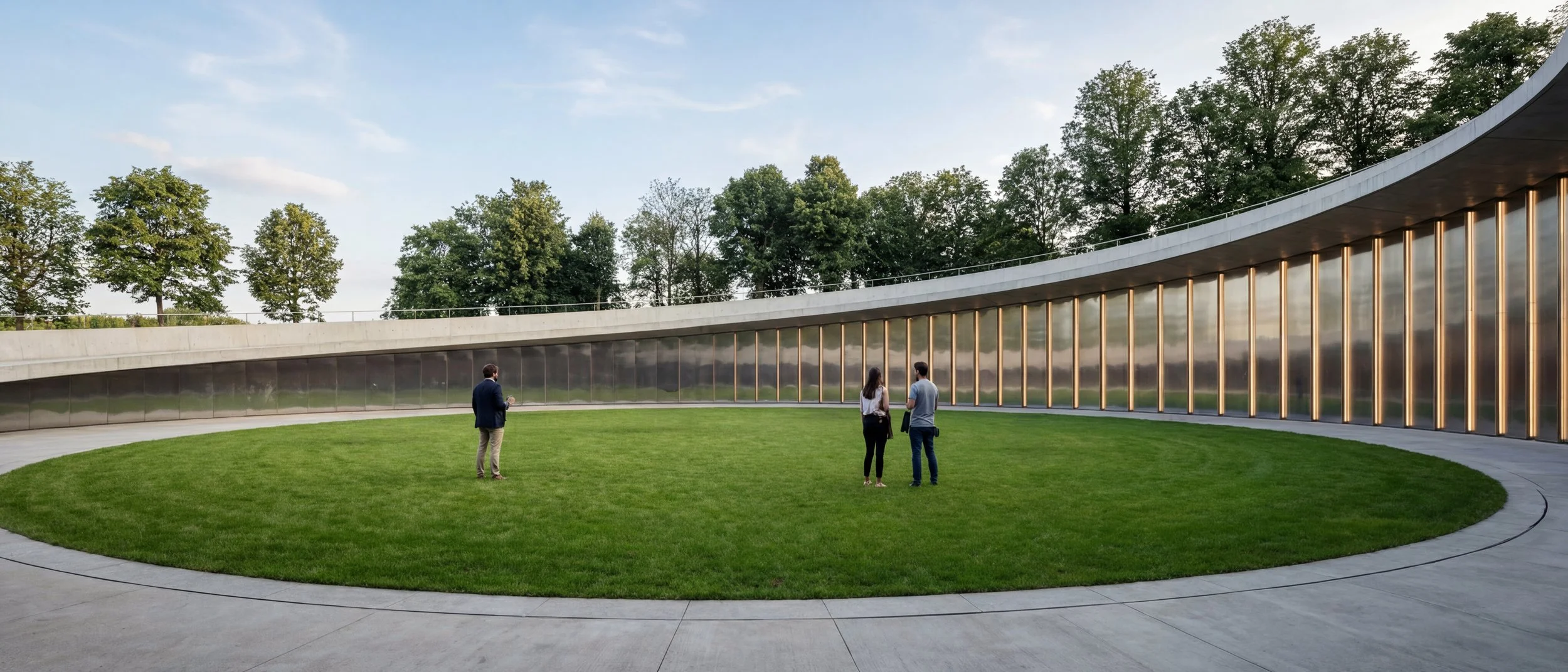
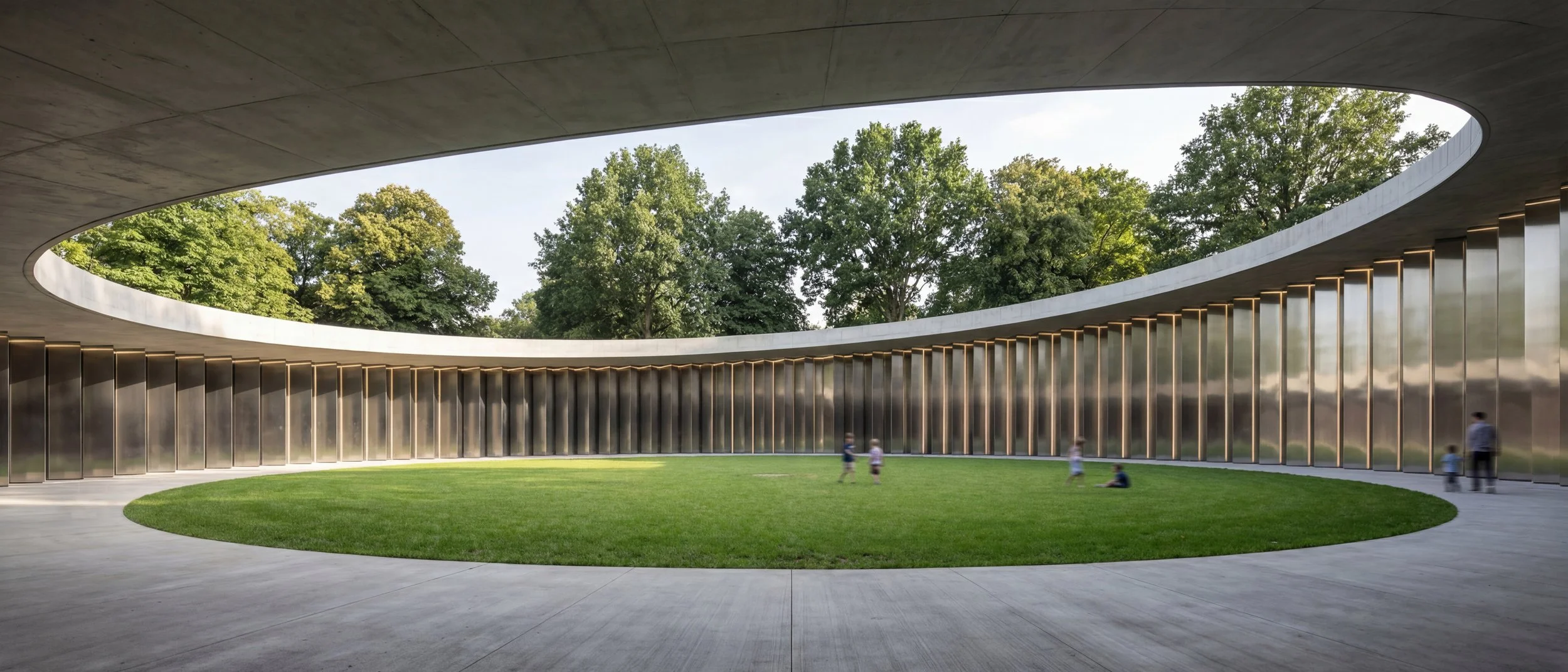
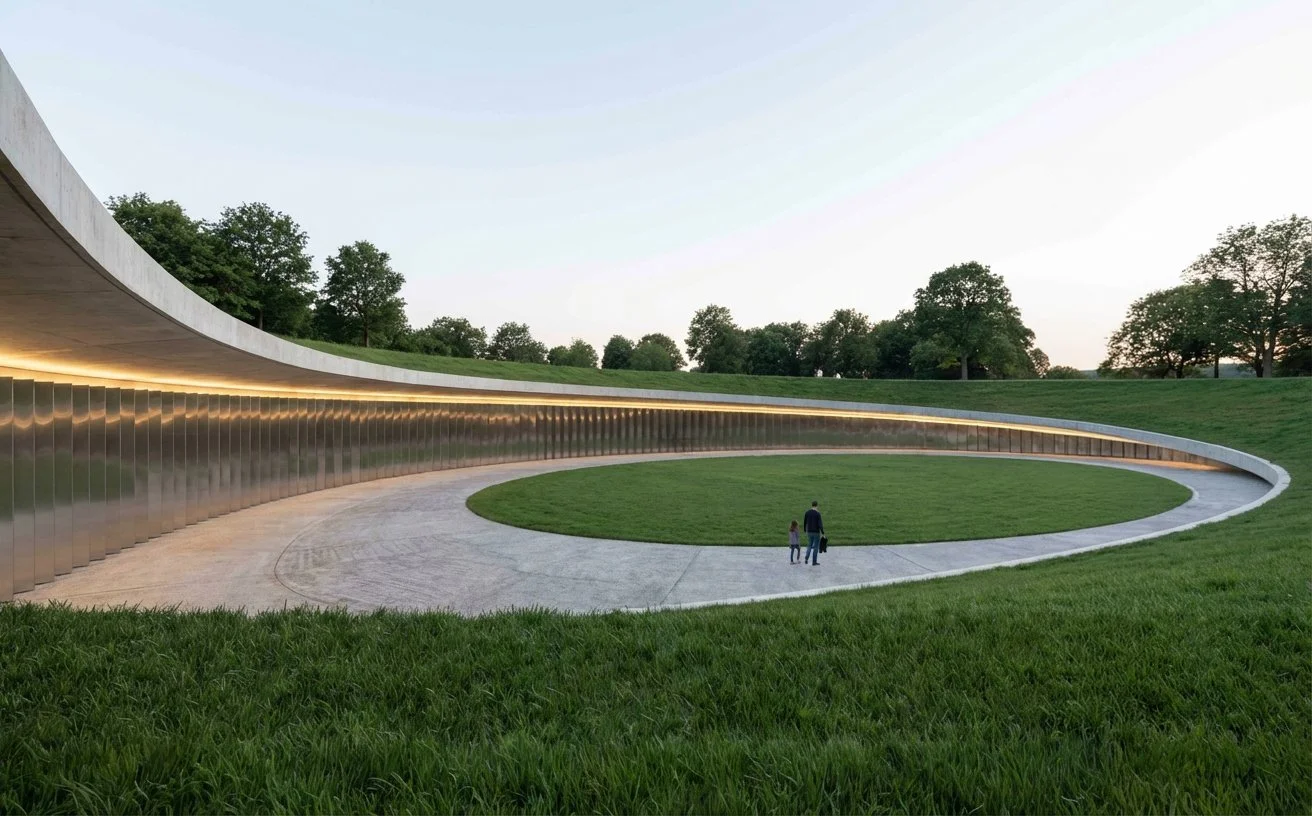
본 제안은 데이터 센터의 기술적 필연성을 수용하고, 거대한 축적의 용량을 공간적 자산으로 전환한다. 기능을 은폐하는 대신 도시 경험의 전경으로 노출하여 재배치하고, 자연과 보행 동선을 결합해 단절된 도시 조직을 복원한다. 이는 감각적 공간 경험과 디지털 인프라의 작동 원리가 충돌하지 않고 공존하는 새로운 공존 모델을 제안한다. 숲 사이로 완만히 솟은 지형은 거대한 원을 품는다. 건축은 대지 위에 서기보다, 땅을 비워내며 형성된 공간에 가깝다. 낮고 수평적인 매스는 풍경의 일부가 되고, 곡선의 보행로는 방문자를 서서히 중심으로 이끈다. 동선은 도달의 수단이 아니라 시간을 체감하는 장치로 작동한다. 프로그램으로 규정되지 않은 중앙 잔디 광장은 비어 있음으로 존재한다. 사람들의 움직임과 머묾이 의미를 갱신하며, 교차하는 동선 속에서 관계의 장이 형성된다. 건축은 행위를 지시하지 않고, 관계가 발생할 조건만을 마련한다. 물리적 공백은 감각적 밀도로 전환되고, 반복되는 순간들은 보이지 않는 중심을 구축한다.
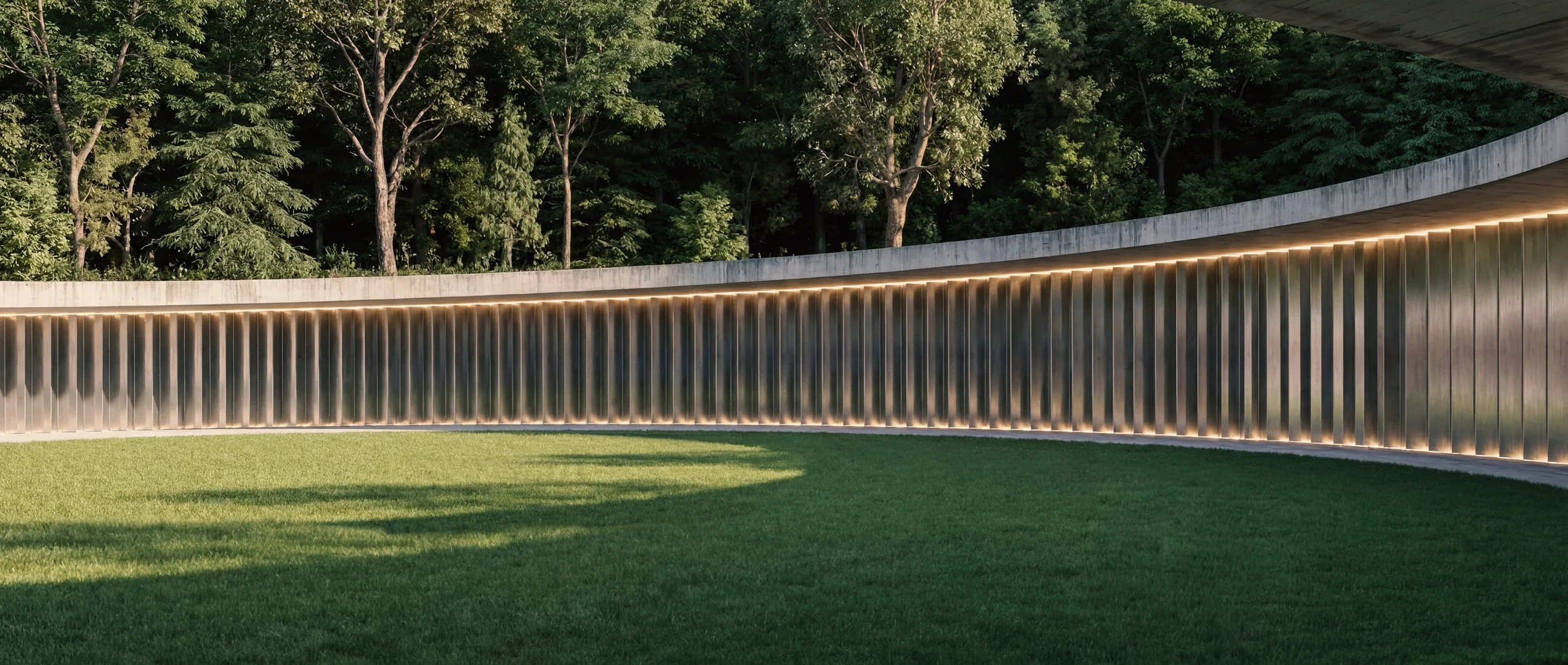
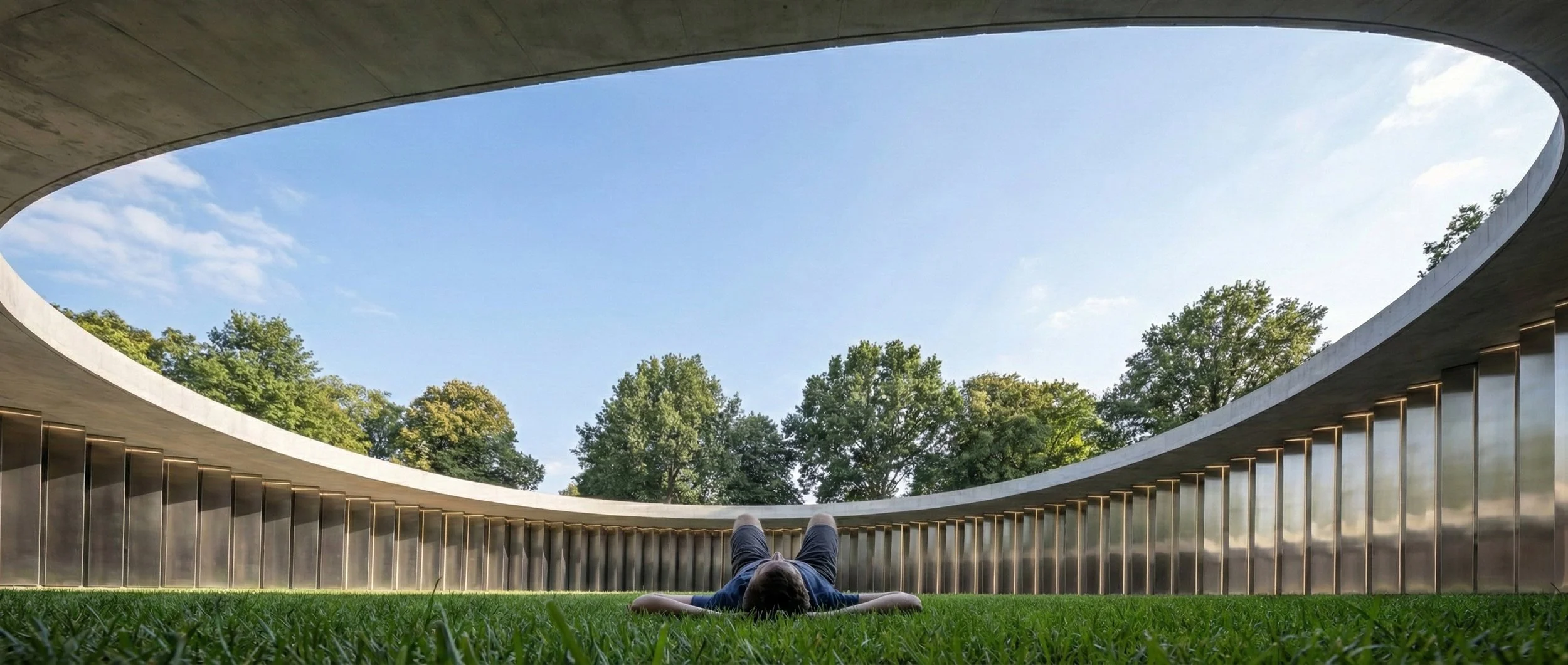
원환을 감싸는 금속 패널은 수직 리듬을 이루며 정교한 질감을 형성한다. 낮에는 숲의 색채를 반사해 배경으로 스며들고, 저녁에는 은은한 조명으로 대지의 경계를 드러낸다. 상부에 띄워진 얇은 콘크리트 캐노피는 하늘을 프레이밍하여 잘려 나간 하늘 조각을 중정에 드리운다. 비가 내리면 처마 끝을 타고 흐르는 빗소리가 공간을 흐릿한 풍경으로 전환시키고, 건축은 하나의 감각적 장치로 작동한다. 이곳에서 방문자는 거대한 연산 체계 속에서도 여전히 감각의 주체임을 자각한다. 기술은 배경이 되고, 경험은 전면이 된다.
© INTERFACE STUDIOS 2026, ALL RIGHTS RESERVED
Space After Function
Circular Infrastructure: Emptied Center with Operative Landscape
Today, data centers underpin contemporary civilization through high-density computation and intelligent storage. Over the past two decades, installed power capacity has increased fivefold and global data generation nearly thirtyfold, ushering in the era of hyperscale. The digital environment has evolved from a supplementary tool into critical infrastructure. Yet its architectural language remains bound to efficiency and closed functionalism: envelopes shaped by security and cooling isolate these facilities from the city and exclude human experience. Data has expanded; the memory of place has diminished.
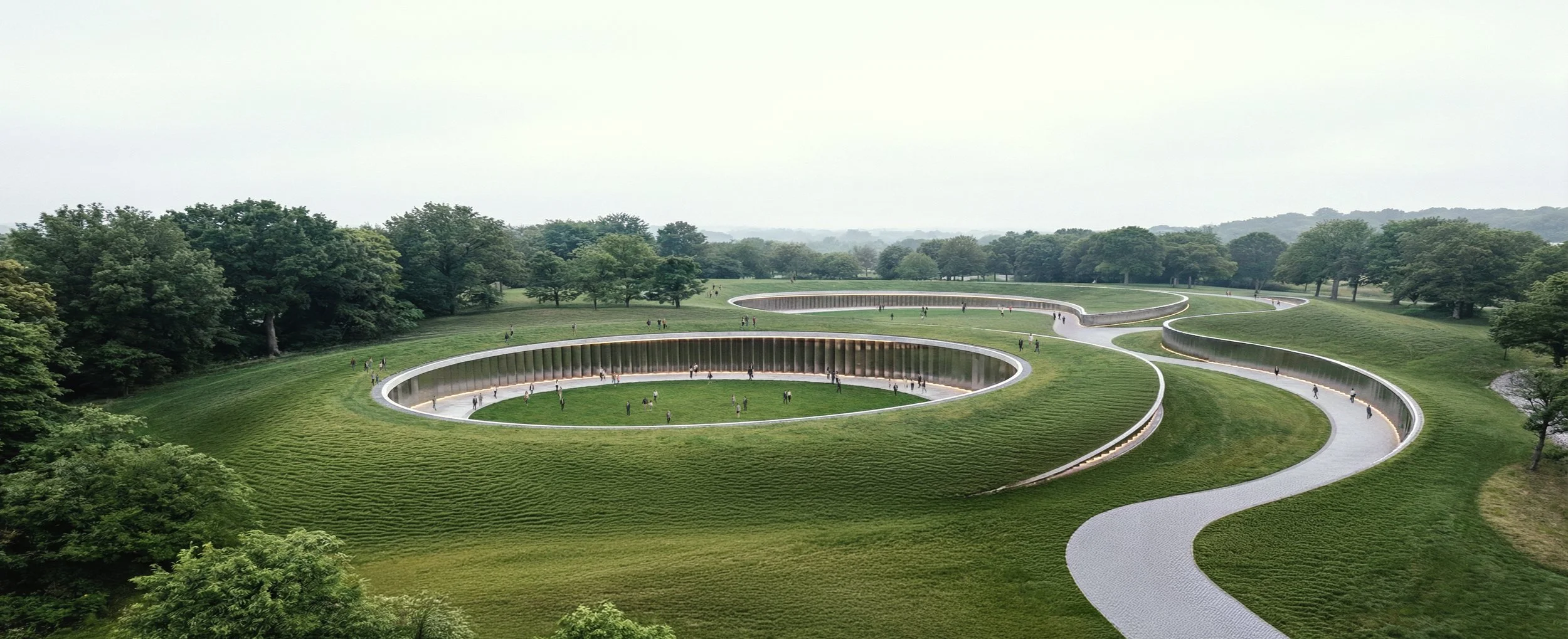
This proposal accepts the technological inevitability of the data center and reinterprets its vast capacity as a spatial asset. Rather than concealing its function, the project brings it into the foreground of urban experience, weaving landscape and pedestrian circulation into a previously fragmented fabric. It proposes a model in which sensory space and digital operations coexist in mutual complementarity.
Rising gently among the trees, the terrain holds a circular void from which the architecture emerges. Low and horizontal, the mass merges with the landscape, while a curving promenade guides visitors toward the center. Circulation becomes not a means of arrival but a device for experiencing duration.
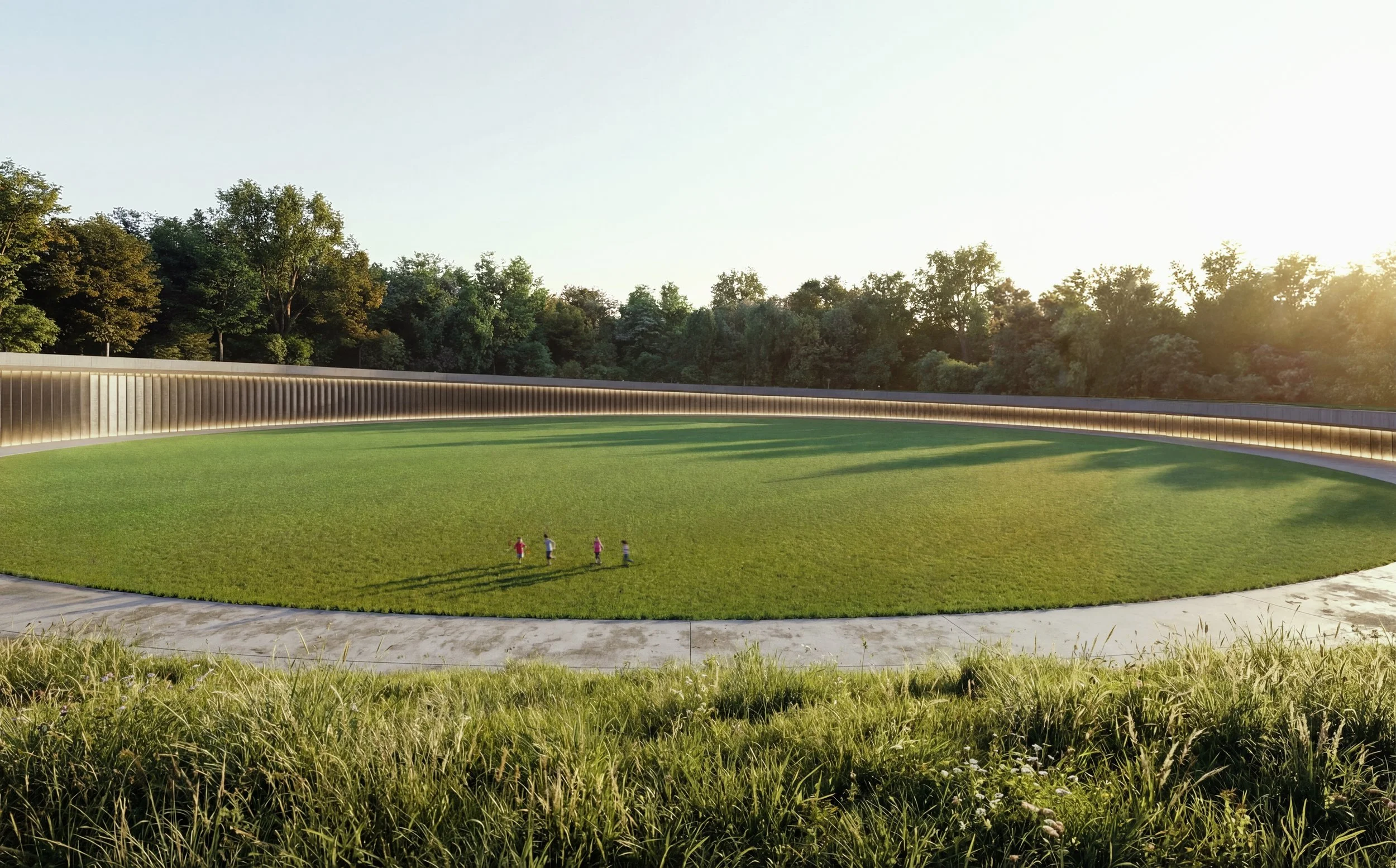
The central lawn, undefined by program, gains meaning through movement and pause. Intersecting paths generate a field of relations; the architecture does not prescribe action but establishes conditions for encounter. Physical emptiness becomes experiential density, forming an invisible center.
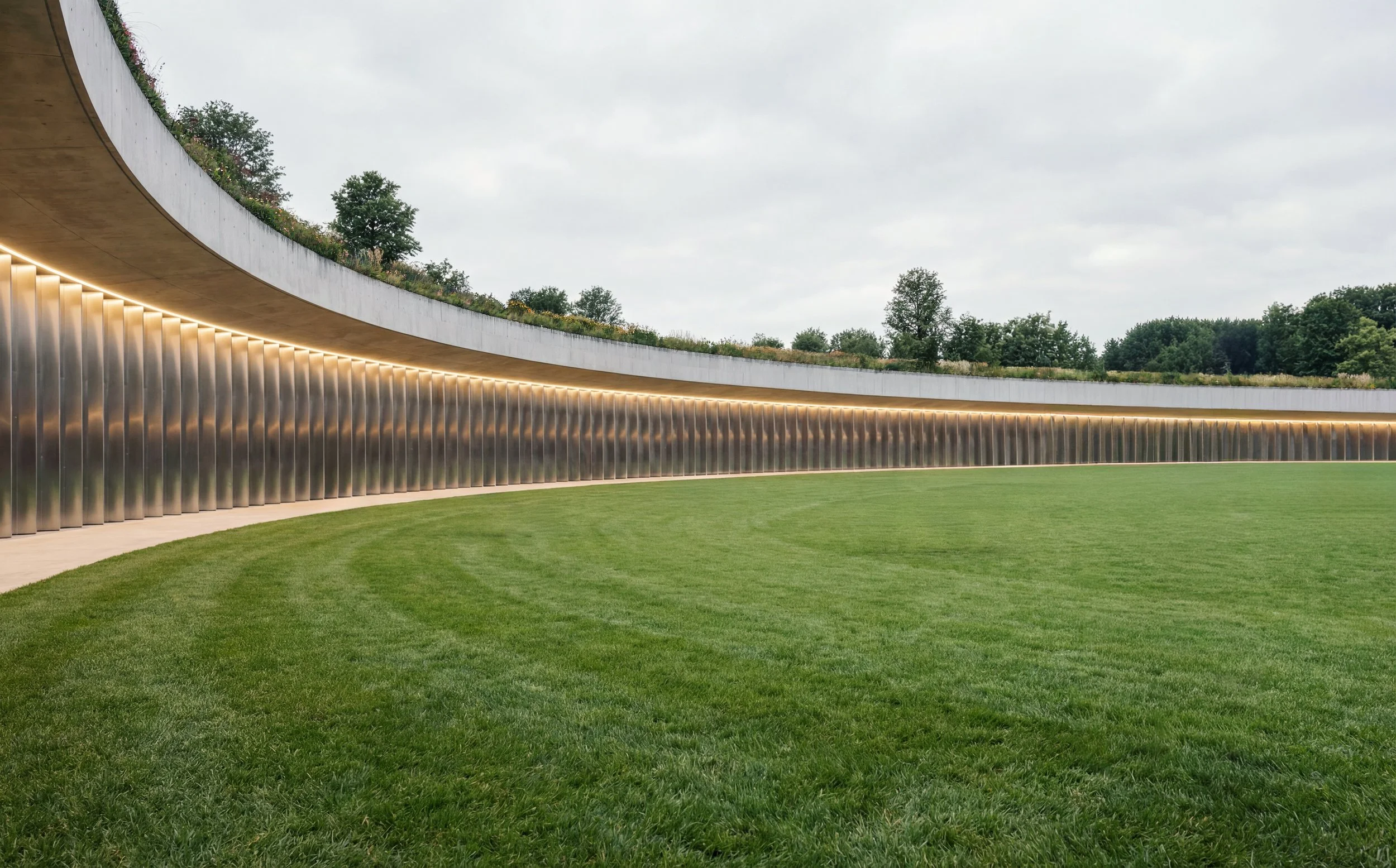
Vertical metal panels encircle the space in a rhythmic texture, reflecting the forest by day and glowing subtly by night. A thin concrete canopy frames a fragment of sky above the courtyard. In rain, sound along the eaves softens the scene, and the building operates as a sensory apparatus. Within this vast computational system, visitors rediscover themselves as subjects of perception: technology recedes, and experience comes forward.