浮游의 指標
부력 기반 공공 인터페이스, 비가시적 존재의 물질화 : 소리, 밀도, 그리고 형태
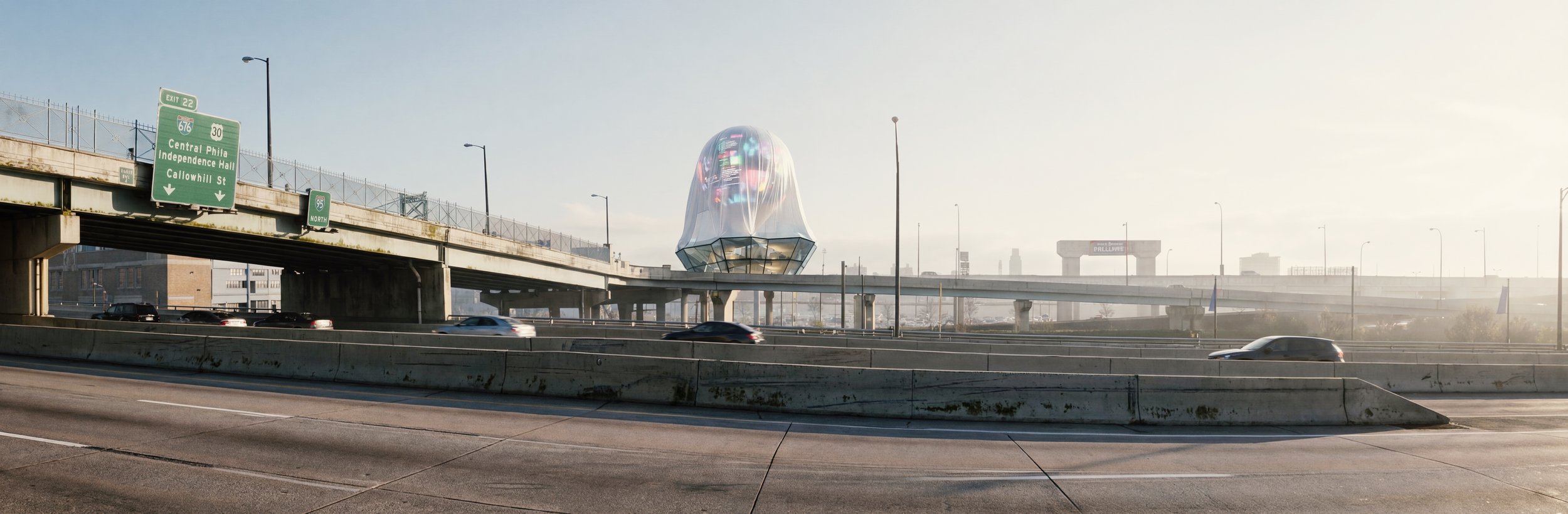
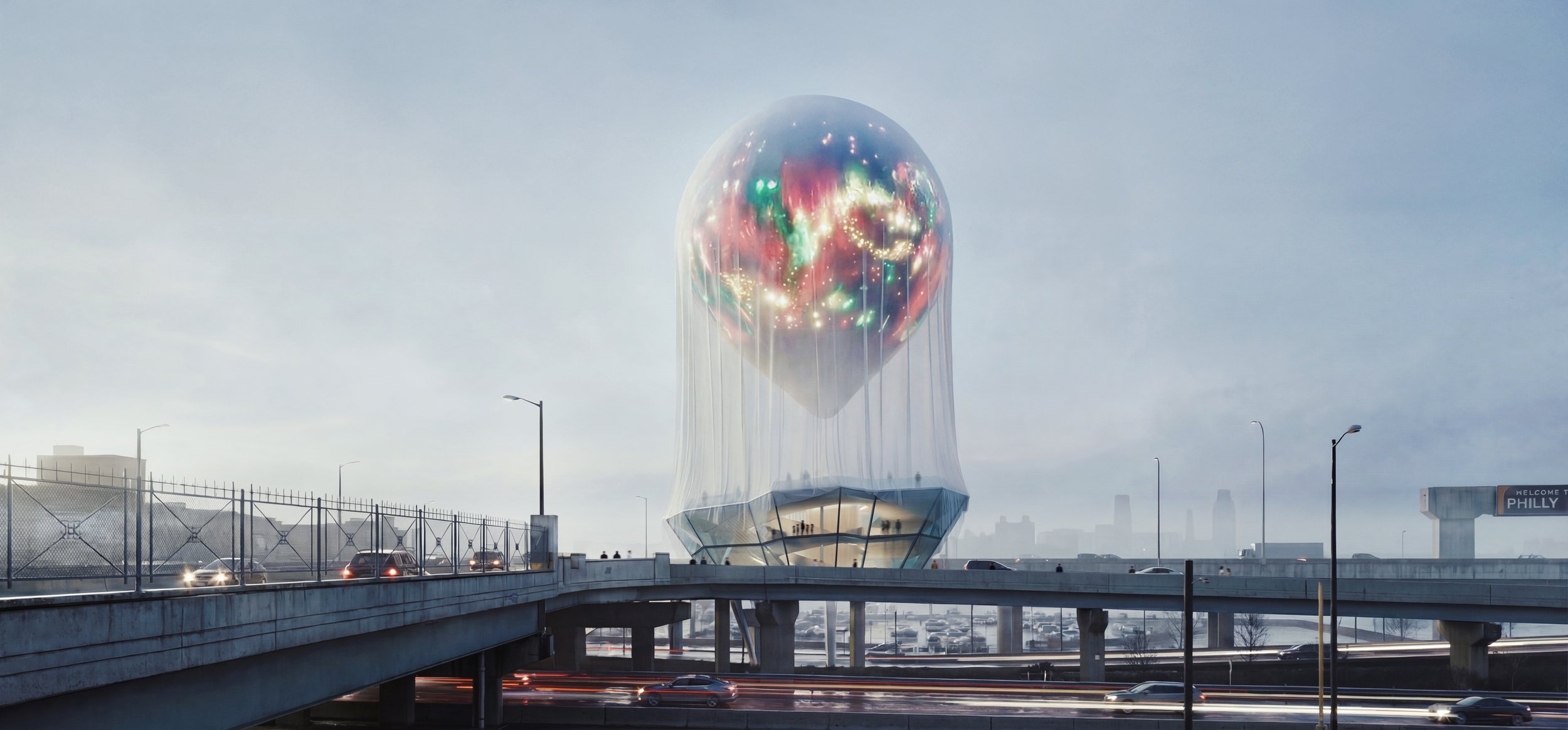
본 프로젝트는 필라델피아 Penn’s Landing과 델라웨어 강 워터프런트의 미래 개발에 대한 대중의 관심을 환기시키기 위한 공공 정보 인터페이스를 제안한다. 디지털 스크린과 같은 직접적이고 장치 중심적인 미디어 적용 방식이 아닌, 공기의 압력·부력·중력과 같은 간단하고 전통적인 물리적 원리를 기반으로 공간의 변화 자체가 정보로 작동하도록 설계되었다. 이를 통해 환경은 수동적인 배경을 넘어 스스로 말하는 능동적인 커뮤니케이션 매체로 기능하며, 장소의 상태와 집단적 활동이 직관적으로 드러나는 시스템을 구축한다.
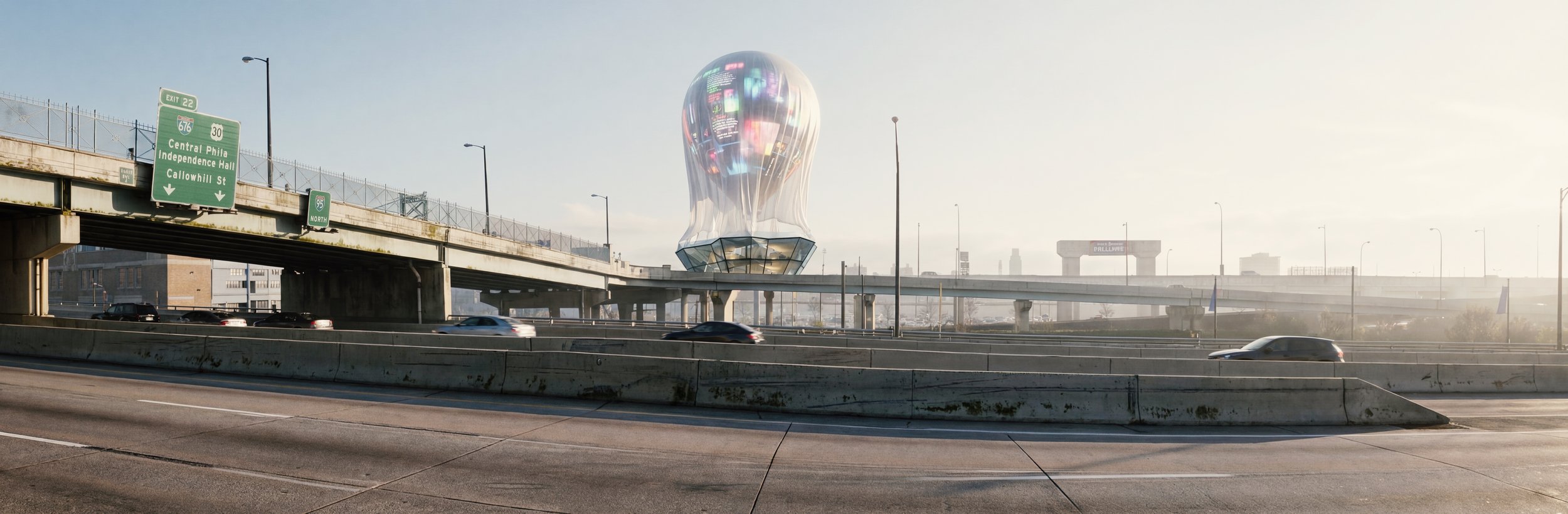
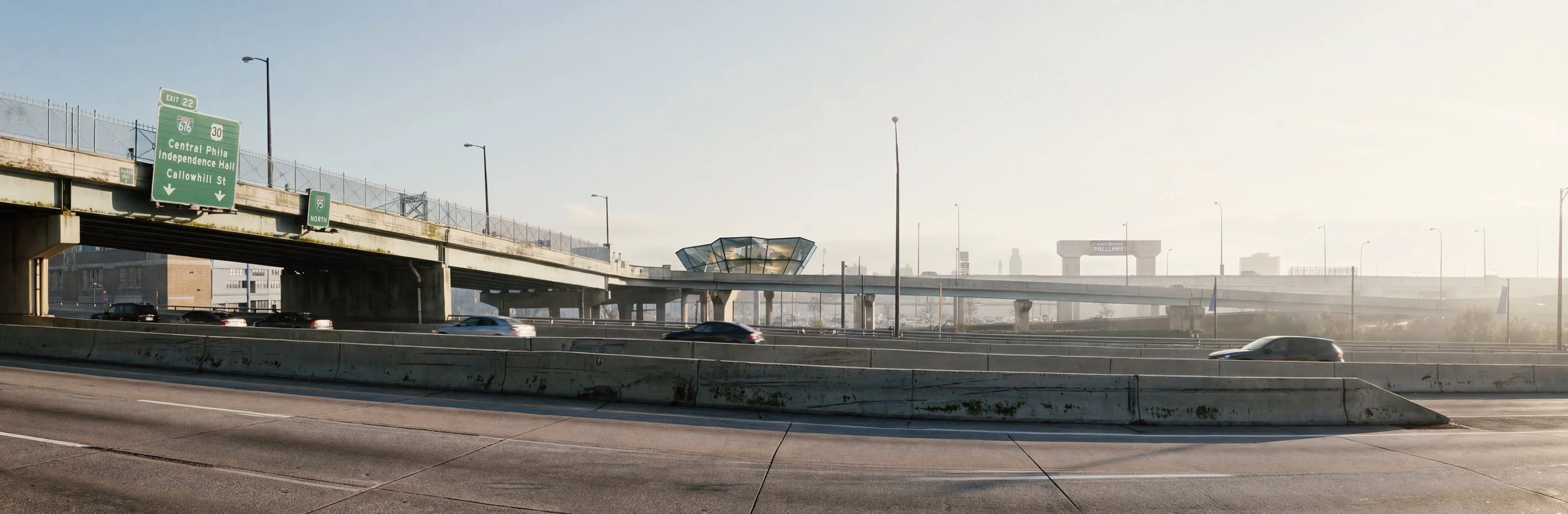
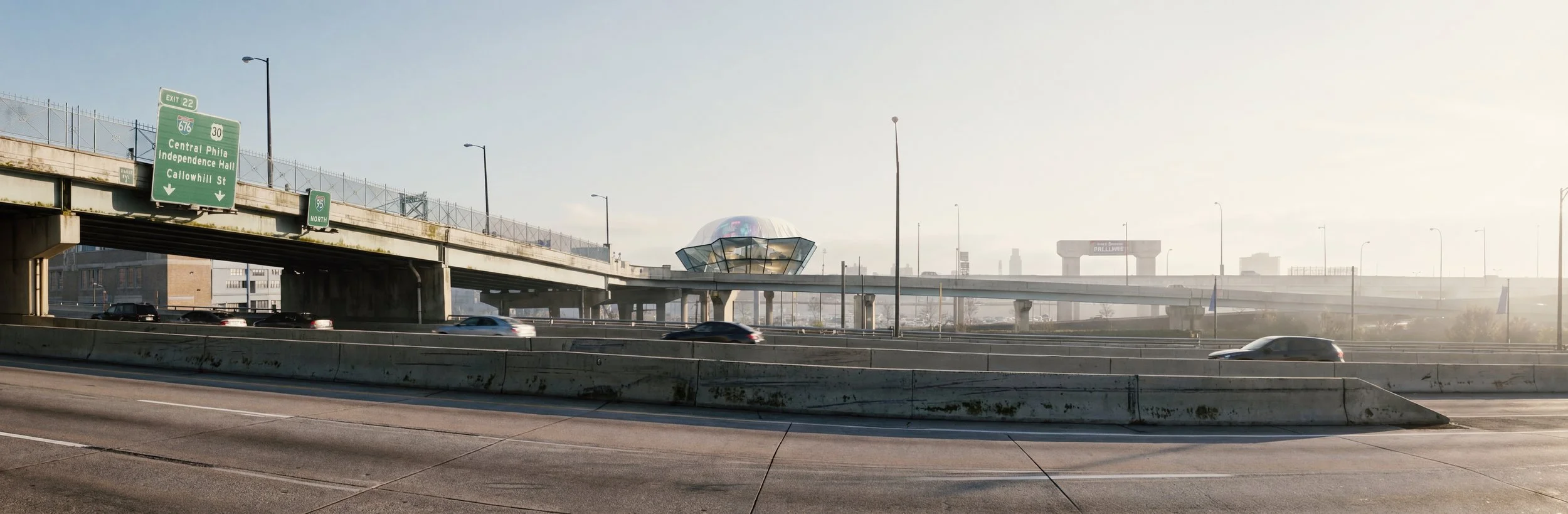
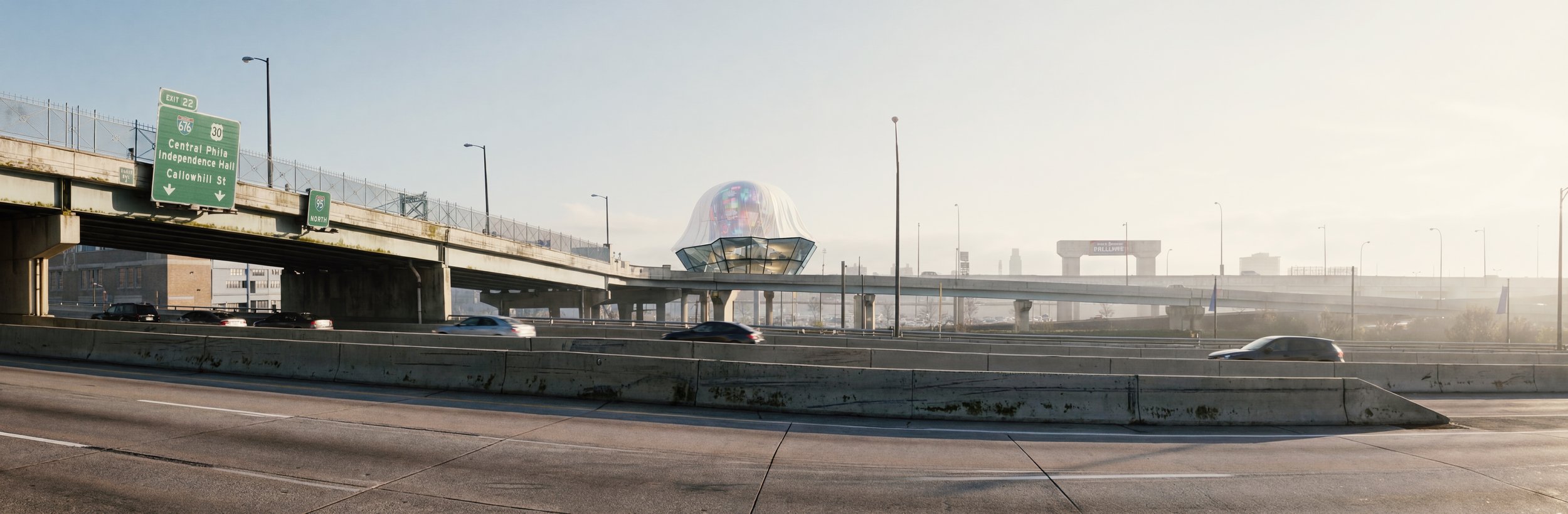
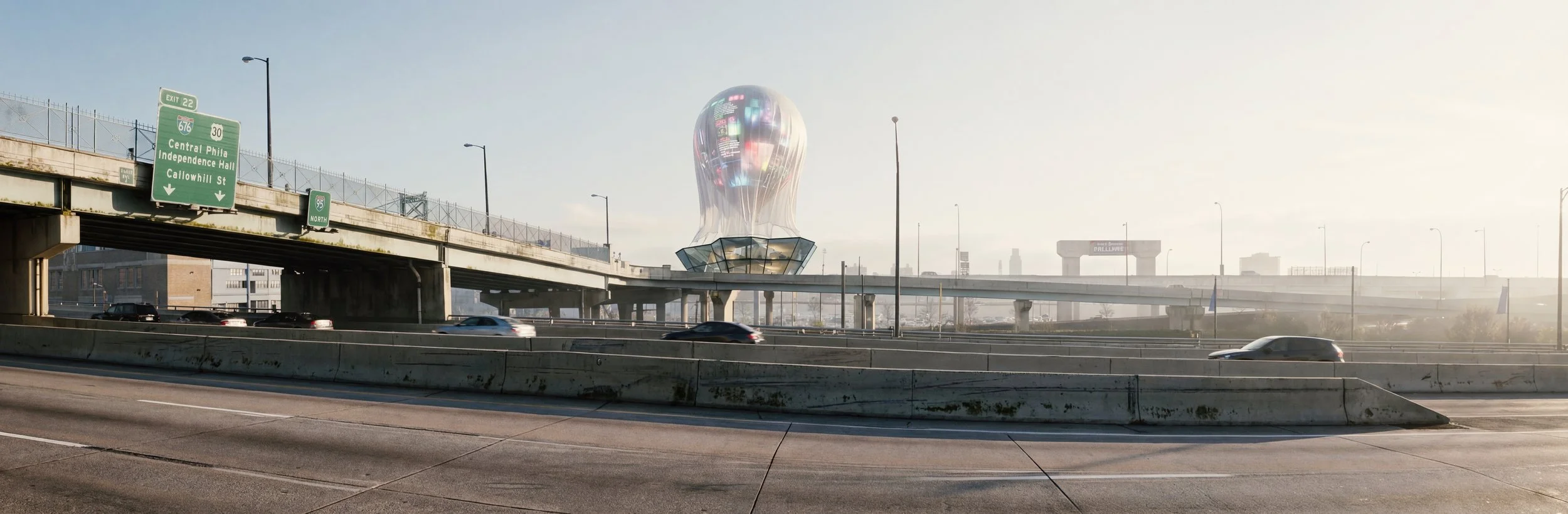
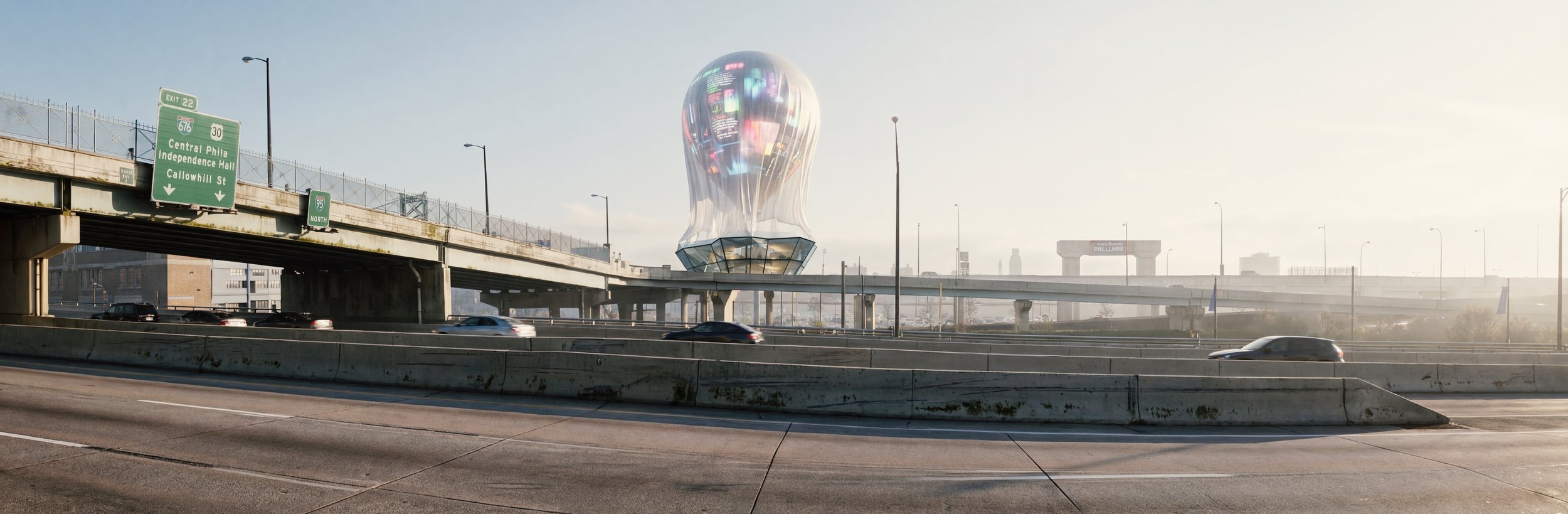
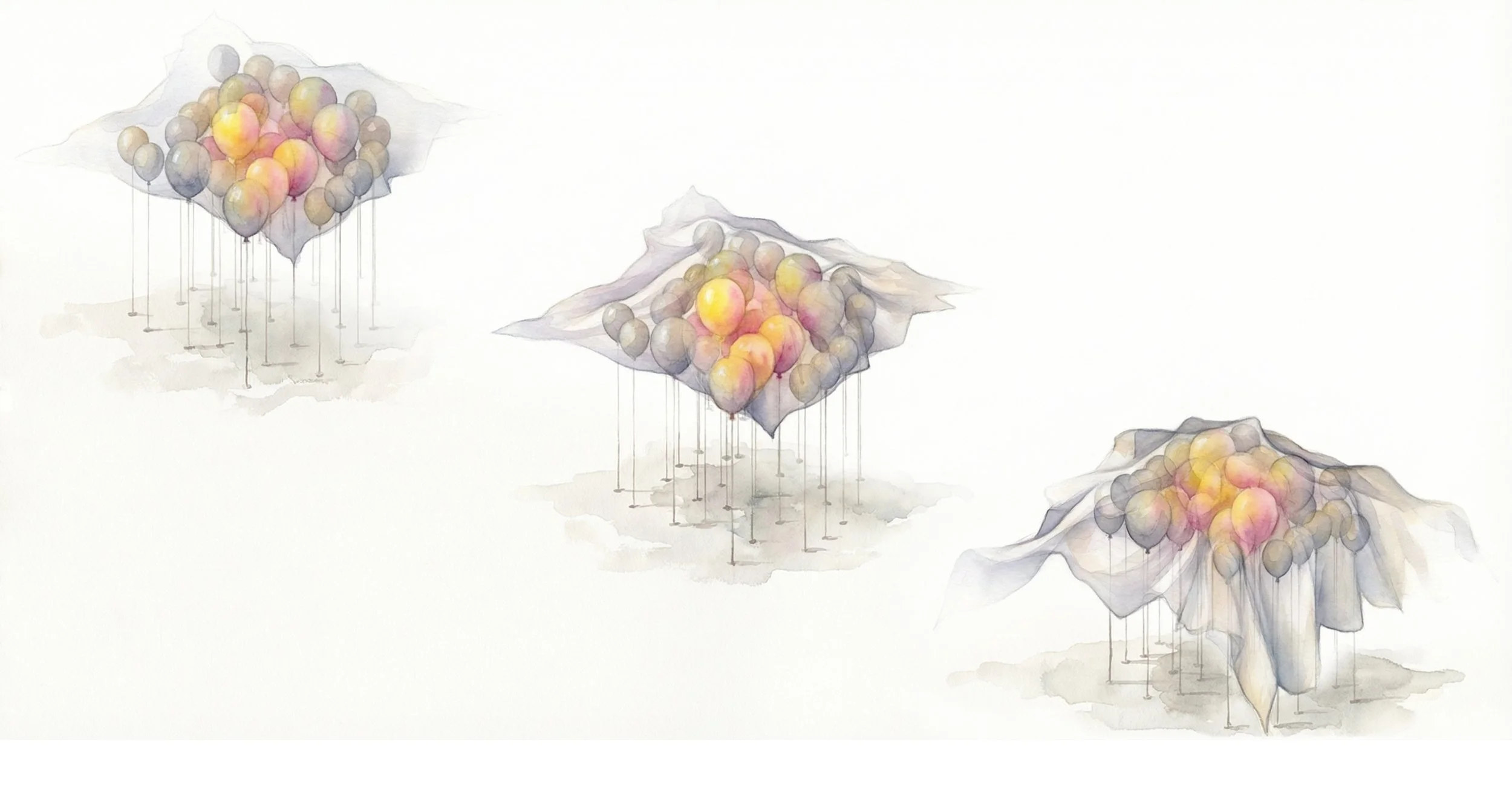
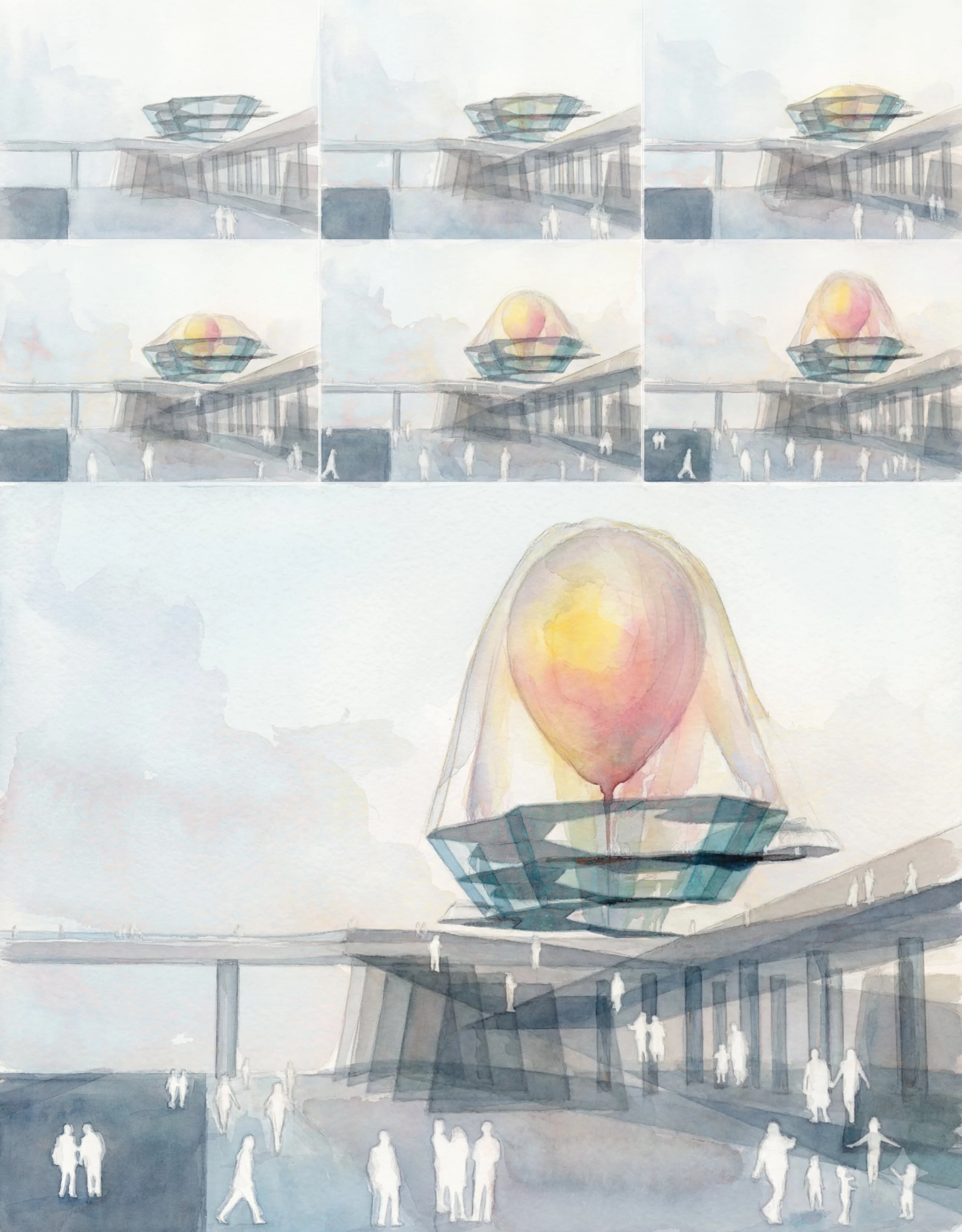
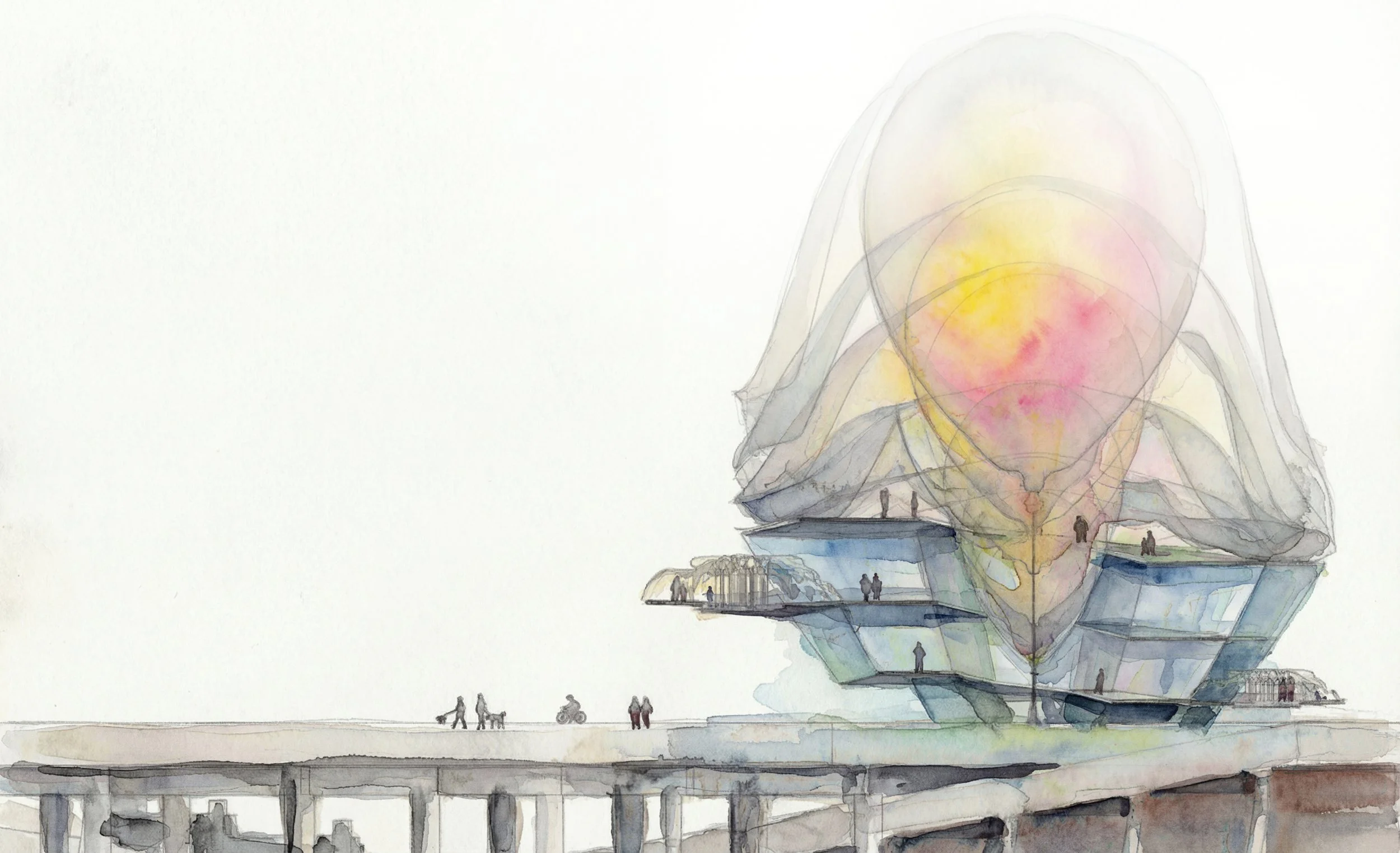
보이지 않는 움직임과 소음, 밀도는 센서를 통해 감지되어 하나의 리듬으로 수렴된다. 분산된 센서는 메인 제어 시스템과 연동되어 대지 내 인원 수와 활동 강도를 분석한다. 공간에 유입되는 사람이 증가할수록 풍선은 숨을 들이마시듯 팽창하며 천천히 상승하고, 이에 따라 옥상 레벨에는 더 많은 인원을 수용할 수 있는 가변적 공간이 형성된다. 이러한 시각적 변화는 물리적 경계를 넘어 멀리 떨어진 관찰자에게도 해당 장소에서 이벤트나 집단적 활동이 발생하고 있음을 알리는 신호로 작동하며 더 많은 인원을 대지 내로 유입한다. 동시에 풍선을 감싸는 패브릭은 프로젝션과 조명을 수용하는 캔버스로 기능하며, 정보의 확산과 장소 인식의 투사를 위한 매개체가 된다.
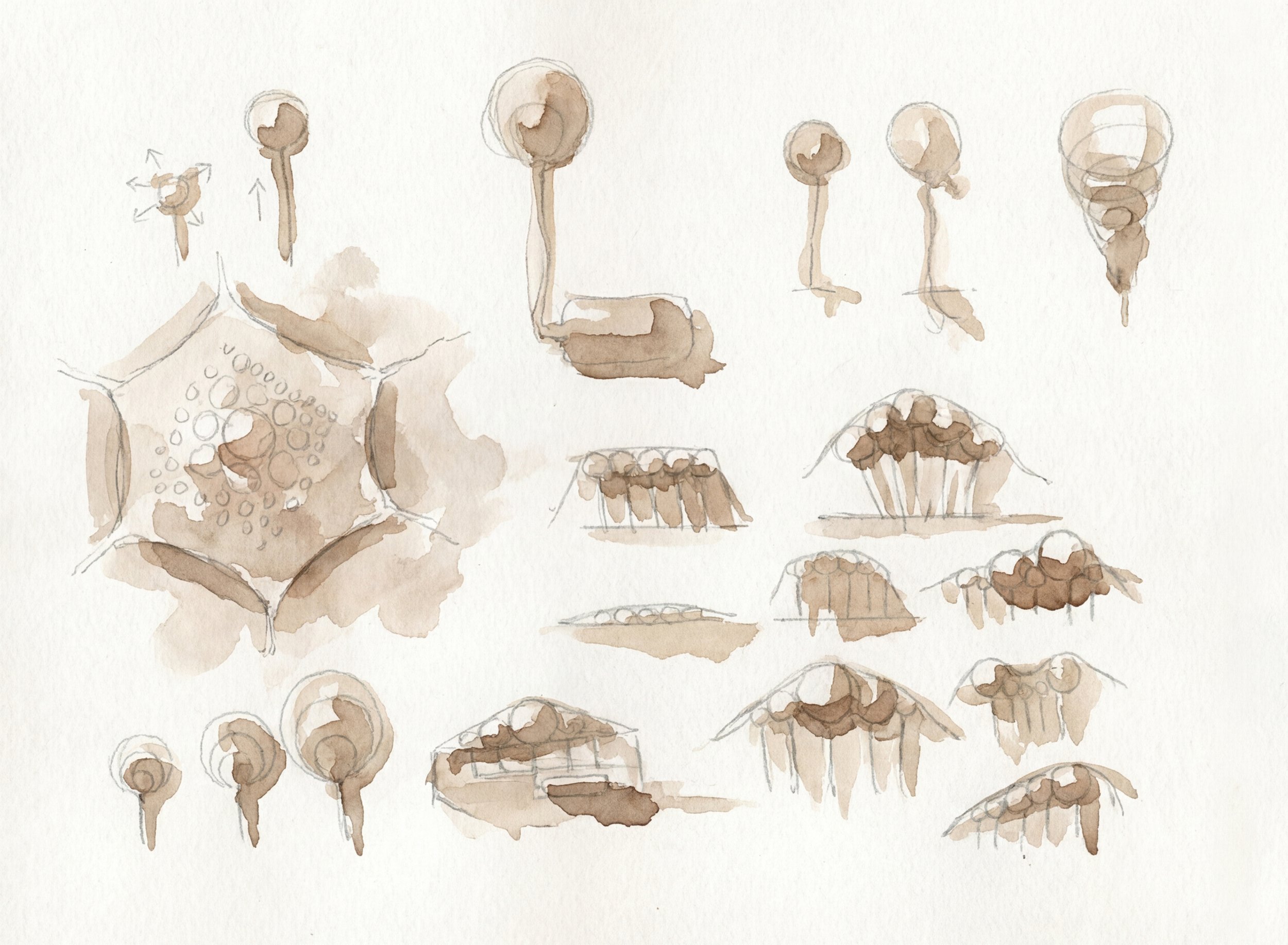
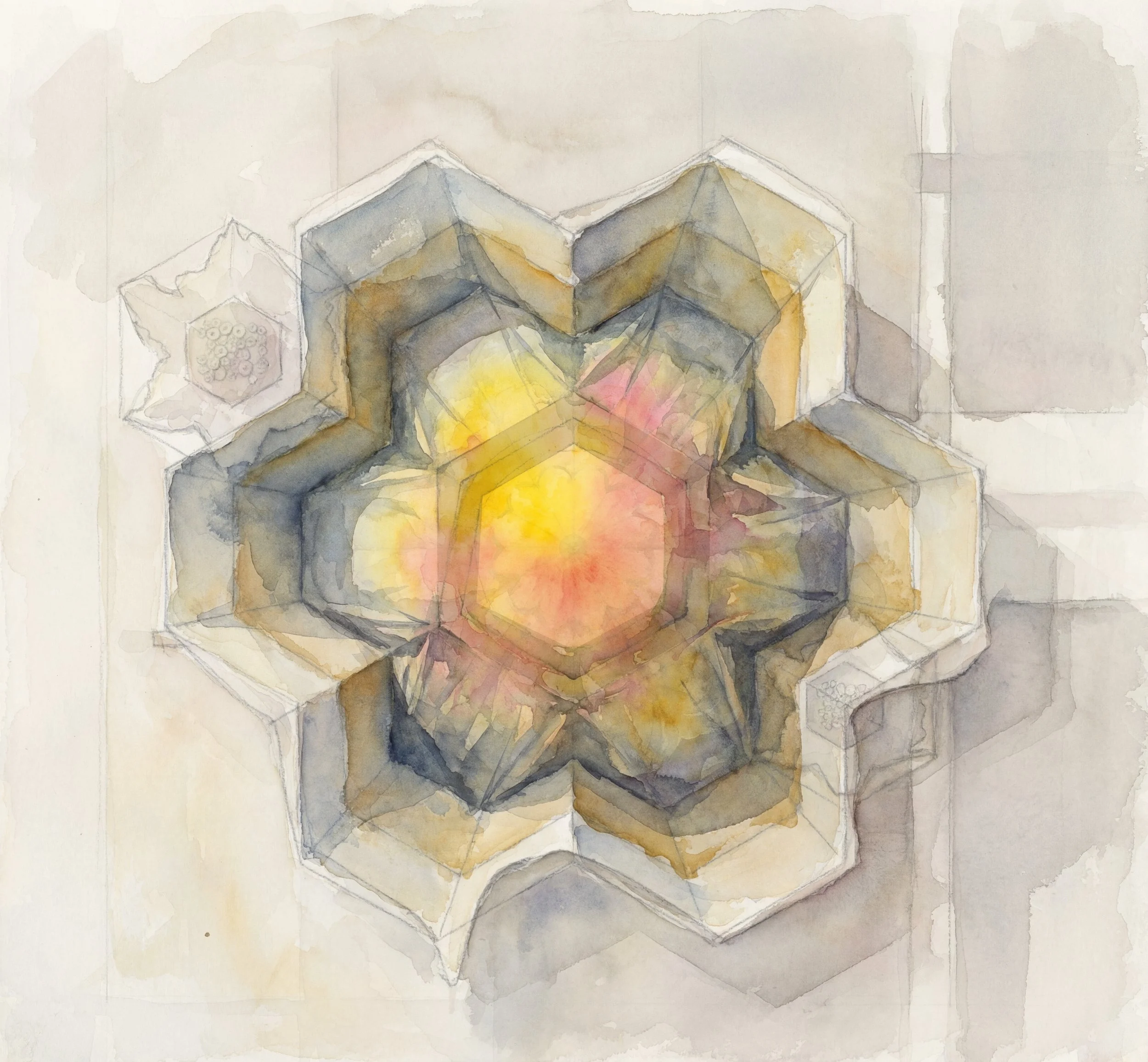
이때 건축은 완결된 형태가 아니라 변화가 머무는 임시의 틀로서, 변화하는 요소와 사건을 담아내는 컨테이너로 재정의된다. 움직임, 밀도, 소음과 같은 비가시적 데이터는 구조적 변형을 통해 가시화되며, 건축은 이를 증폭시키는 장(field)으로 작동한다. 물리적으로는 견고한 구조를 유지하면서도 풍선의 지속적인 변형을 통해 상황에 따라 상이한 형태와 공간적 관계를 생성함으로써 탈형태적(formless) 공간을 구현한다. 결과적으로 본 프로젝트는 건축을 정적인 결과물이 아닌, 정보와 사건, 그리고 집단적 행위에 반응하며 끊임없이 갱신되는 과정으로 제시한다. 안정성과 불확실성, 질서와 우연이 겹쳐지는 지점에서 건축은 결과가 아니라 과정이 되며, 사람들의 집단적 행위와 흐름 속에서 이 구조는 매 순간 새롭게 쓰인다.
The Floating Indicator
A Buoyancy-Based Public Interface, Materializing the Invisible : Sound, Density, and Form
This proposal reimagines the public interface at Penn’s Landing and the Delaware River Waterfront in Philadelphia. Departing from conventional screen-based media, the system mobilizes fundamental physical principles—air pressure, buoyancy, and gravity—to translate spatial transformation into legible information. Within this framework, the environment shifts from a passive backdrop to an active communicative medium, intuitively articulating the site’s collective energy.
Ephemeral conditions—sound, density, and presence—are synthesized into a coherent rhythm through a distributed sensor network that analyzes crowd volume and activity levels. This data feeds a central pneumatic system, activating an inflatable architectural field. As the site becomes increasingly populated, the inflatable architectural field expands and rises as if inhaling, deploying a flexible roof canopy to accommodate larger gatherings. This kinetic transformation transcends the site’s physical boundaries, signaling unfolding events to distant observers. Simultaneously, the fabric envelope operates as a luminous canvas for projection, mediating both the dissemination of information and the articulation of spatial identity.
In this context, architecture is not a static artifact but a temporal framework for transformation—a responsive vessel that hosts shifting elements and unfolding events. By rendering invisible data perceptible through structural metamorphosis, the project amplifies latent site conditions. While maintaining a robust structural system, the continuous deformation of inflatable components generates fluid spatial relationships, dissolving the boundary between form and formlessness. Ultimately, the project positions architecture as an adaptive process, continuously rewritten through collective behavior, information flow, and event-driven transformation at the intersection of stability and uncertainty, order and contingency.