Ethereal Voids
유연한 공간 통합을 위한 기초
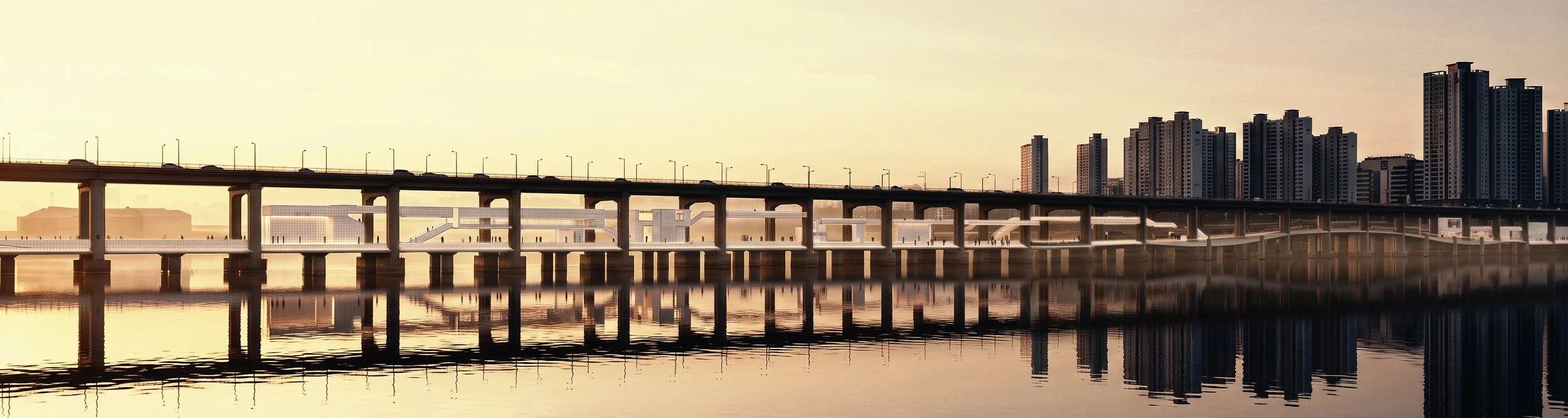
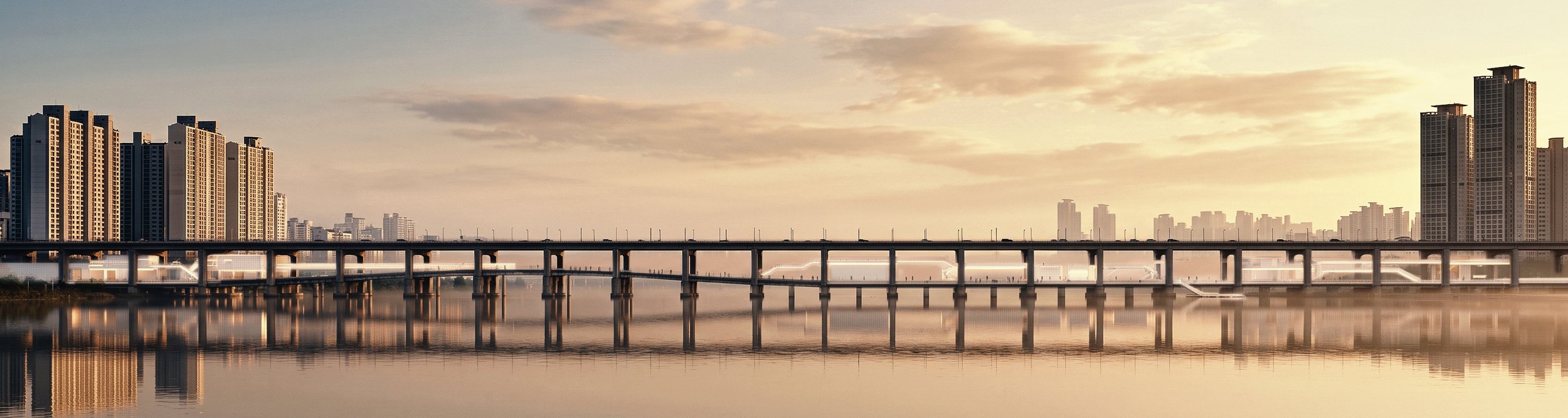
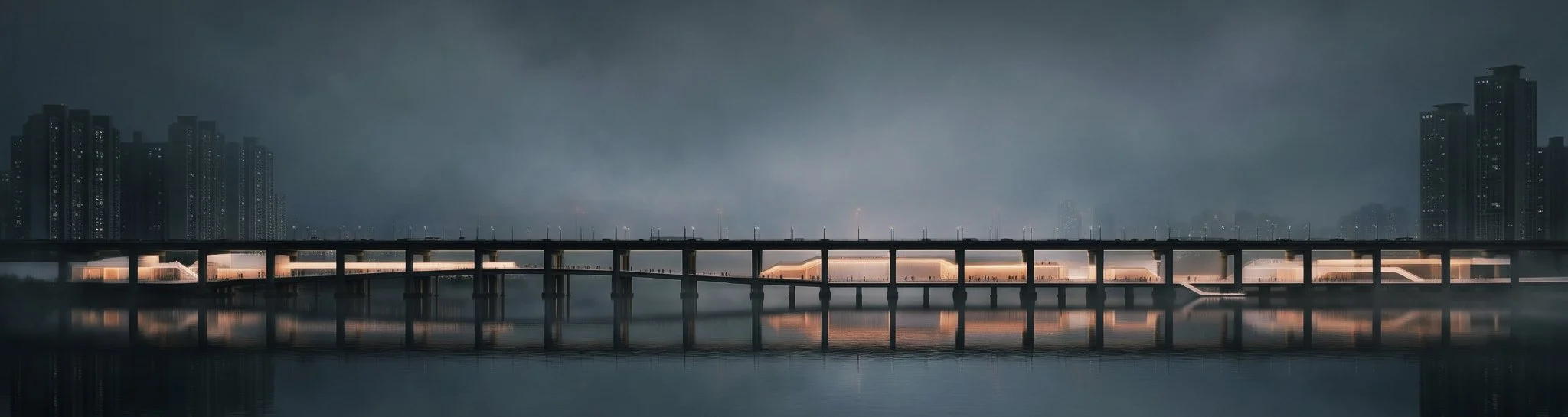
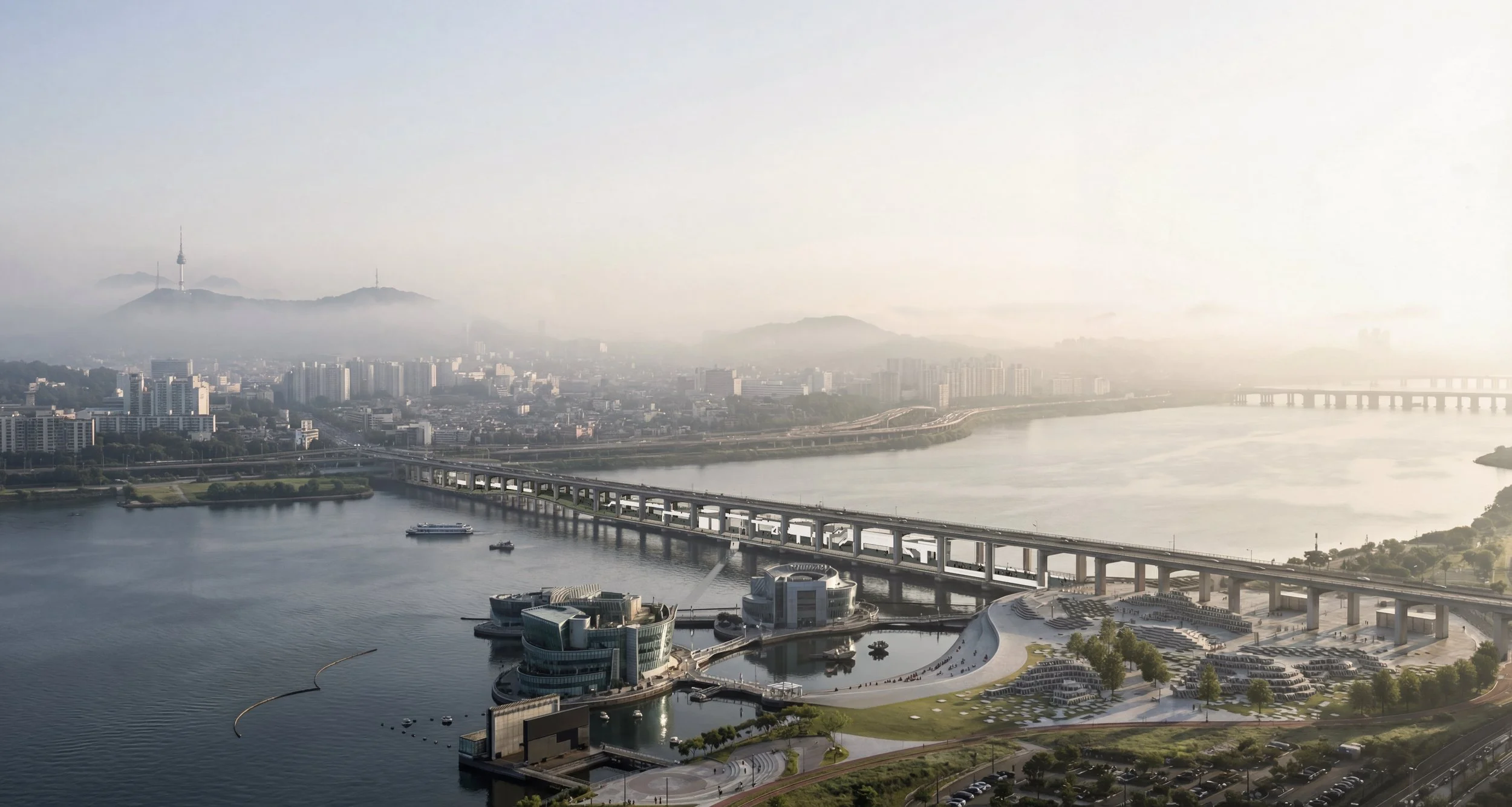
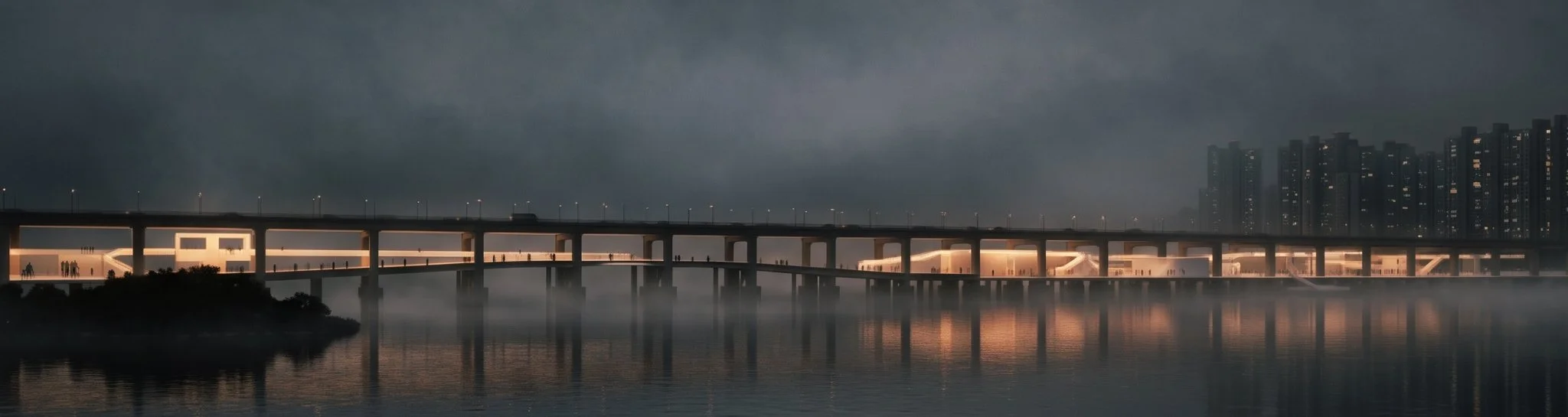
반복되는 침수, 제한된 단면, 자동차·자전거·보행자가 중첩된 구조는 안전과 공간 활용, 그리고 한강과의 관계를 오랫동안 단절시켜 왔다. 그러나 차량의 흐름이 멈추는 순간, 잠수교는 보행자를 위한 도시 인프라로 다시 태어날 수 있다.
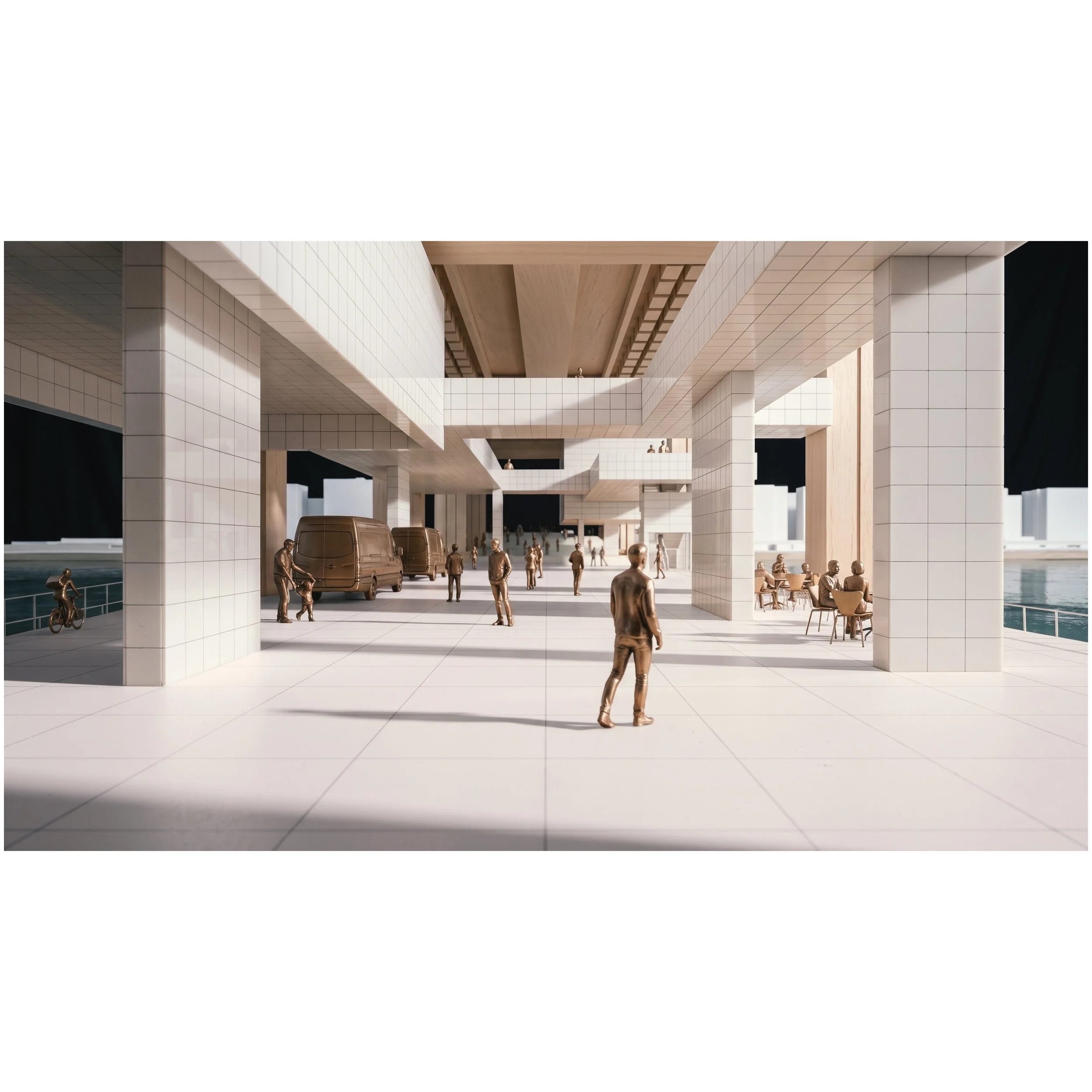
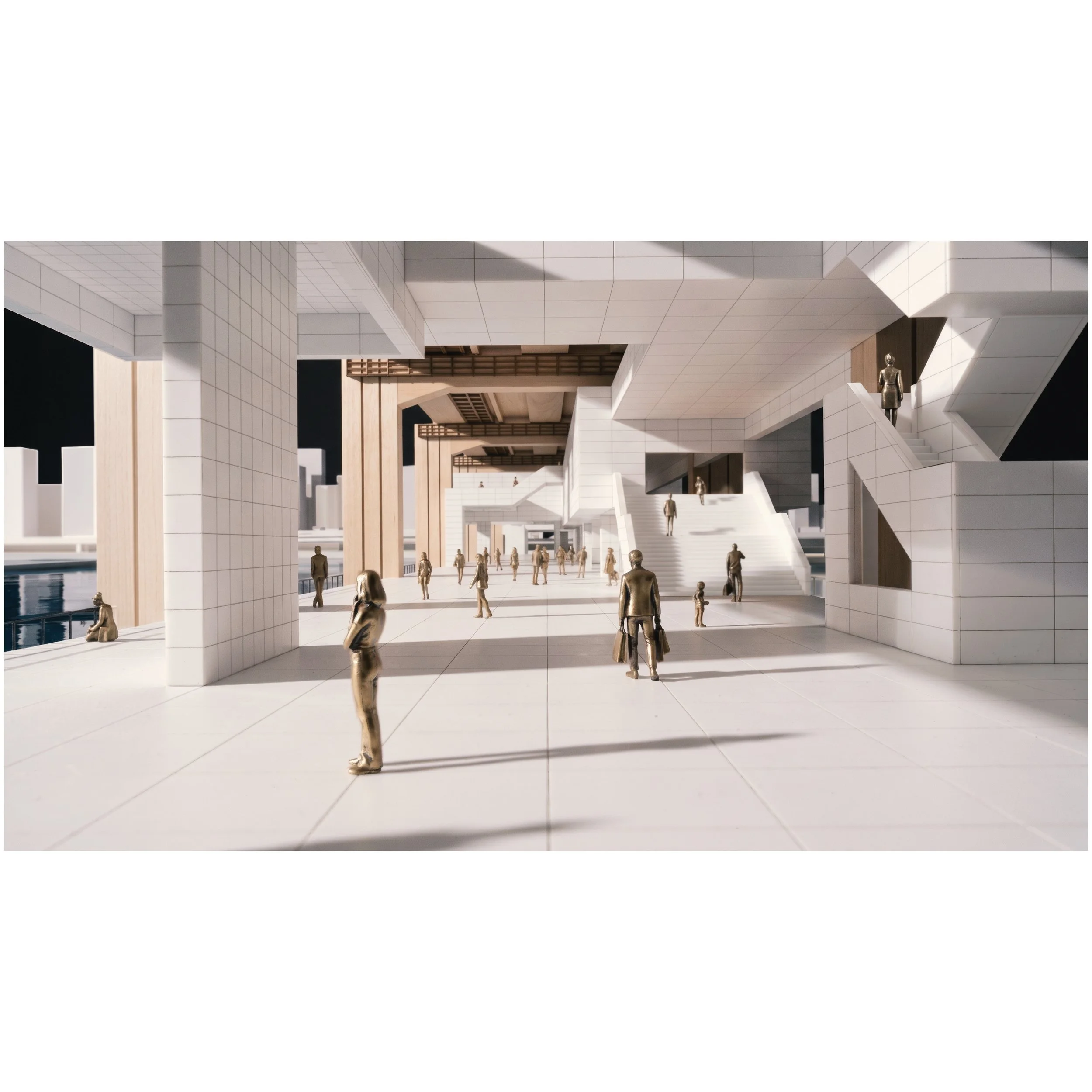
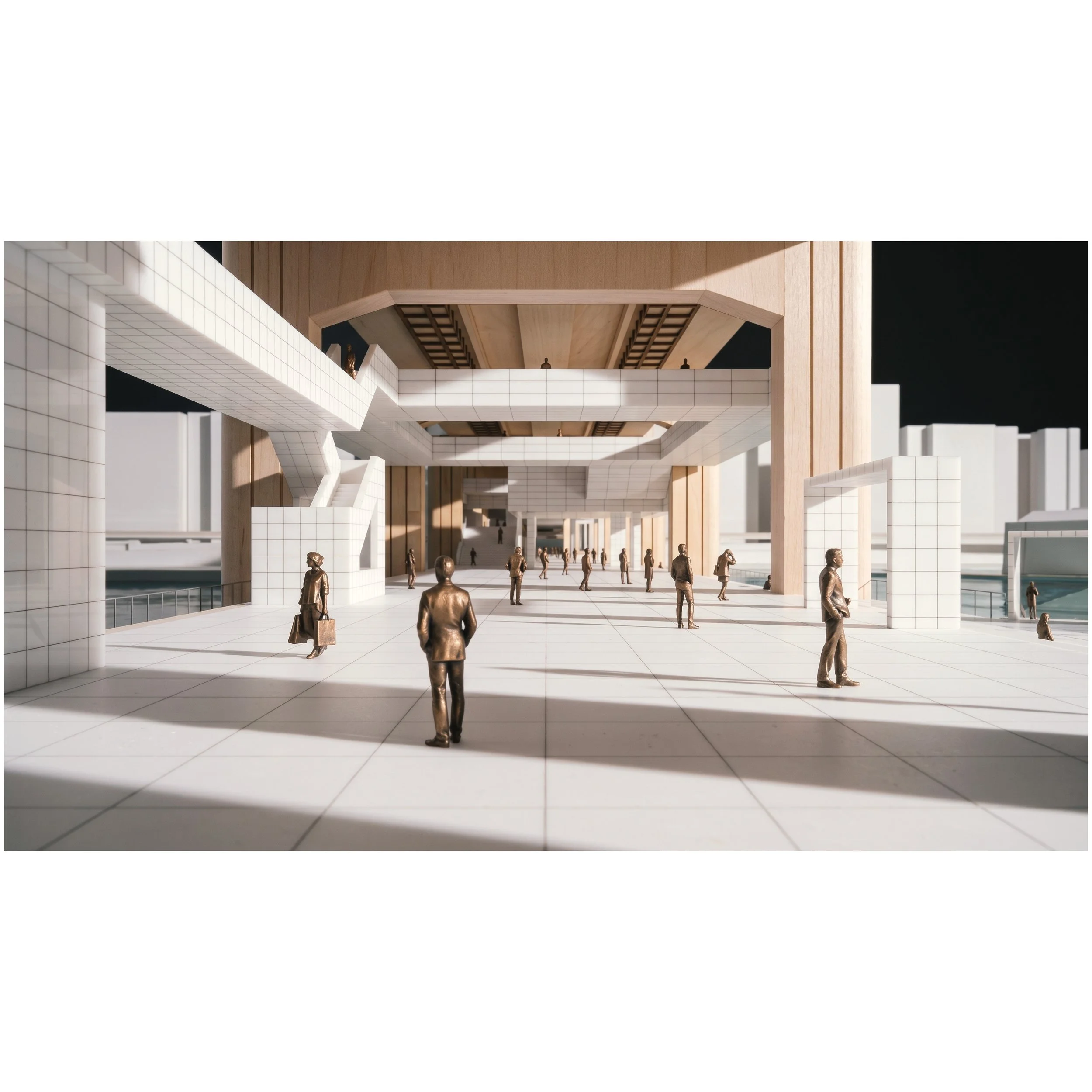
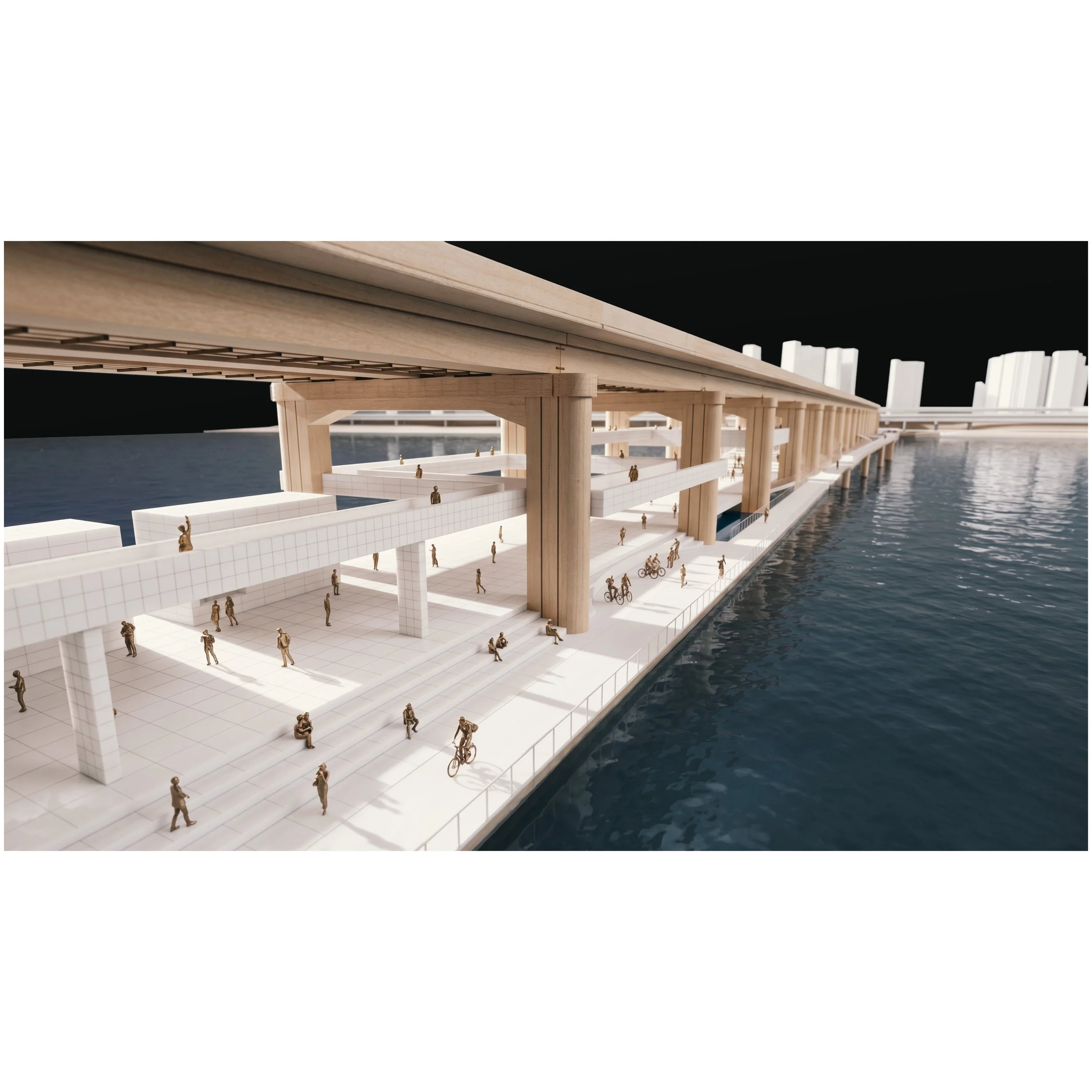
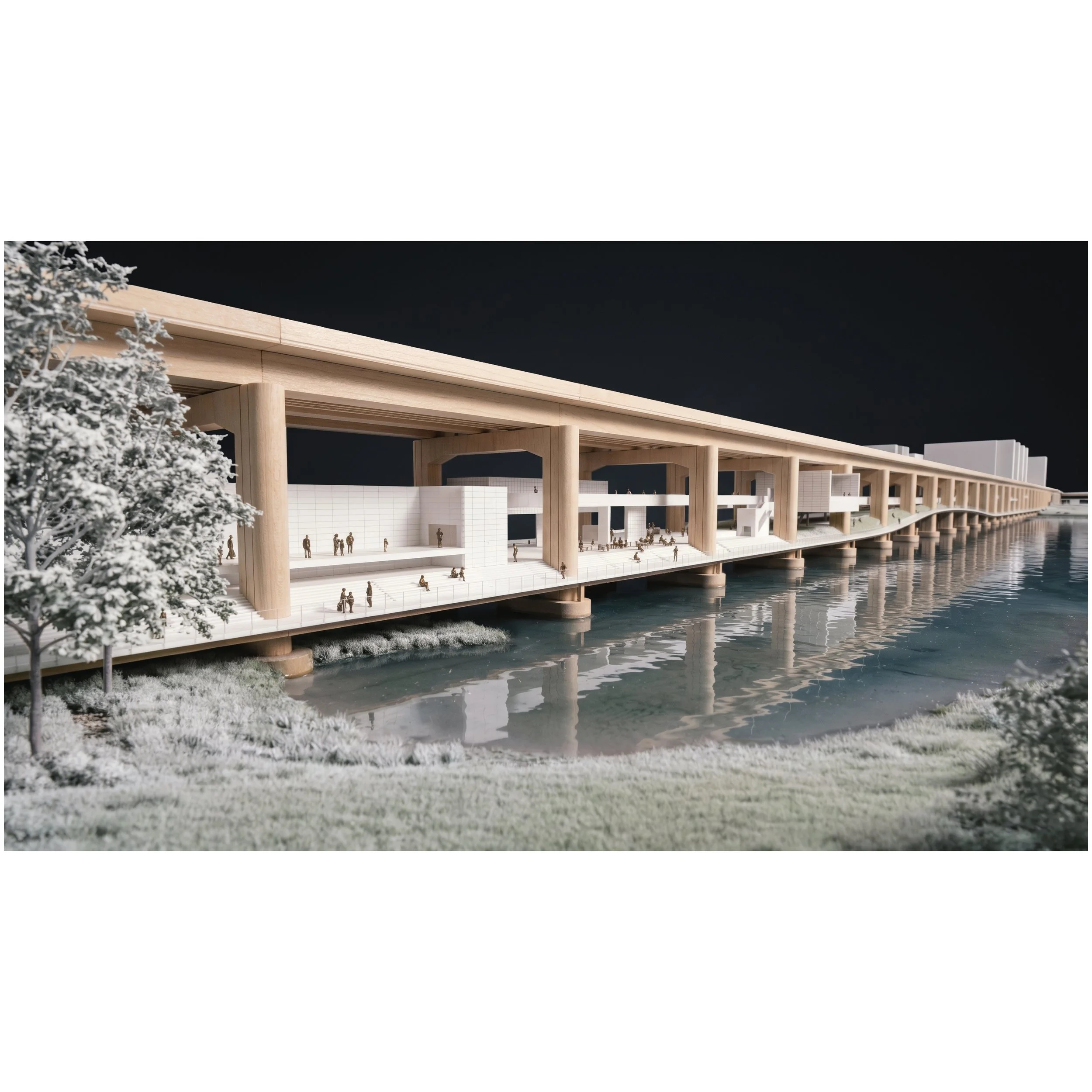
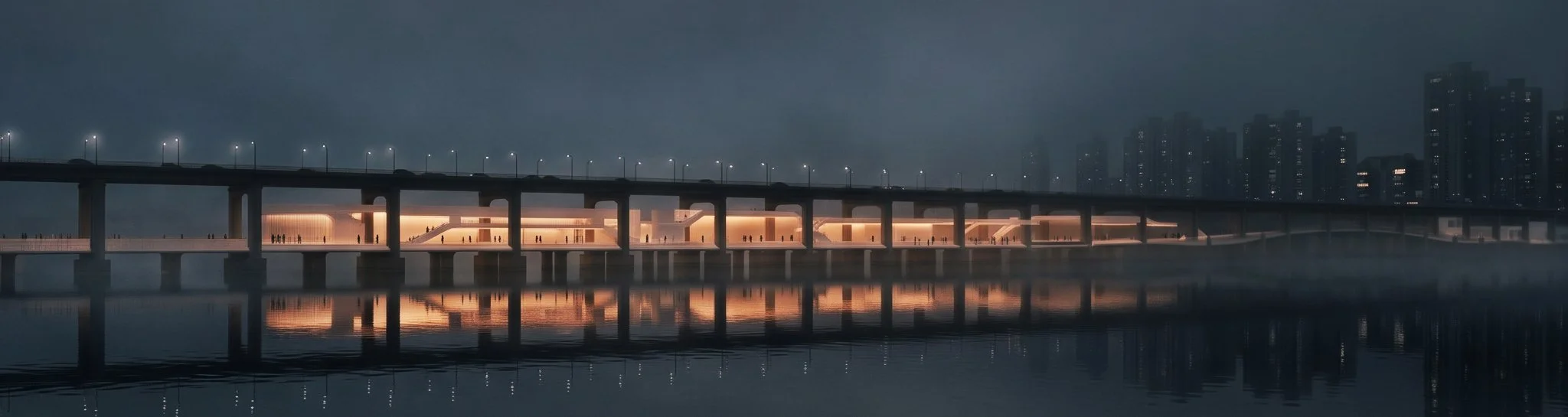
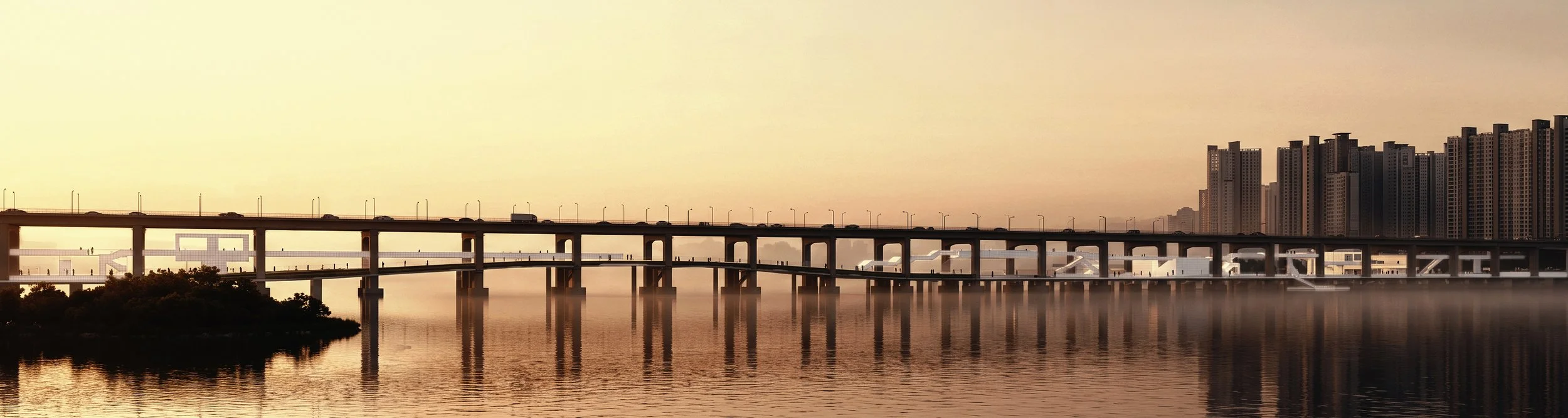
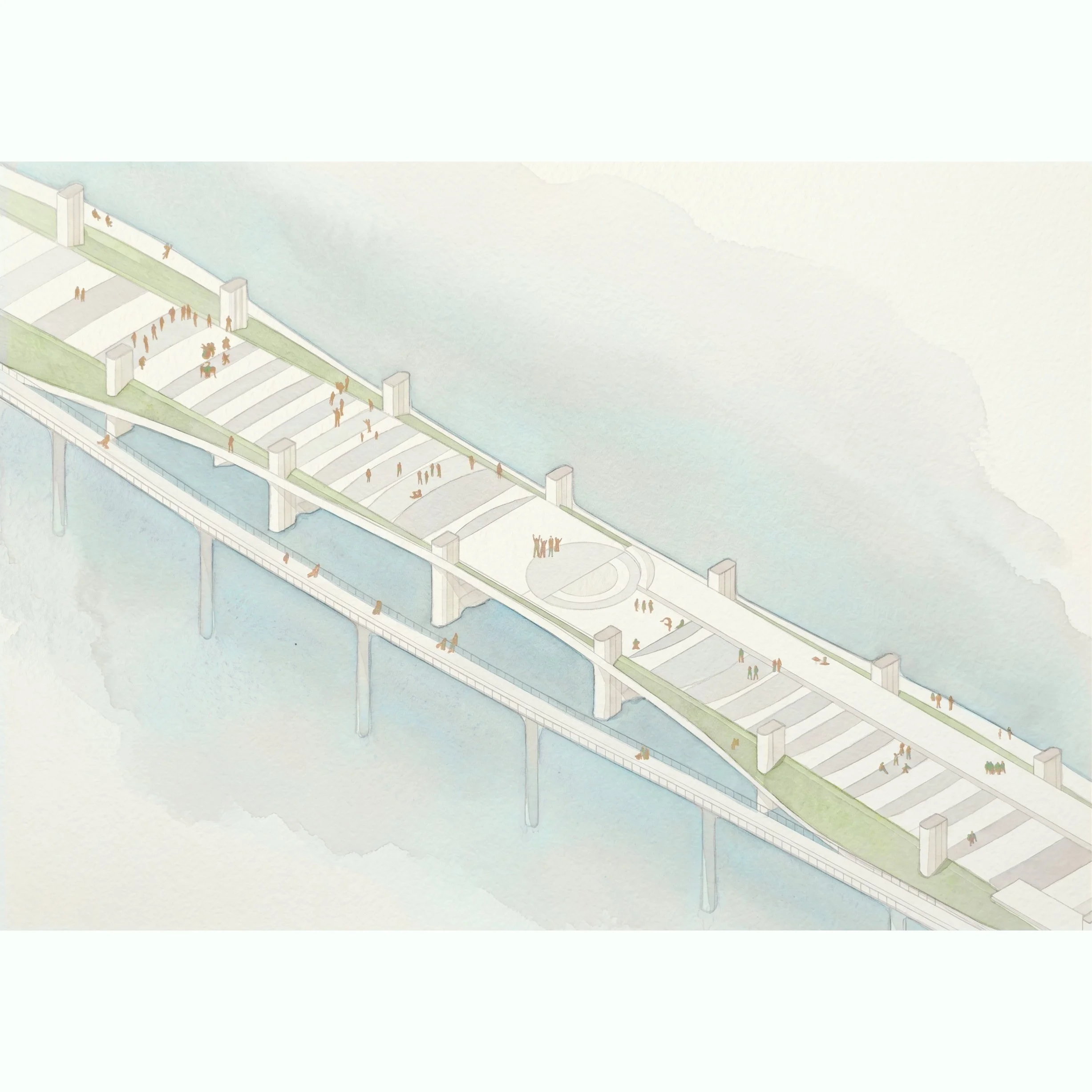
예측할 수 없는 사용과 끊임없이 변화하는 환경 속에서, 공간은 프로그램이 아니라 가능성 자체가 될 수 있는가라는 물음에 대한 응답으로 제안된 '공백의 캔버스'는 다양한 프로그램이 시간에 따라 중첩되고 재구성되는 기반이자, 잠수교에 축적된 축제와 행사, 사회·문화적 기억을 수용하는 비워진 플랫폼이다.
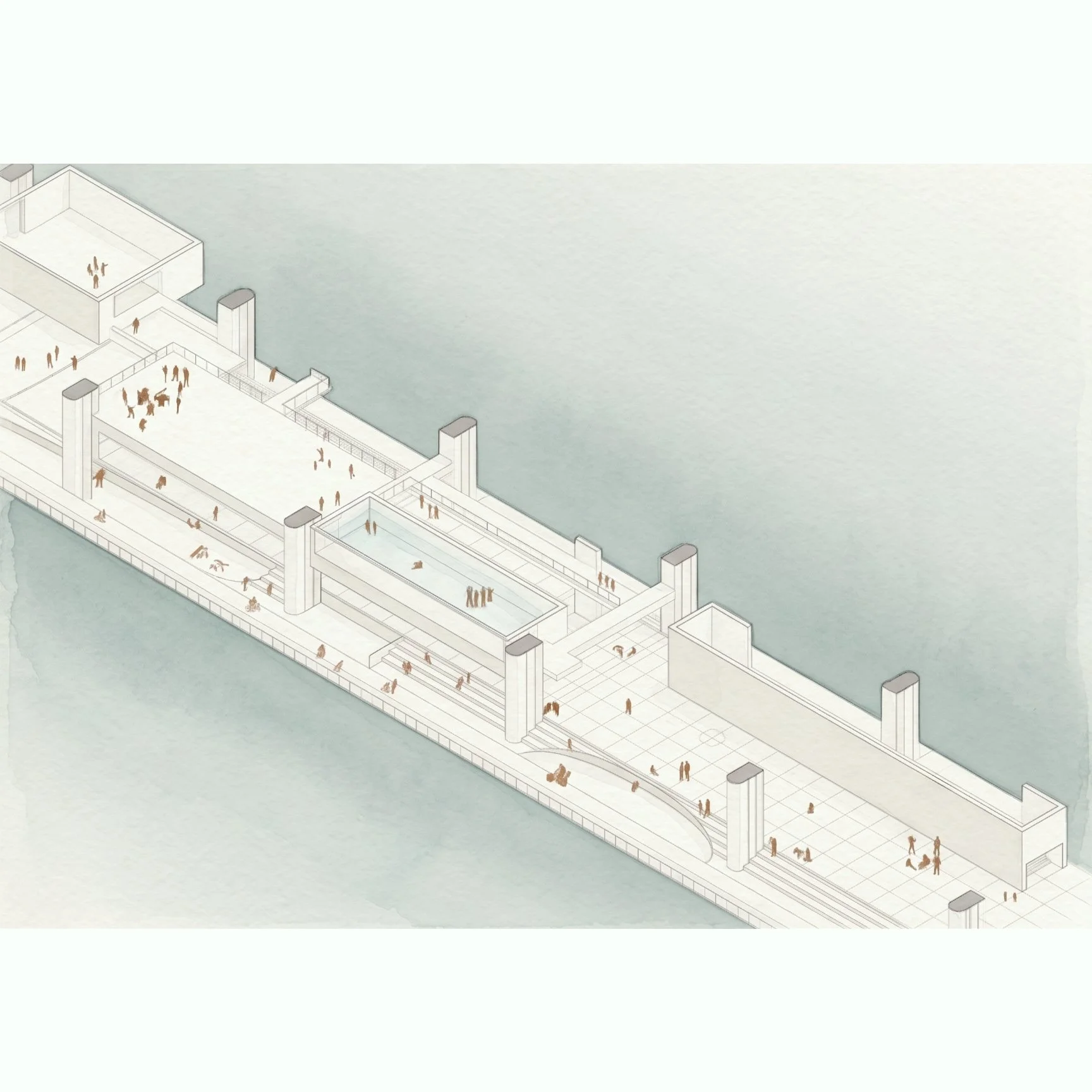
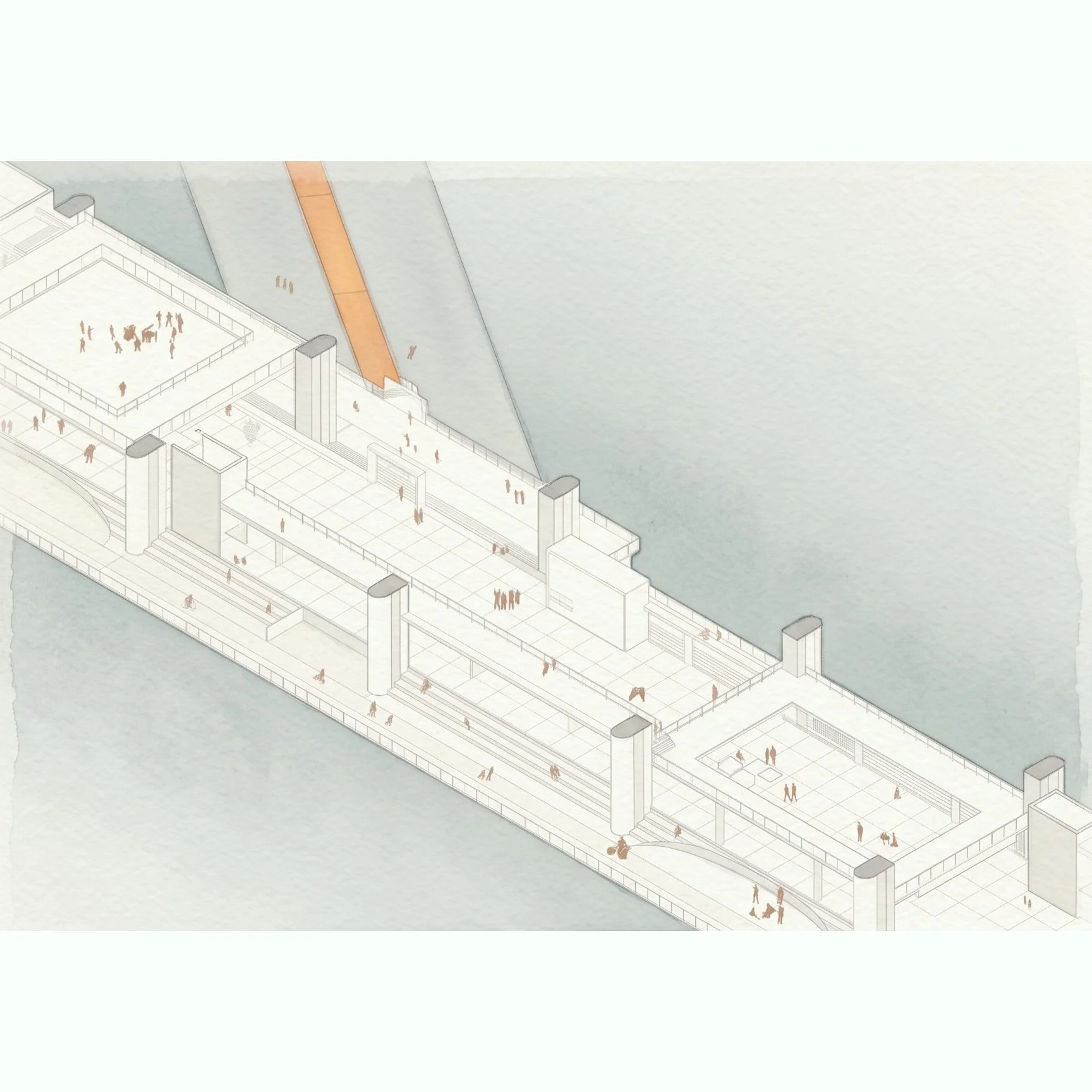
설계의 핵심은 침수를 피하는 것이 아니라 침수를 전제로 하는 것이다. 박스형 프로그램과 다층적 플레인(planes), 녹지를 수직으로 들어 올려 반복되는 범람을 수용하고, 수위 변화에 적응하는 회복탄력적 공공 구조를 구축한다.
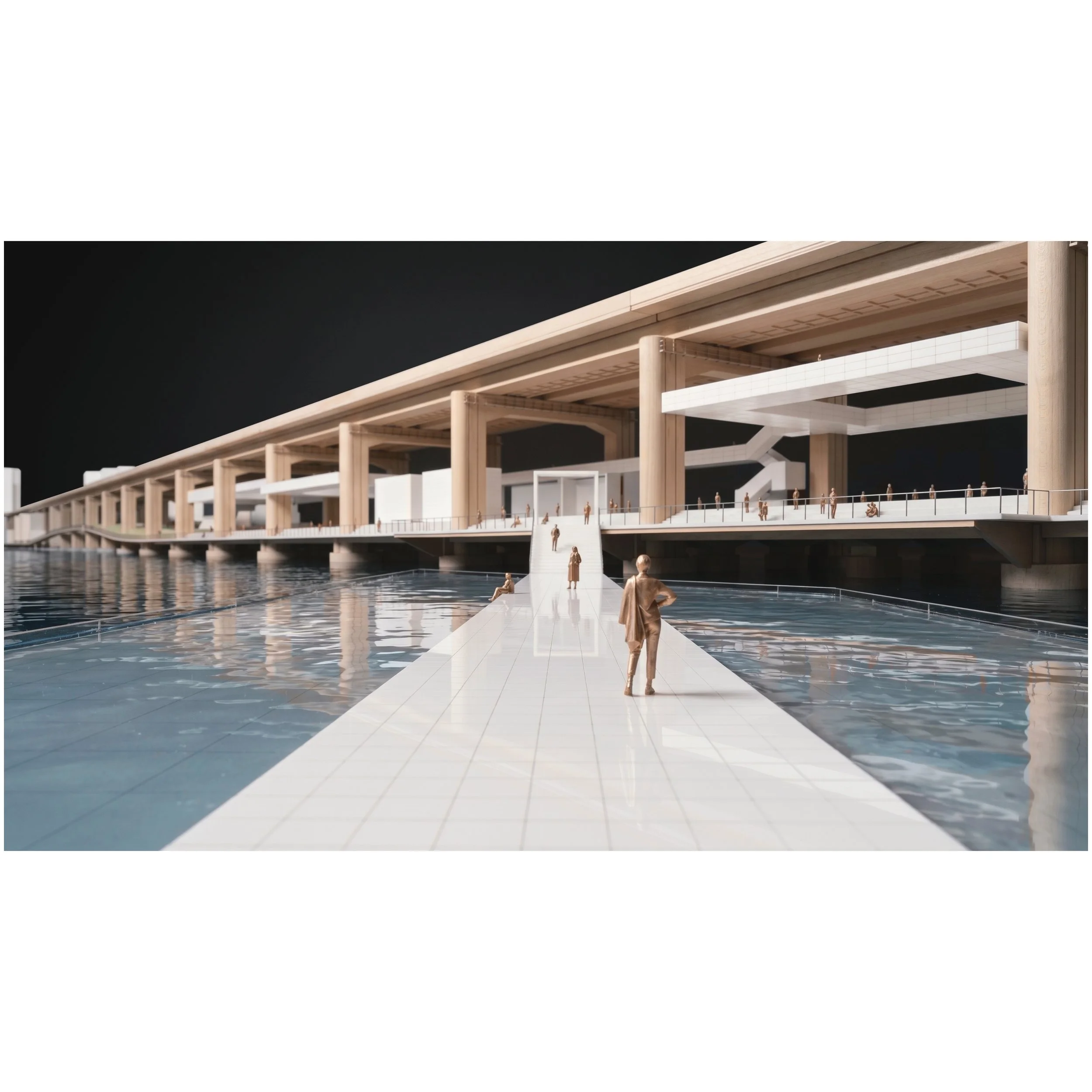
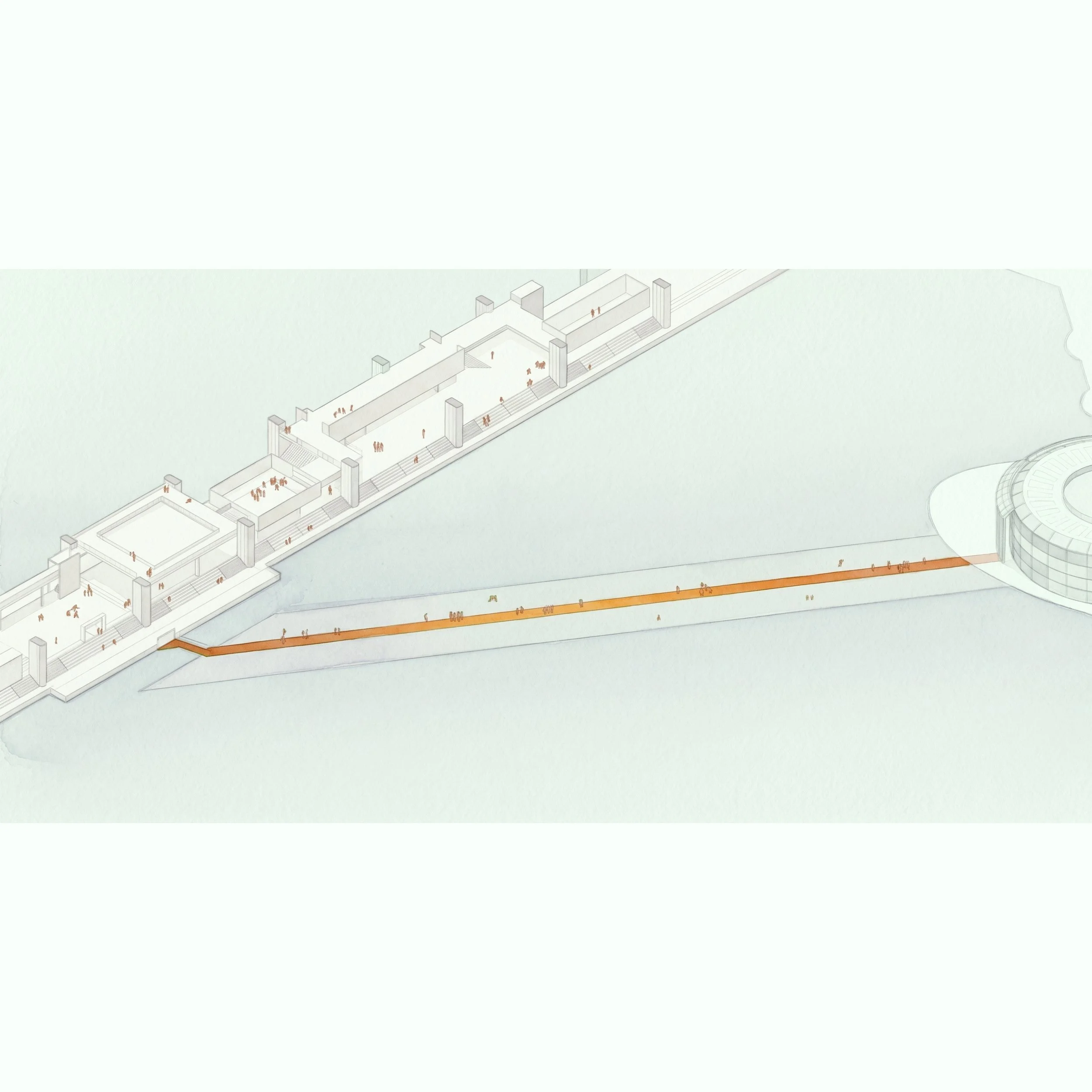
교량의 경계 또한 새롭게 정의된다. 자전거도로와 난간의 선을 낮추고 연장해 사람을 물가로 이끌고, 도시와 한강이 맞닿는 새로운 장면을 만든다. 그 결과 잠수교는 더 이상 통과를 위한 기반시설이 아닌, 물과 도시를 연결하는 새로운 공공 플랫폼으로 재정의된다.
© INTERFACE STUDIOS 2026, ALL RIGHTS RESERVED
Location Jamsu Bridge area (115-5 Banpo-dong, Seocho-gu ~ 287-3 Seobingo-dong, Yongsan-gu)
Programme Public
Site Area N/A
Building Area N/A
Gross floor Area N/A
Building Scope N/A
Parking None
Height N/A
Building to land ratio N/A
Floor area ratio N/A
Structure Steel Frame
Exterior finishing N/A
Interior finishing N/A
Ethereal Voids
Foundation for Flexible Space Integration
Recurring inundation, a constrained cross-section, and the convergence of vehicular, bicycle, and pedestrian circulation have long compromised safety, spatial capacity, and Jamsu Bridge's relationship with the Han River. Yet once vehicular traffic is removed, the bridge can be reimagined—not as infrastructure for passage, but as civic infrastructure.
Within an environment defined by unpredictable use and continual transformation, can space become a framework for possibility rather than a predetermined program? The Canvas of Void responds as an intentionally open platform where diverse activities accumulate, overlap, and evolve over time. Rather than prescribing use, it provides a resilient spatial framework accommodating the festivals, public events, and collective social and cultural memories embedded in Jamsu Bridge.
The design does not resist flooding—it presupposes it. Elevated programmatic volumes, layered planes, and lifted landscapes accommodate recurring inundation, establishing a resilient public framework that adapts to fluctuating water levels rather than opposing them.
The bridge edge is redefined as an inhabitable threshold. By lowering and extending the bicycle path and guardrails, the design draws people toward the water's edge, creating new points of contact between the city and the Han River. As a result, Jamsu Bridge is redefined—not as infrastructure for passage, but as a resilient public platform reconnecting the city with the river.