感覺空間
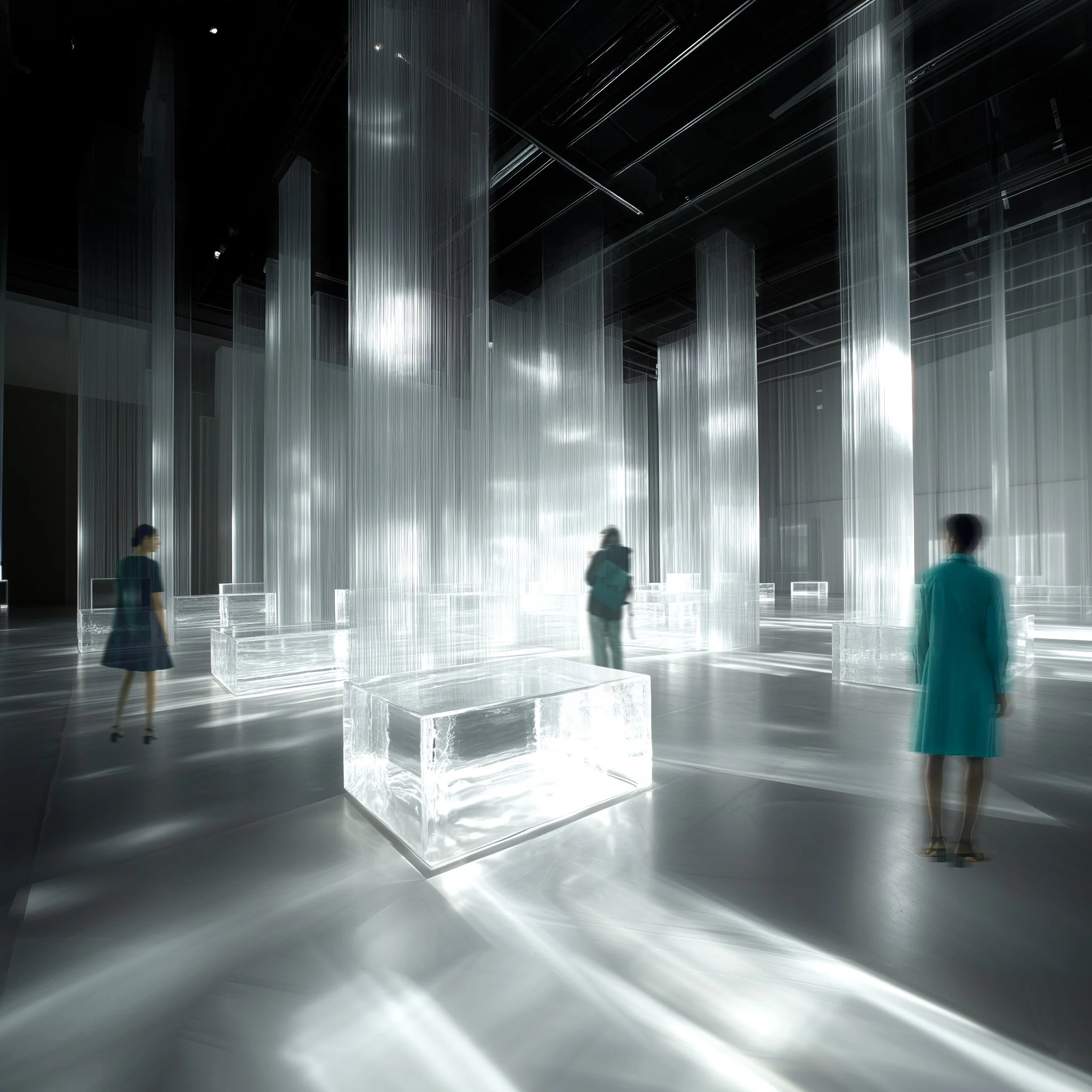
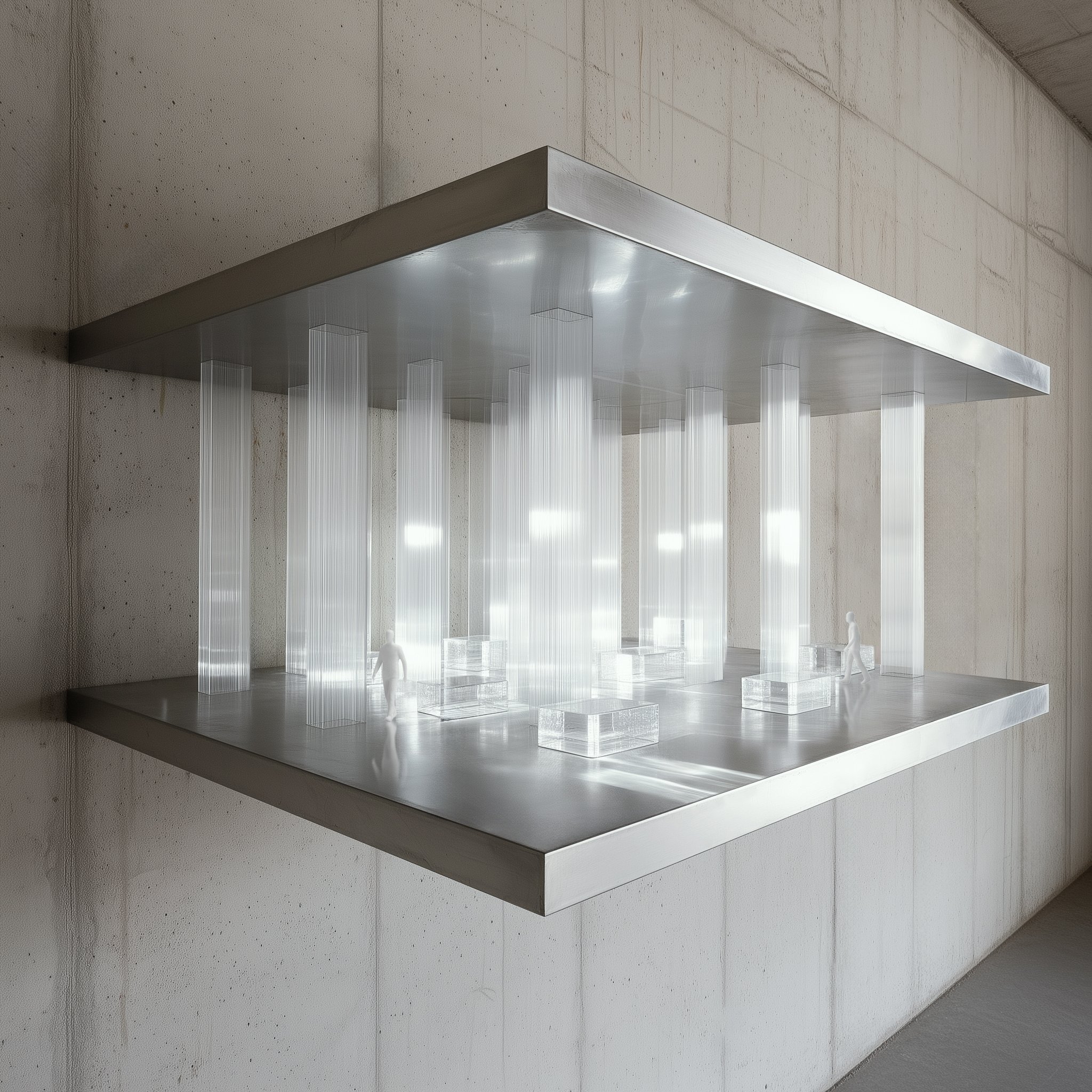
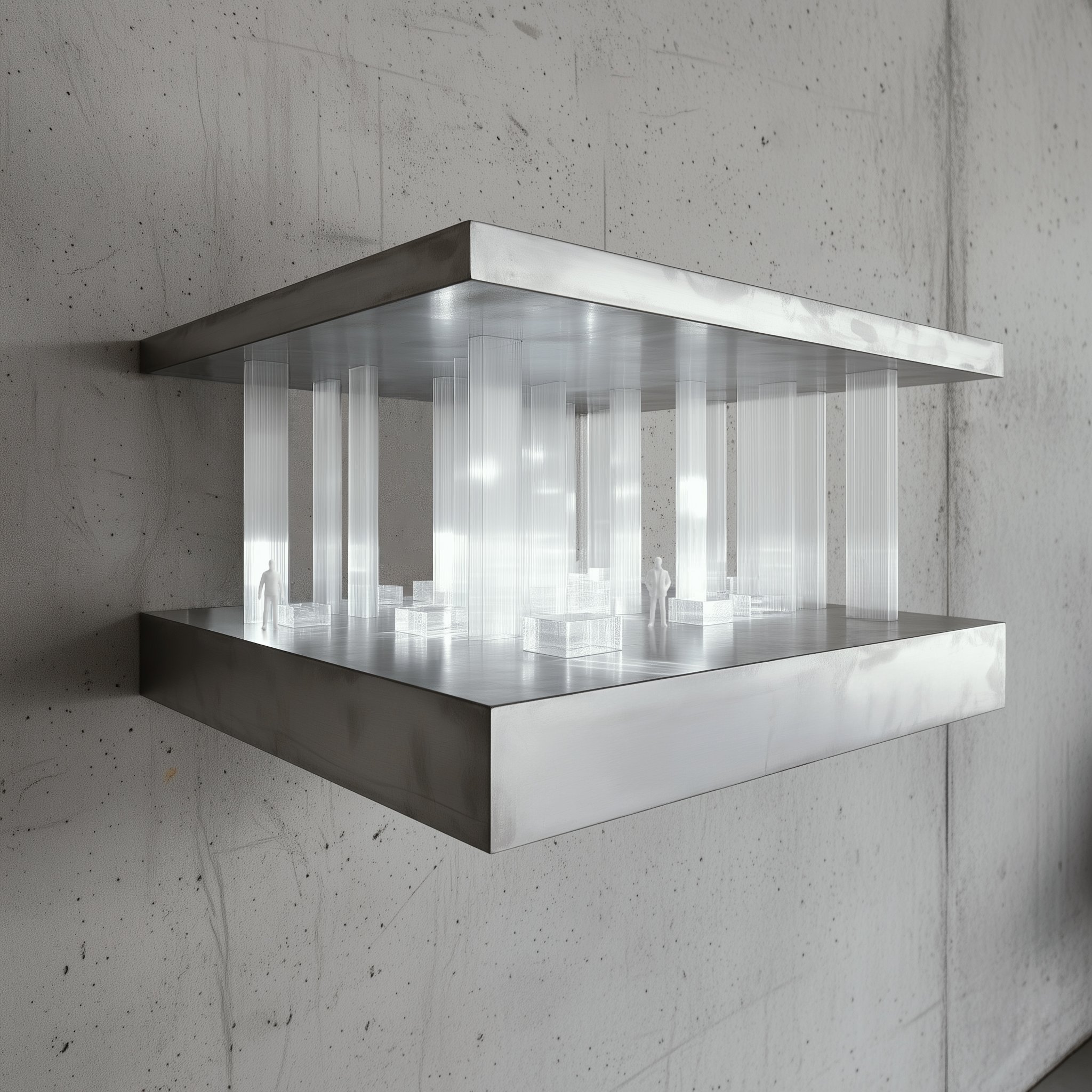
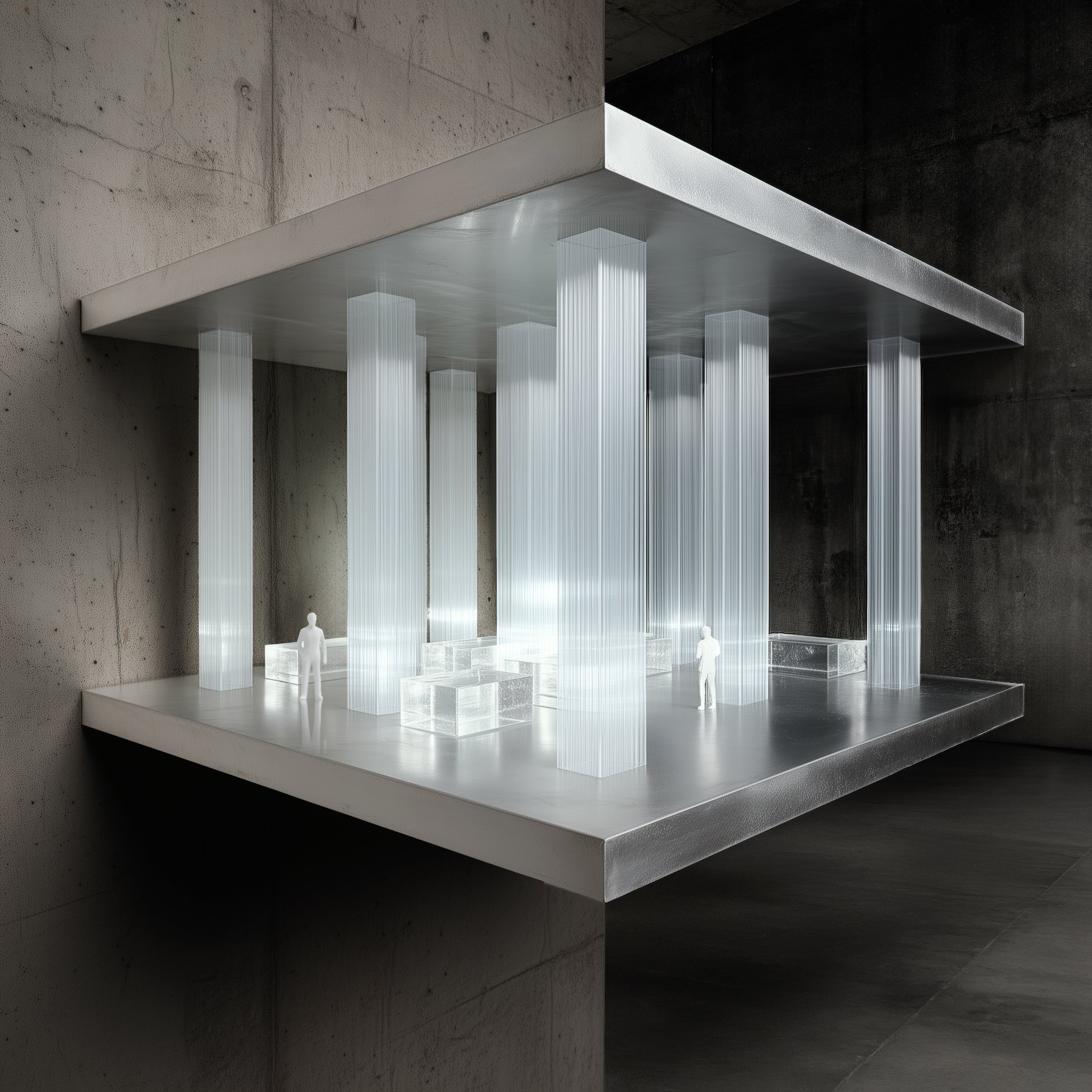
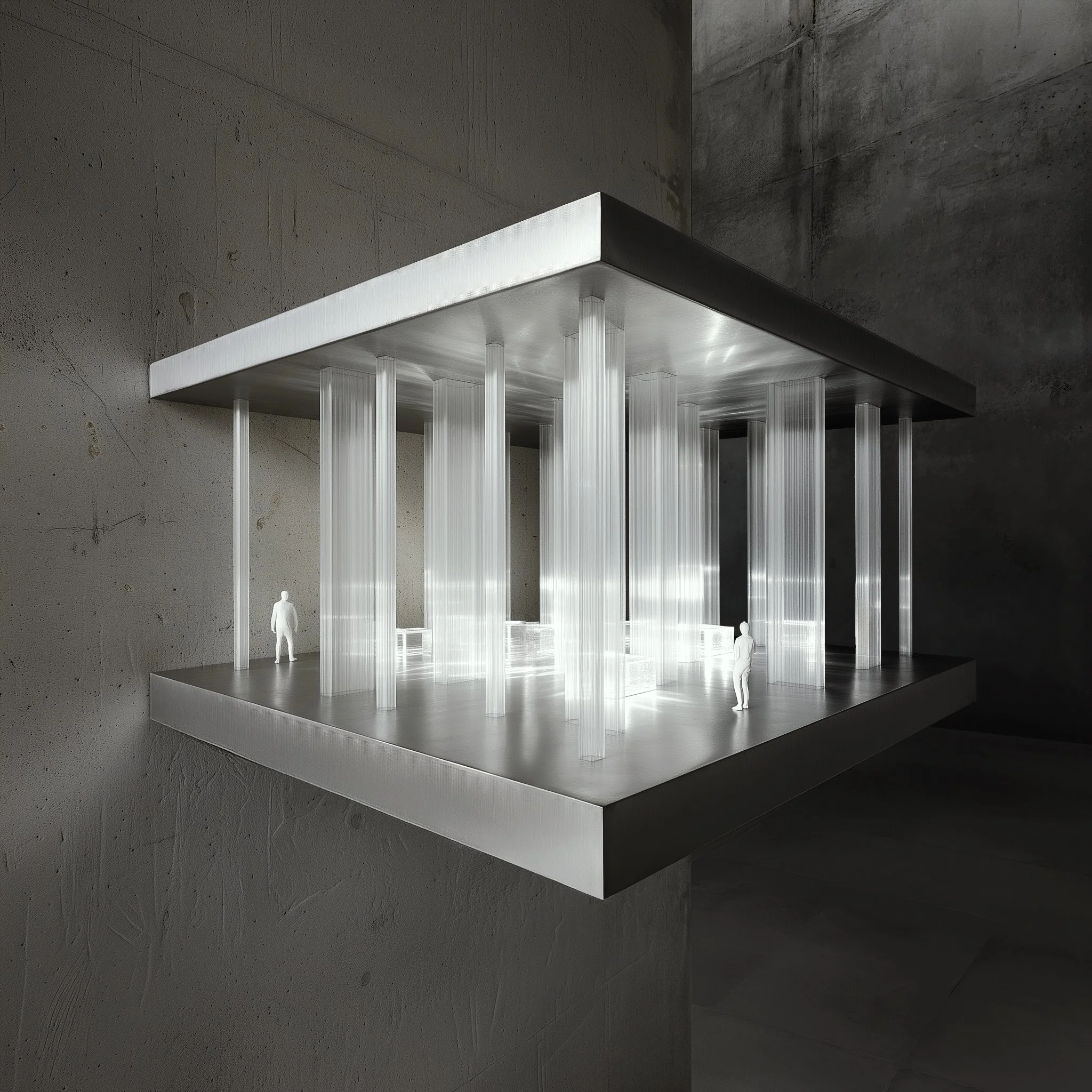
건축은 단순히 물리적인 구조물을 설계하는 행위가 아니라, 인간의 감각을 자극하는 공간을 창조하는 일이다. 본 프로젝트는 건축이 시각적 경험을 넘어, 인간 인지의 모든 측면과 공명하는 공간 구현을 시도한다. 시간적이며 비물질적인 현상인 소리는, 청각적 경험을 유형화하기 위한 건축적 요소로 해석되었다. 빛으로 가득 찬 투명한 유리 기둥은 육중한 구조의 존재를 인식에서 지워내고 자연광이 내부로 유입되는 듯한 인식을 매개한다.
소리와 빛은 주파수, 진폭, 파장이라는 유사한 파동의 속성을 지니며, 공간을 따라 전파되는 방식이 유사한 특성을 가진다. 소리의 요소를 건축 공간으로 전환하는 과정은 청각과 시각을 동시에 자극하는 환경을 만들어낼 수 있는 독특한 가능성을 제시한다. 소리의 물리적 속성을 기준으로 에칭된 유리 기둥과 포디움의 공간적 배열을 구성함으로써, 소리가 지닌 비물질적 특성은 공간적으로 표현된다. 이러한 투명 및 반투명 유리 요소들은 기능적 요소이자 상징적 장치로 작동하며, 시각과 청각이라는 감각 세계 사이의 경계를 잇는 매개체가 된다.
Space of Senses
Architecture is not merely the act of designing physical structures, but the creation of spaces that stimulate human senses. This project seeks to realize a spatial experience in which architecture extends beyond the visual and resonates with all dimensions of human perception. Sound, a temporal and immaterial phenomenon, is interpreted as an architectural element through which auditory experience is made tangible. Transparent glass columns filled with light mediate a perception in which the presence of heavy structural mass is visually dissolved, allowing natural daylight to appear as though it permeates the interior.
Sound and light share analogous wave-based properties—frequency, amplitude, and wavelength—and propagate through space in comparable ways. Translating elements of sound into architectural space reveals a unique potential to construct environments that engage both auditory and visual senses simultaneously. Through the spatial arrangement of etched glass columns and podiums guided by the physical properties of sound, its immaterial qualities are expressed spatially. These transparent and translucent glass elements function as both architectural components and symbolic devices, bridging the boundary between the sensory realms of sight and sound.